Corrective Dental Implant Treatment in Cheshire with Dr Nikhil Oberai
If your implant treatment has not gone to plan, whether placed in the UK or abroad, I want you to know that a failed implant is rarely the end of the story. Come and let me take a look before you give up.
Something has gone wrong and you do not know what to do next
Failed implant treatment leaves patients in a particularly difficult place. They have already been through the process once. They have already invested money, time, and trust. And now something is not right. There is pain, movement, infection, or a result that looks nothing like what was promised. They are not sure who to turn to or whether it can be fixed.
Many patients in this situation feel a deep reluctance to try again. That is completely understandable. What I want them to know is that the failure of a previous procedure does not define what is possible now. The two things are not the same. And in the majority of cases I see, something can be done.
- Why patients come to see me
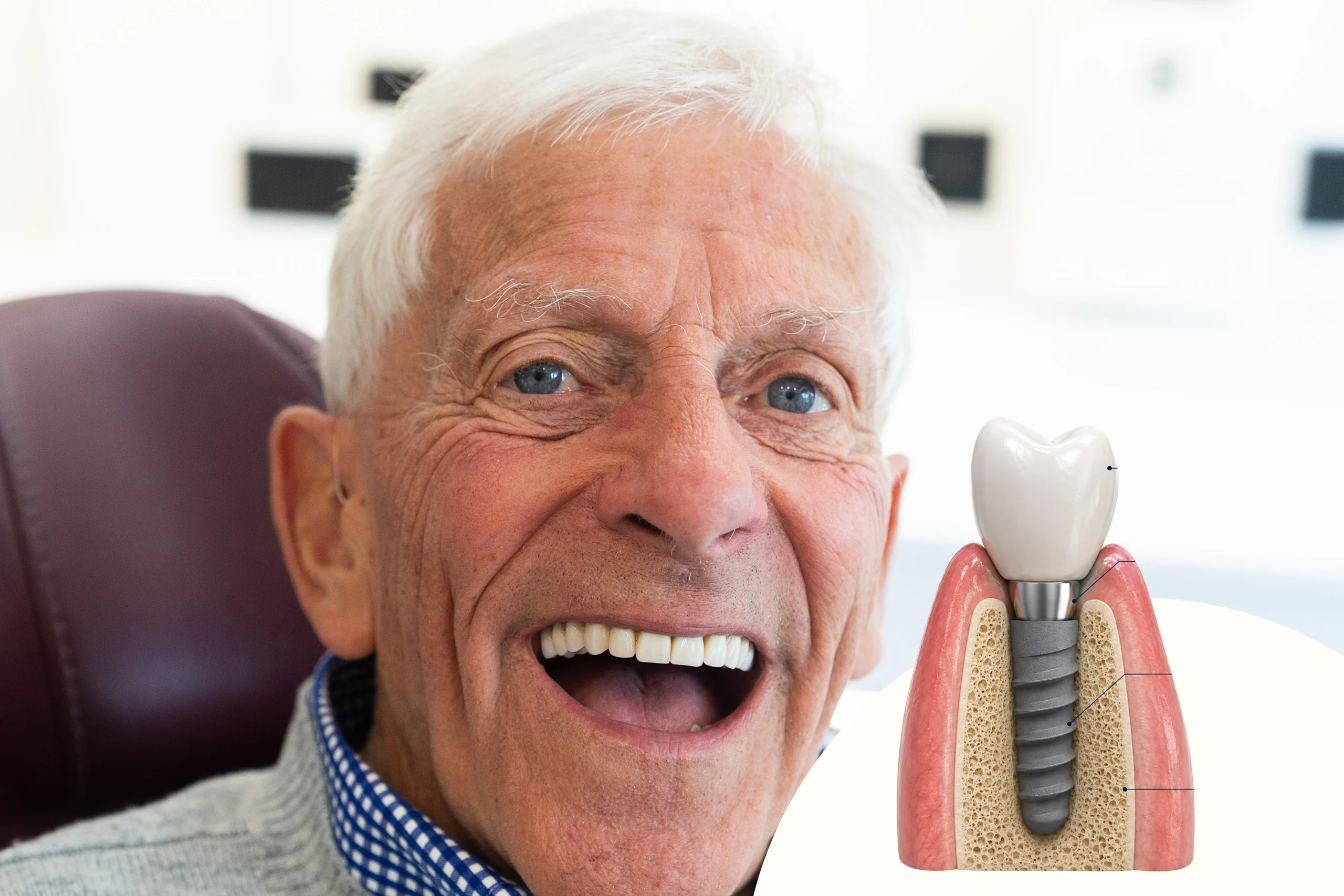
Do any of the points below sound familiar?
Your implant is loose, painful, or failing
It was not supposed to feel like this. An implant that is integrating correctly should be stable and pain-free. If yours is not, if there is movement, discomfort, swelling, or something that simply does not feel right, it needs to be assessed properly and urgently.
The result looks nothing like what you were promised
The colour, the shape, the fit, the appearance. Something is visibly wrong. You had expectations that were reasonable and they have not been met. That is not something you should simply accept.
You had treatment abroad and something has gone wrong since
Dental tourism has grown significantly in recent years and so has the number of patients who return to the UK with complications. Poorly placed implants, incorrect prosthetics, infections, or work that has simply deteriorated. The cost saving at the time has been overtaken by the cost of dealing with the consequences.
You have been told nothing can be done
This is the point at which many patients arrive at my practice. They have been back to the original clinician and been told the situation is not correctable. Or they have been told by another dentist that the implant needs removing and nothing further is possible. In my experience, this is very rarely the full picture.
The good news is, failed implant treatment is rarely the end of the story.
Corrective implant work is one of the most technically demanding areas of implant dentistry and one of the areas I find most clinically rewarding. The cases that arrive with the most uncertainty attached to them are often the ones that, with the right assessment and approach, have a clear route to resolution.
Corrective treatment might mean removing a failed implant and replacing it correctly. It might mean addressing an infection and treating the surrounding bone before replanning. It might mean a complete reconstruction where previous work has caused wider damage. In every case, it starts with a thorough 3D assessment, because I will not make promises before I know exactly what I am looking at.
What I can tell you is that in the vast majority of corrective cases I take on, a viable solution exists. And that the patients who come to me having been told nothing could be done are often the ones who leave most changed.
- Real Patient Results
Thousands of Smiles Transformed
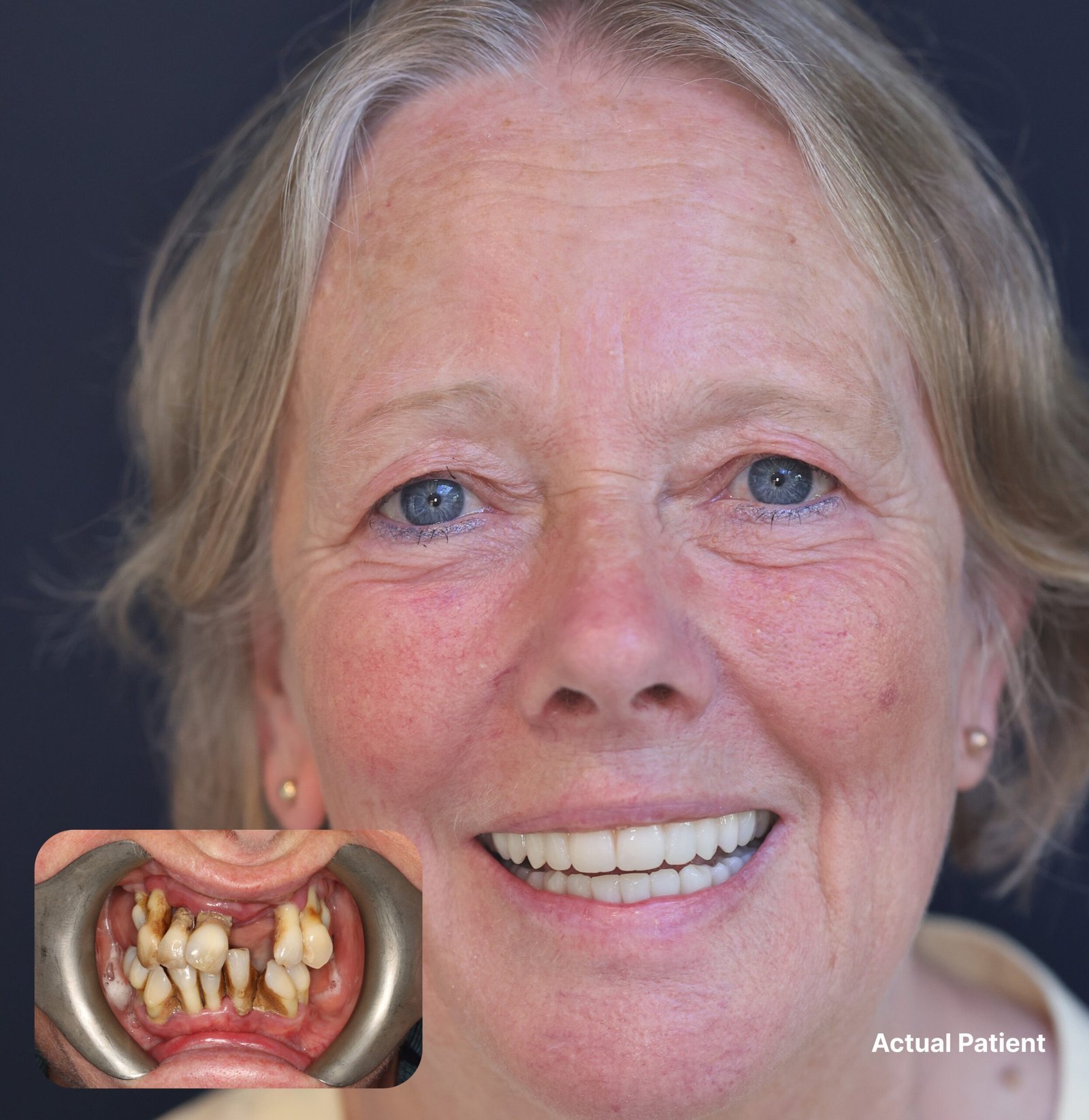
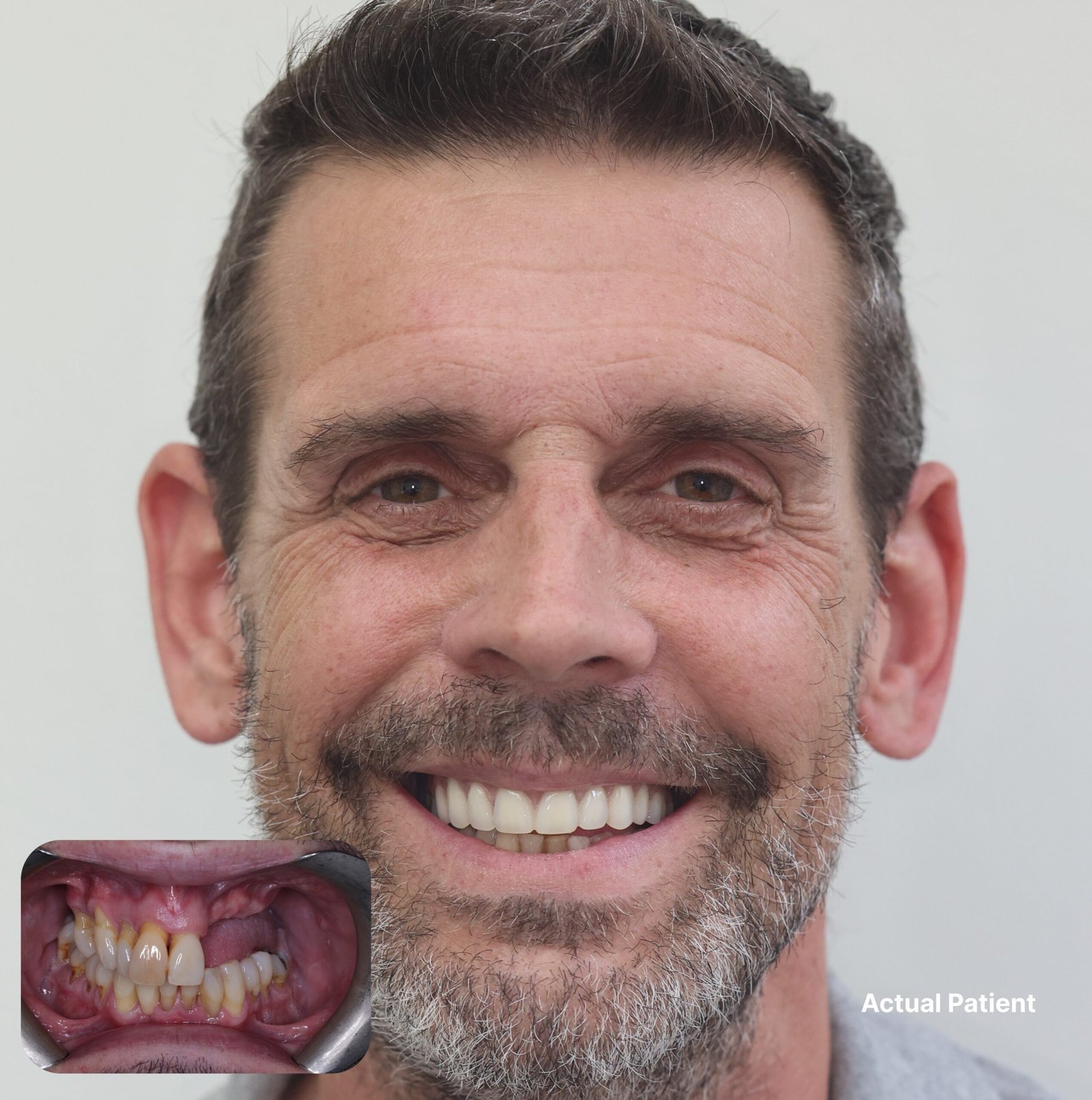
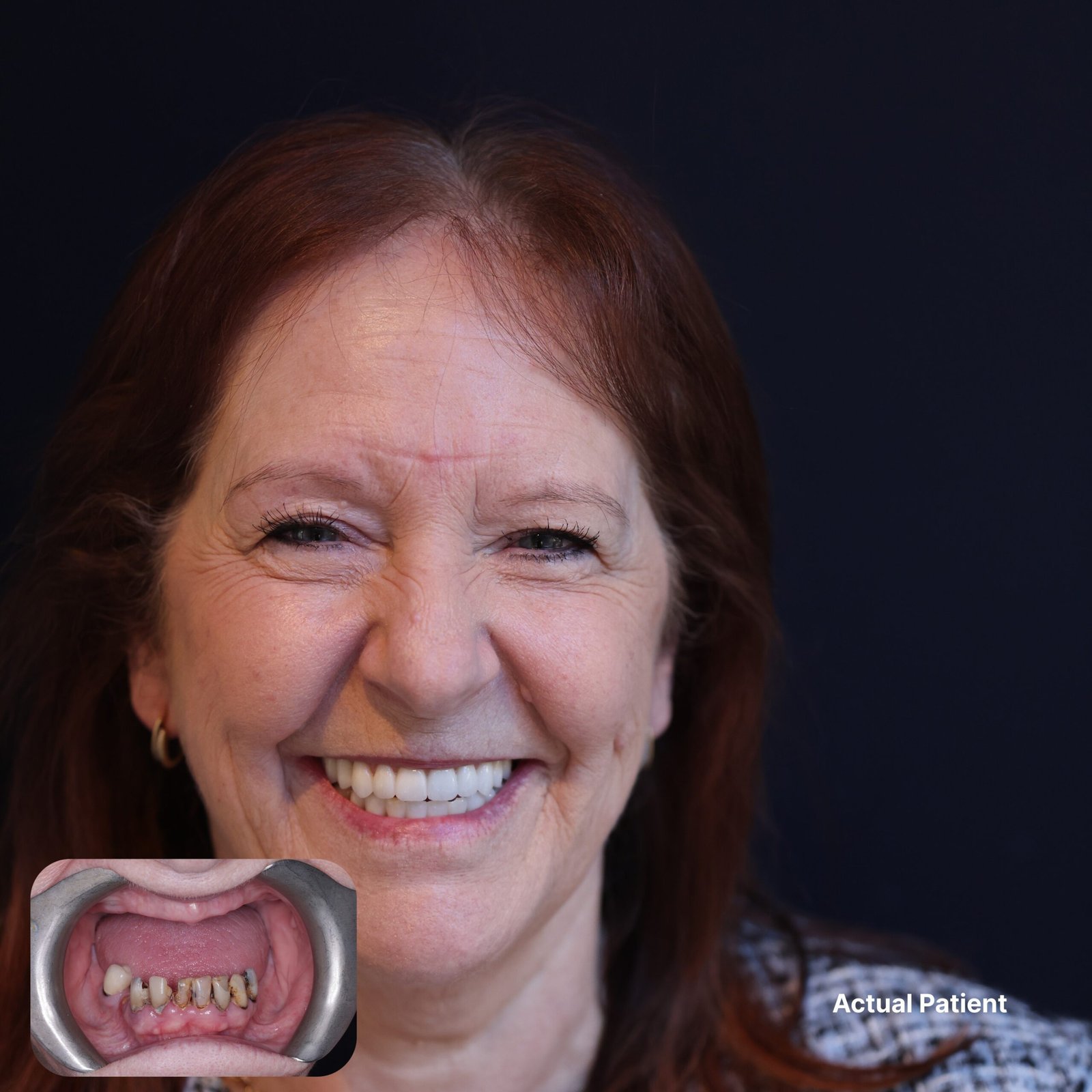
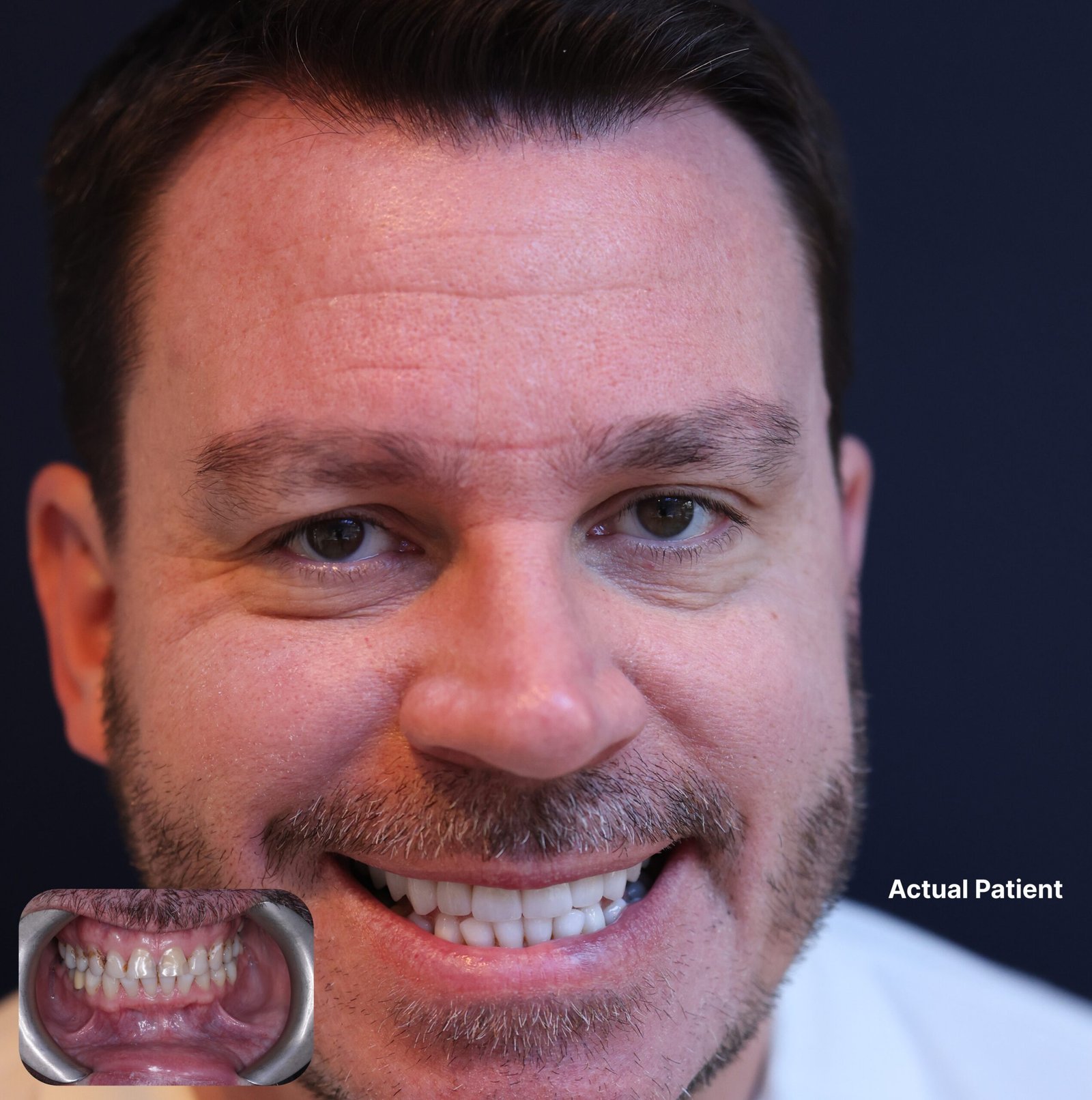
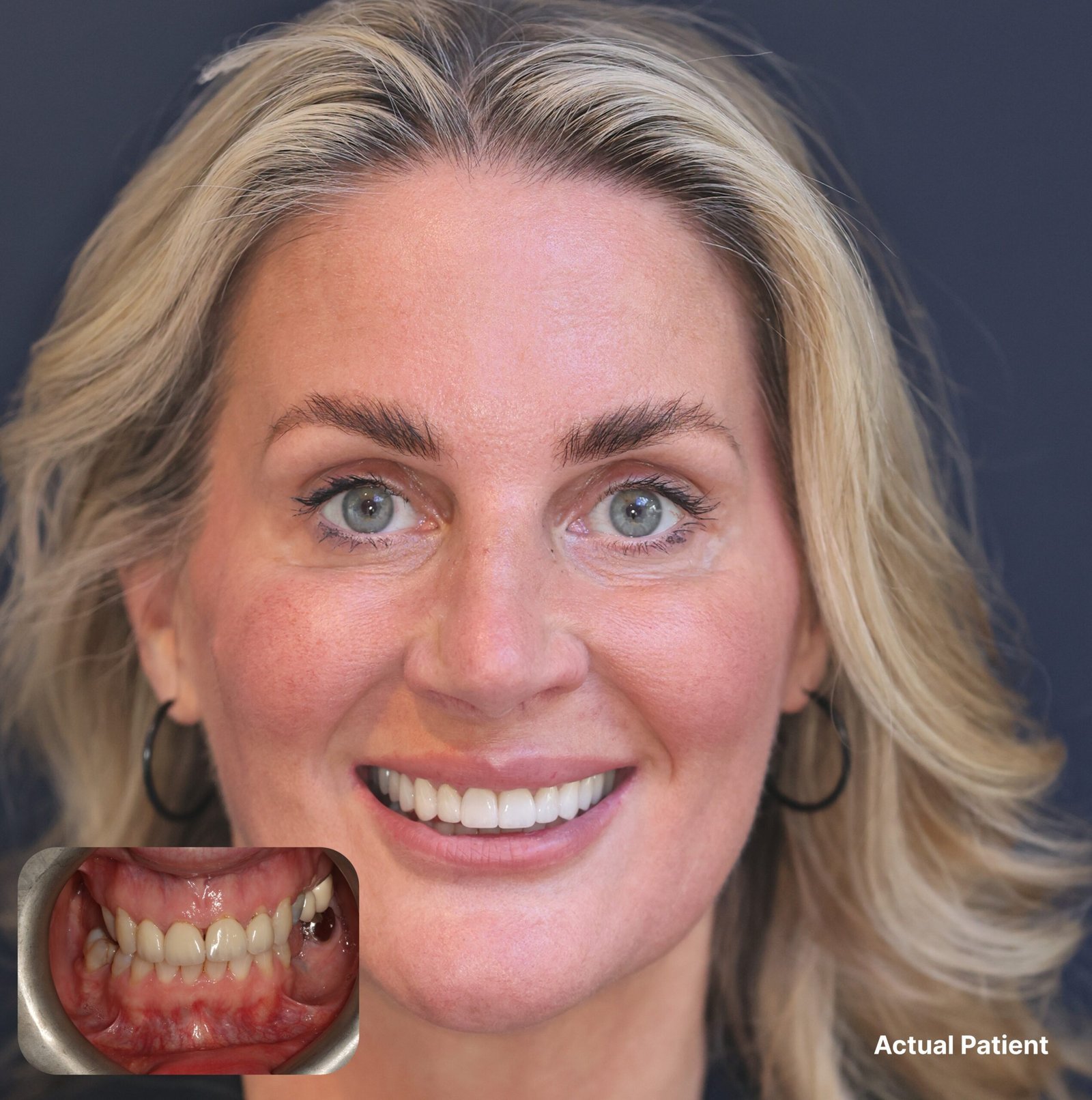
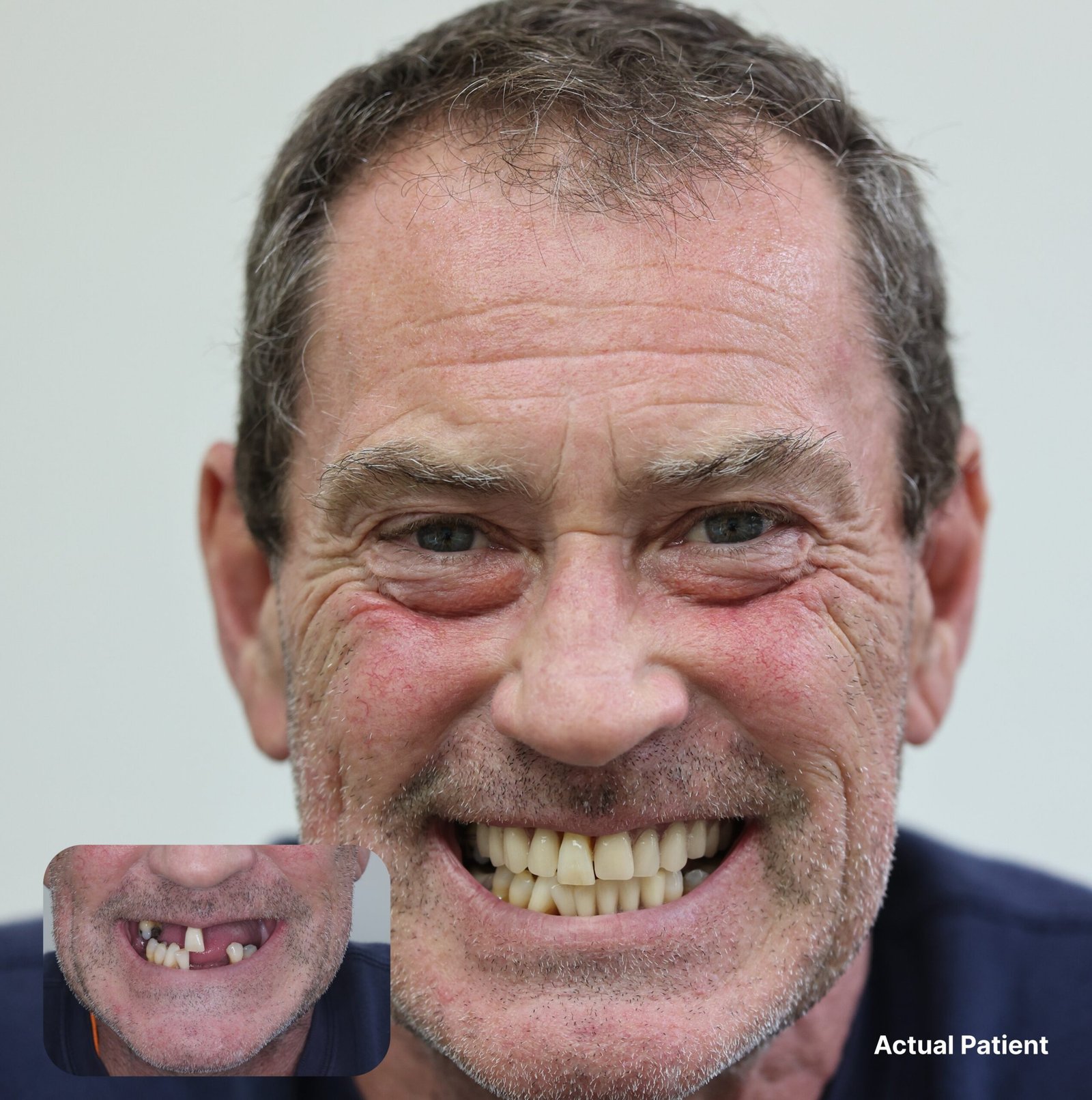
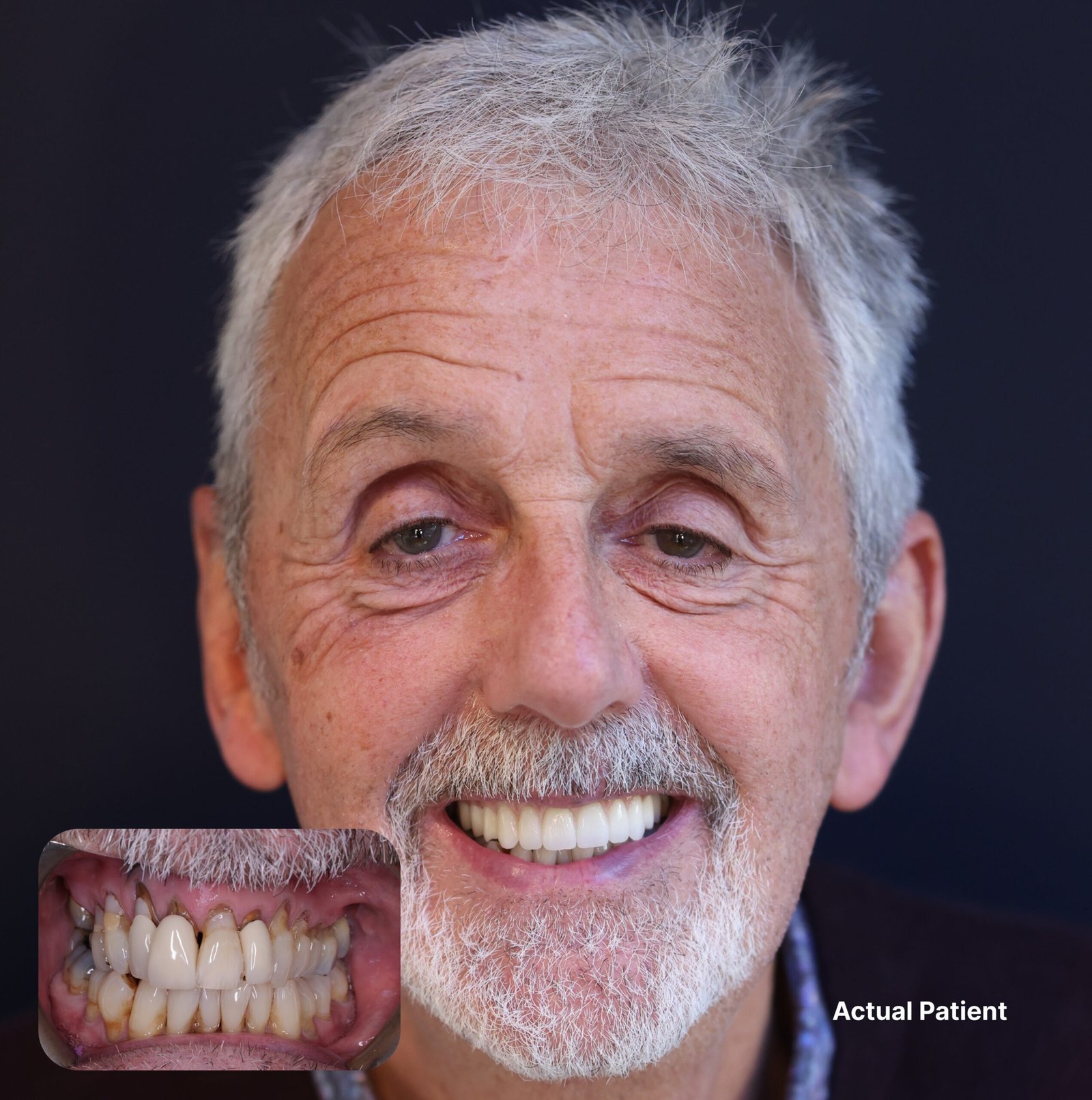
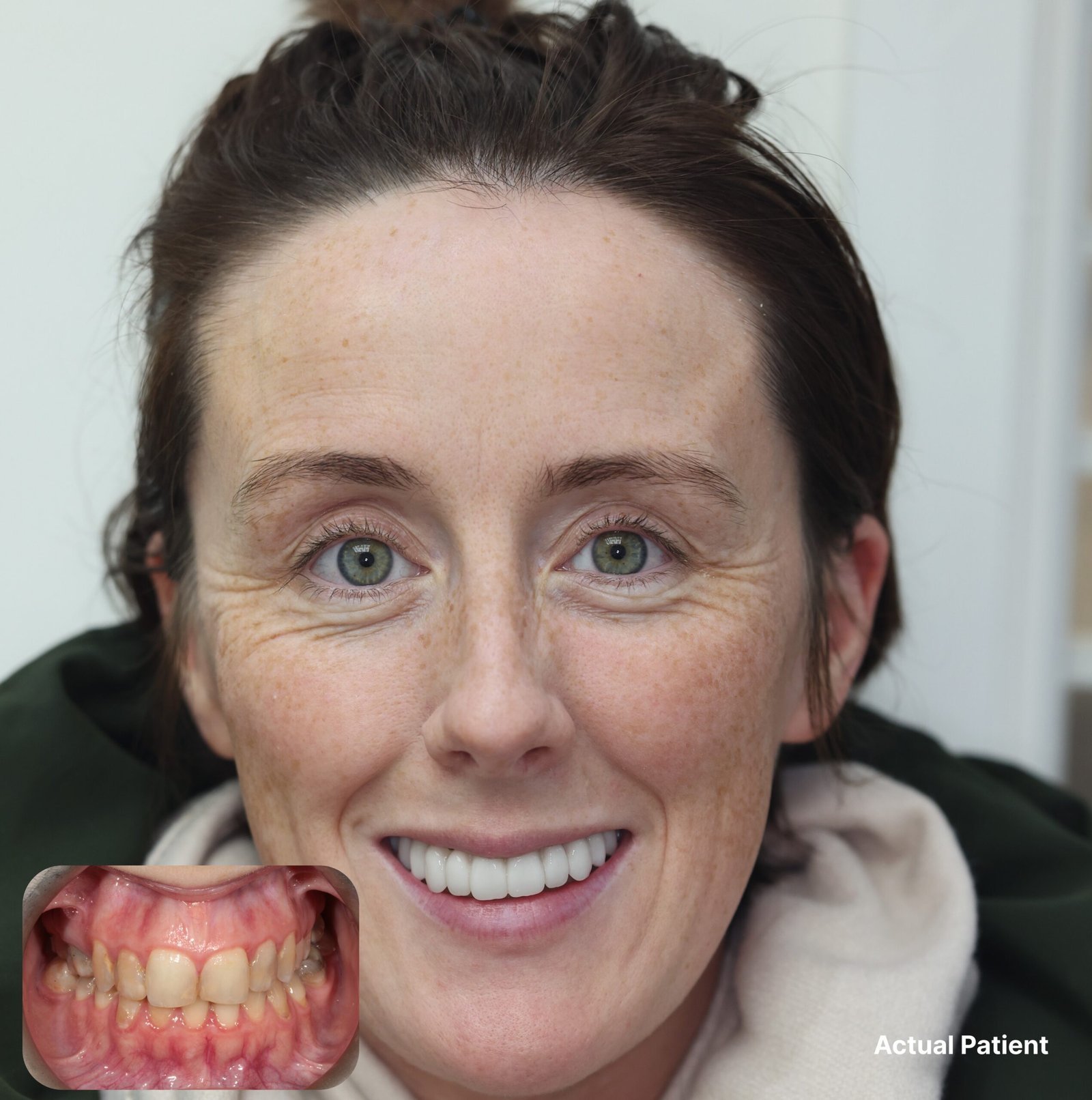
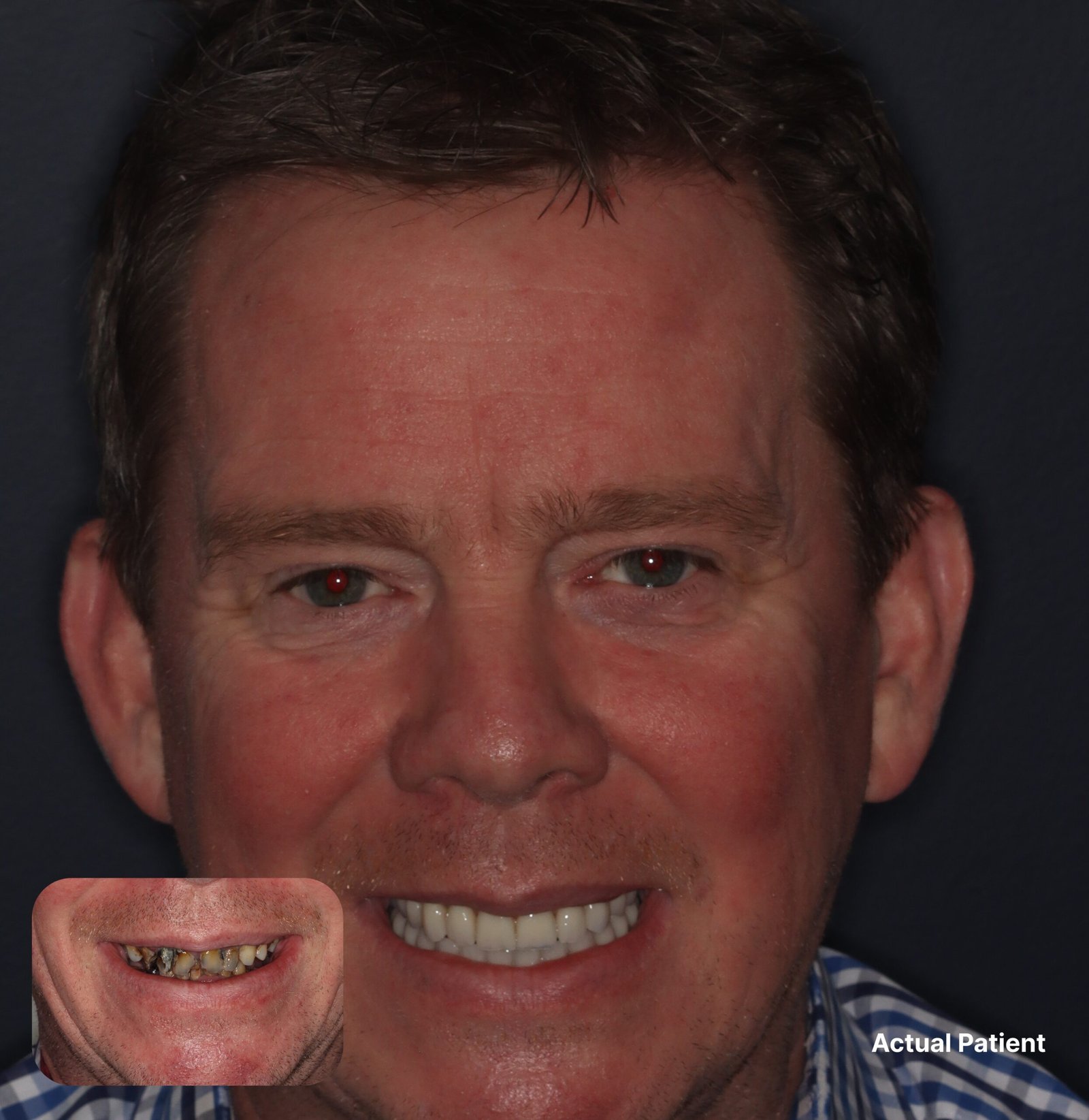
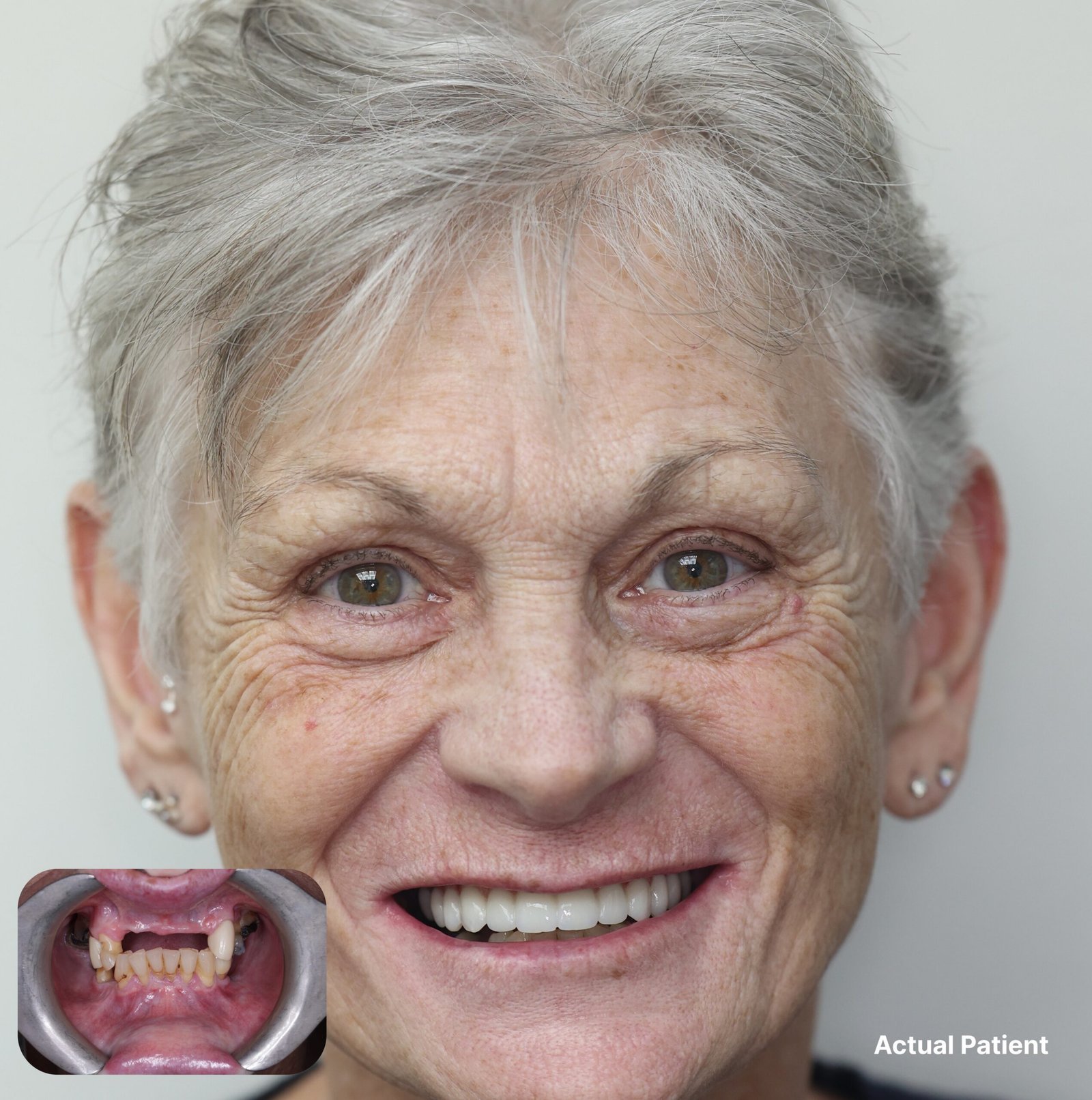
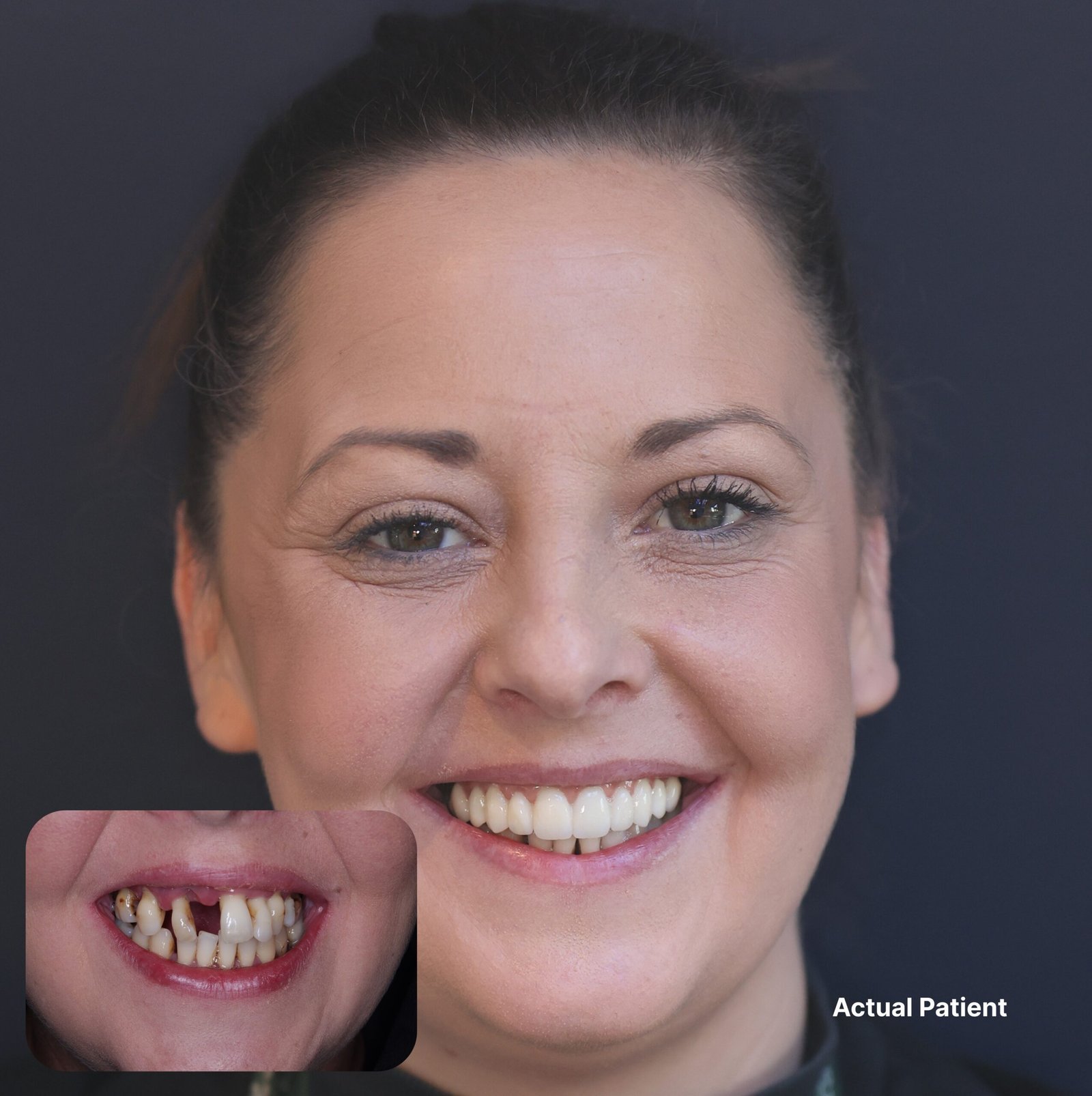
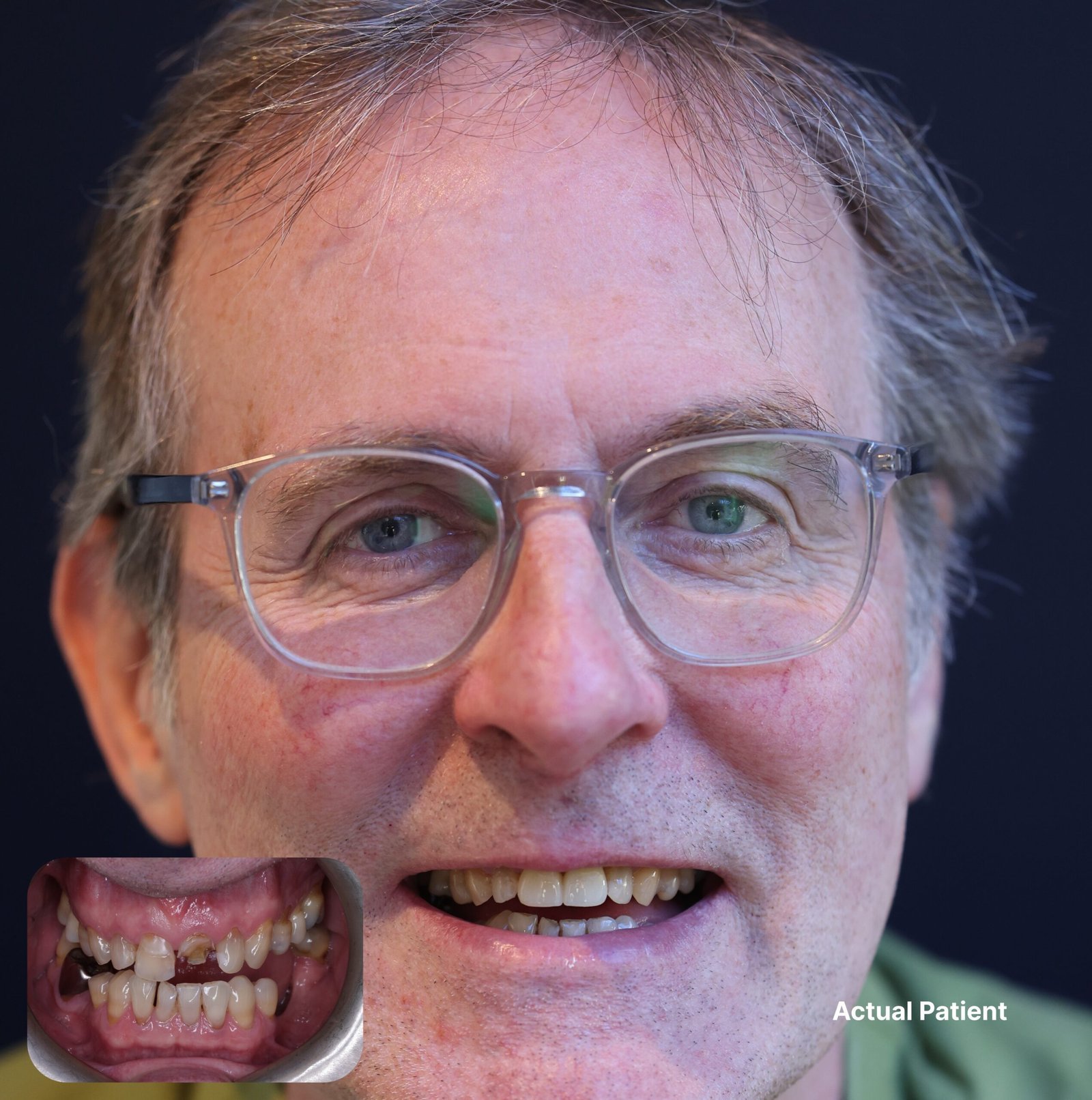
Be our Next Success Story!
Experience personalised dental care designed to help you achieve your dream smile.
What corrective implant treatment actually involves, in plain English
There is no single corrective procedure because no two failed cases are the same. What I bring to every corrective case is a thorough diagnostic process, starting with a full 3D CT scan, and a completely open clinical mind. I do not arrive at a corrective assessment with a predetermined approach. I arrive with the tools to find out exactly what the situation is and then work out the best route forward for that specific patient.
The most common corrective scenarios I encounter are these. A previously placed implant that has failed to integrate and needs removing before a new one can be placed. An implant placed at the wrong angle or in the wrong position, affecting the bite or the appearance. Prosthetic work that has been poorly designed or fitted. Infection around an implant site, sometimes called peri-implantitis, that has been left untreated and has caused bone loss. And full arch reconstructions placed abroad that have subsequently deteriorated.
Each of these has a treatment pathway. None of them are straightforward. All of them require a clinician with the experience and the patience to work through the detail properly.
Not sure where to begin? Speak to someone.
Make an Enquiry
Related Dental Implant Treatments in Cheshire
- Your Dental implant Journey
Here is how I approach a corrective case, from first assessment to resolved outcome
Every corrective case is different. What stays the same across all of them is this: nothing is assumed, nothing is rushed, and nothing proceeds until I know exactly what we are dealing with.
Free 3D Smile Assessment
Your consultation is completely free and includes a full cone beam CT scan focused on the failed or failing treatment. That scan gives me a precise picture of the implant position, the bone condition around it, the health of the surrounding tissue, and what has or has not integrated correctly. You leave with a written clinical assessment and my honest view of the options. No obligation to proceed.
Free · Approximately 45 to 60 minutesFull Case Review and Treatment Planning
Once I have reviewed your scan and clinical history in full, I build a treatment plan specific to your case. This might be a straightforward single implant replacement. It might involve bone grafting to rebuild a site before replanting. It might be a more extensive reconstruction if the failed treatment has caused wider damage. Whatever it is, I walk you through every stage before anything is agreed.
Clinical planning · Tailored entirely to your caseFailed Implant Assessment or Removal
Where the implant needs to be removed, this is carried out carefully under local anaesthetic to preserve as much surrounding bone as possible. Where the implant can be retained but the prosthetic work needs correcting, this stage focuses on the crown, bridge, or bridge framework. Sedation is available throughout.
Clinical procedure · Time varies by case · Sedation availableSite Preparation
Depending on the condition of the bone and tissue at the affected site, preparation may be needed before new implants can be placed. This might involve bone grafting, treatment of peri-implantitis, or a period of healing to allow the site to stabilise. This stage is what most patients with failed treatment have not had addressed properly. It is where the foundation for long-term success is built.
Time varies · Healing monitored throughoutNew Implant Placement
Once the site is ready, new implants are placed, correctly positioned, correctly angled, and using a system I have clinical confidence in. I use the Osstem TSIII system, for which I am a Key Opinion Leader, at both my Northwich and Wilmslow practices. Where the previous failure was due to placement error, I approach this stage with additional surgical care and planning.
Day procedure · Under local anaestheticFinal Restoration
Your permanent crown, bridge, or prosthesis is designed and fitted once the new implants have fully integrated. This is the final appointment and the one where the corrective journey reaches its conclusion. The result should be what you were promised the first time.
Final appointment · Approximately 60 minutes- Why Invest in an Implant
Here is what patients tell me after corrective treatment is complete
Patients who come to me for corrective work have usually been through something difficult. What they describe afterwards is not just physical resolution. It is relief.
The pain or discomfort stops
For patients whose failed implant was causing ongoing pain, swelling, or infection, the first and most significant change is simply the absence of it. The constant awareness of something wrong in their mouth goes away.
They feel heard for the first time since the failure
Many patients have tried to get their concerns addressed before coming to see me. They have been dismissed, minimised, or told the discomfort is normal. Part of what I offer is a thorough, honest clinical assessment that takes the problem seriously from the start.
They have a stable, correct result they can trust
When corrective treatment is complete, the implant is correctly placed, correctly integrated, and correctly restored. That stability, knowing the result is built properly, matters enormously to patients who have already experienced what it feels like when it is not.
They get the smile they were originally promised
The appearance they were shown at the consultation, the result they were told to expect. Corrective treatment is about delivering what the original treatment failed to. Not a compromise. The actual result.
The cost can be spread interest-free
Through Tabeo, corrective treatment can be spread over 12 months at 0% interest. For longer repayment periods, an APR applies. All options are discussed at your consultation before any commitment is made.
- Transparent Pricing
How much does a single corrective implant treatment cost in the UK?
This is the one treatment on this site where it is genuinely not possible to give you a meaningful starting price, and I want to explain why honestly rather than simply avoiding the question.
Corrective implant treatment varies more than any other procedure I carry out because no two failed cases are alike. Removing a single poorly placed implant and replacing it is a very different scope of work to reconstructing a full arch that has progressively deteriorated following overseas treatment. The cost of your specific case depends on what has failed, what the bone condition is at the site, what preparatory work is needed, and what the final restoration involves.
What I can tell you is this: your free 3D Smile Assessment gives me everything I need to provide you with a precise, written, itemised cost for your corrective treatment before you commit to anything. I will not ask you to proceed without knowing the full picture first.
Finance Block:
0% finance via Tabeo
Tabeo offer 12 months’ interest-free finance on corrective implant treatment. For repayment periods beyond 12 months, an APR applies. Full details and representative examples are discussed at your consultation before you commit to anything.
- Talk to Our Team
Not sure if you're suitable? Give us a call. There's no obligation.
We understand that choosing a dental implant is a significant decision. Our team is here to answer any questions, with no pressure, no sales tactics, and no obligation to proceed.
- START WITH A CONSULTATION
What Your Free 3D Smile Assessment Includes
Full 3D CT Scan
A full cone beam CT scan of your jaw — included at no charge. This gives Dr Nikhil a precise picture of your bone density, nerve positions, and implant suitability.
Written Treatment Plan
You will leave with a full written treatment plan and a complete cost breakdown. Nothing is left vague or estimated.
An Honest Conversation
Dr Nikhil will take the time to understand your situation, answer every question, and give you an honest clinical opinion — with no pressure to proceed.
Finance Options Explained
If 0% finance is right for you, we will walk you through the options in detail so you can make a fully informed decision.
Response Within 1 Working Day
We respond to every enquiry within one working day. Often same day.
- MEET YOUR CLINICIAN
Meet Your Implant Dentist, Dr Nikhil Oberai MSc
Corrective implant work requires a level of clinical experience and diagnostic skill that goes well beyond straightforward implant placement. You are dealing with a site that has already been disturbed, often damaged, and in many cases further complicated by time passing without proper treatment. I hold a Master’s Degree in Dental Implantology from the University of Manchester and have been taking on complex corrective cases for over a decade. I teach advanced implant techniques at the same institution as an Honorary Clinical Teaching Fellow, which means I understand the clinical standards these cases should have been held to in the first place.
I take on corrective work that other practices decline. Not because I am reckless about complexity, but because I am experienced enough to assess it properly, honest enough to tell you what is and is not achievable, and confident enough in my approach to take on the difficult cases. If you have been told nothing can be done, please come and get a second opinion before you accept that.
“For every problem, there is a solution. It might be challenging, but it is almost always possible.”
Credentials:
- BDS, University of Manchester (2008)
- MSc Dental Implantology, University of Manchester (2014)
- Honorary Clinical Teaching Fellow — University of Manchester
- Key Opinion Leader — Osstem UK
- External Examiner, BAIRD Implant Course
- Award Winning dentistry
- GDC No. 150126
- Frequently Asked Questions
Frequently Asked Questions About Corrective Implant Treatment
Here are the questions our corrective implant patients ask most often — answered honestly and in plain language.
In the majority of cases yes, though the extent of what is possible depends on the condition of the bone at the failed site, how long ago the failure occurred, and what caused it. A thorough 3D CT scan assessment is the only reliable way to establish what is achievable. I would strongly recommend getting a proper assessment before drawing any conclusions.
Yes. I treat this regularly. Patients who have returned from overseas dental treatment with complications ranging from poorly fitting prosthetics to failed integration to ongoing infection. The fact that the original treatment was placed abroad makes the case more complex, but it does not make it uncorrectable in most instances. Bring whatever records and scans you have and I will take a full look.
The most common signs are pain or tenderness at the implant site, particularly when biting or pressing on it. Swelling or bleeding around the gum at the implant. Movement or looseness in the implant or crown. A visible change in the surrounding gum. Any of these warrant an assessment as soon as possible, particularly if they persist for more than a few days after the original placement.
Corrective implant treatment varies more in cost than any other procedure I carry out because no two failed cases are identical. A single implant removal and replacement is a very different scope of work to a full arch corrective reconstruction. Your exact written cost is confirmed at the free 3D Smile Assessment before any commitment. 0% finance through Tabeo is available.
Not necessarily. In some cases the failed implant can be removed and replaced in a single procedure. In other cases, particularly where there is bone loss or infection around the site, a period of preparation and healing is needed before new implant placement. I will not cut corners on this stage. Getting the foundation right is what determines whether the corrective treatment succeeds long term.
Yes. I would always encourage a second opinion before accepting a conclusion about what is not possible. I regularly see patients who have been told their situation is beyond correction and who leave my practice with a clear treatment plan. The previous assessment may have been made without the experience or the tools to find a solution. Let me make that determination properly, with a full CT scan.
All corrective procedures are carried out under local anaesthetic and sedation is available throughout. The experience is no more uncomfortable than the original placement should have been. There may be some tenderness in the days following surgery, managed with standard pain relief and detailed aftercare guidance.
Call Croft Dental in Wilmslow on 01625 523 524, or Brunner Court in Northwich on 01606 440 394, or complete the enquiry form above. My team will be in touch within one working day, usually the same day.