Bone Grafting in Cheshire with Dr Nikhil Oberai
Being told you do not have enough bone for implants can feel like the end of the conversation. In most cases, it is the beginning of a different one. Bone grafting rebuilds the foundation that makes implant treatment possible.
You have been told your bone is not good enough. I want to explore whether that is the whole story.
Bone loss in the jaw is one of the most common reasons patients are told implants are not possible for them. It happens gradually after a tooth is lost, as the jawbone that used to support the root begins to resorb. The longer a tooth has been missing, the more bone has typically been lost. And for some patients, a previous failed implant or longstanding gum disease has accelerated the process further.
The important thing to understand is that being told your bone is insufficient is not the same as being told nothing can be done. For many patients, bone grafting restores exactly the foundation needed for a successful implant. The question is whether it is the right approach for your specific anatomy, your timeline, and your goals, and that is what the free 3D CT scan assessment is designed to establish.
- Why patients come to see me
Do any of the points below sound familiar?
You have been told your jawbone is too thin or shallow for implants
A bone density or volume assessment that falls below the threshold for conventional implant placement is one of the most common clinical findings in patients who want implants but have been missing teeth for some time. It is a real constraint. It is also, in many cases, a temporary one.
You have been waiting to get implants and now find the window may have closed
Patients who put off implant treatment for financial reasons, anxiety, or uncertainty often discover that the bone at the extraction site has receded significantly in the time that has passed. The urgency patients were not given at the time of the extraction becomes clear in retrospect.
You had an implant that failed and the site is now damaged
Failed implants, particularly those that developed infection, often leave behind a site where bone loss has occurred. Before a replacement implant can be placed, that site needs to be rebuilt. Bone grafting is how that is done.
You have been told the only alternative is a denture or bridge
When bone loss rules out conventional implants, some clinicians present dentures or bridges as the only remaining option. In many cases this is not the complete picture. Bone grafting, and in some situations zygomatic implants, can change what is possible significantly.
The good news is, a single dental implant can fix all of this, for good.
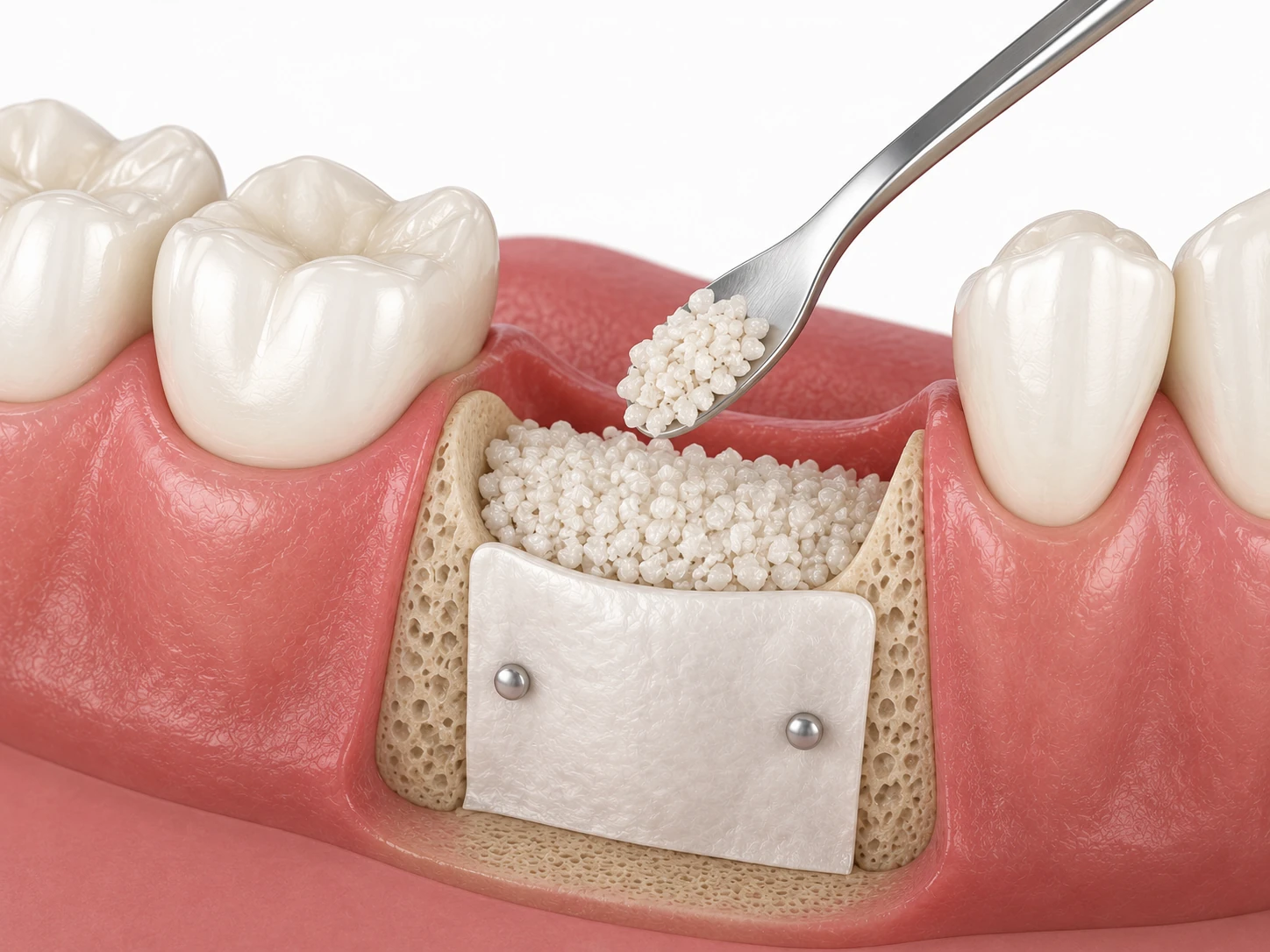
Bone grafting is a procedure that rebuilds the volume and density of the jawbone at a specific site, creating the foundation that a dental implant needs to integrate successfully. It is well-established, routinely performed, and in the right cases produces predictable results that make implant treatment possible where it previously was not.
I perform bone grafting procedures at both my Northwich and Wilmslow practices as part of a broader implant treatment plan. In many cases the graft is placed at the same appointment as a tooth extraction, which reduces the total number of appointments and allows healing to begin immediately. In others it is a separate preparatory procedure that takes place in advance of implant placement.
The approach depends entirely on your specific anatomy, which is why the 3D CT scan is the essential starting point for every case.
- Real Patient Results
Thousands of Smiles Transformed
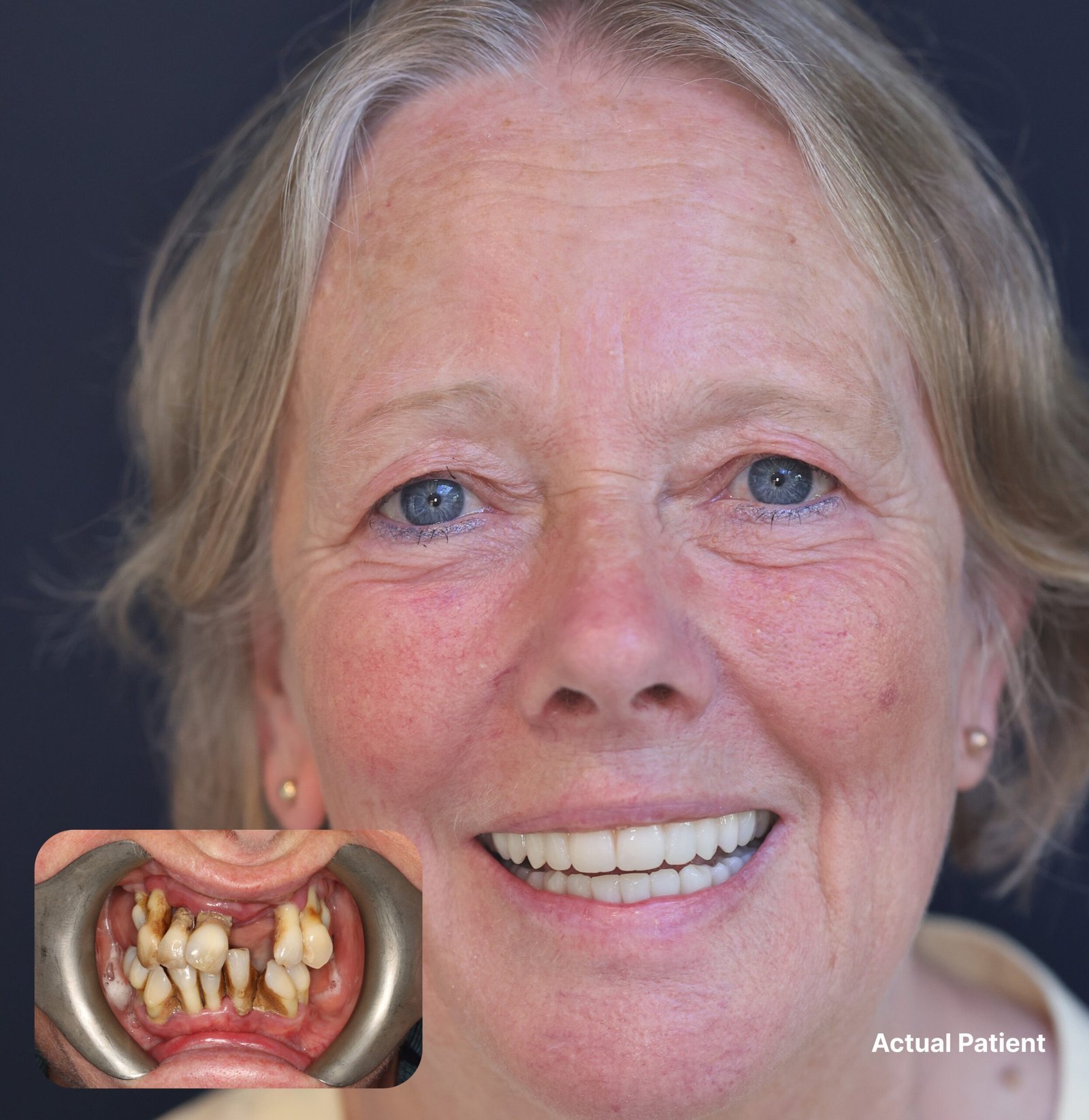
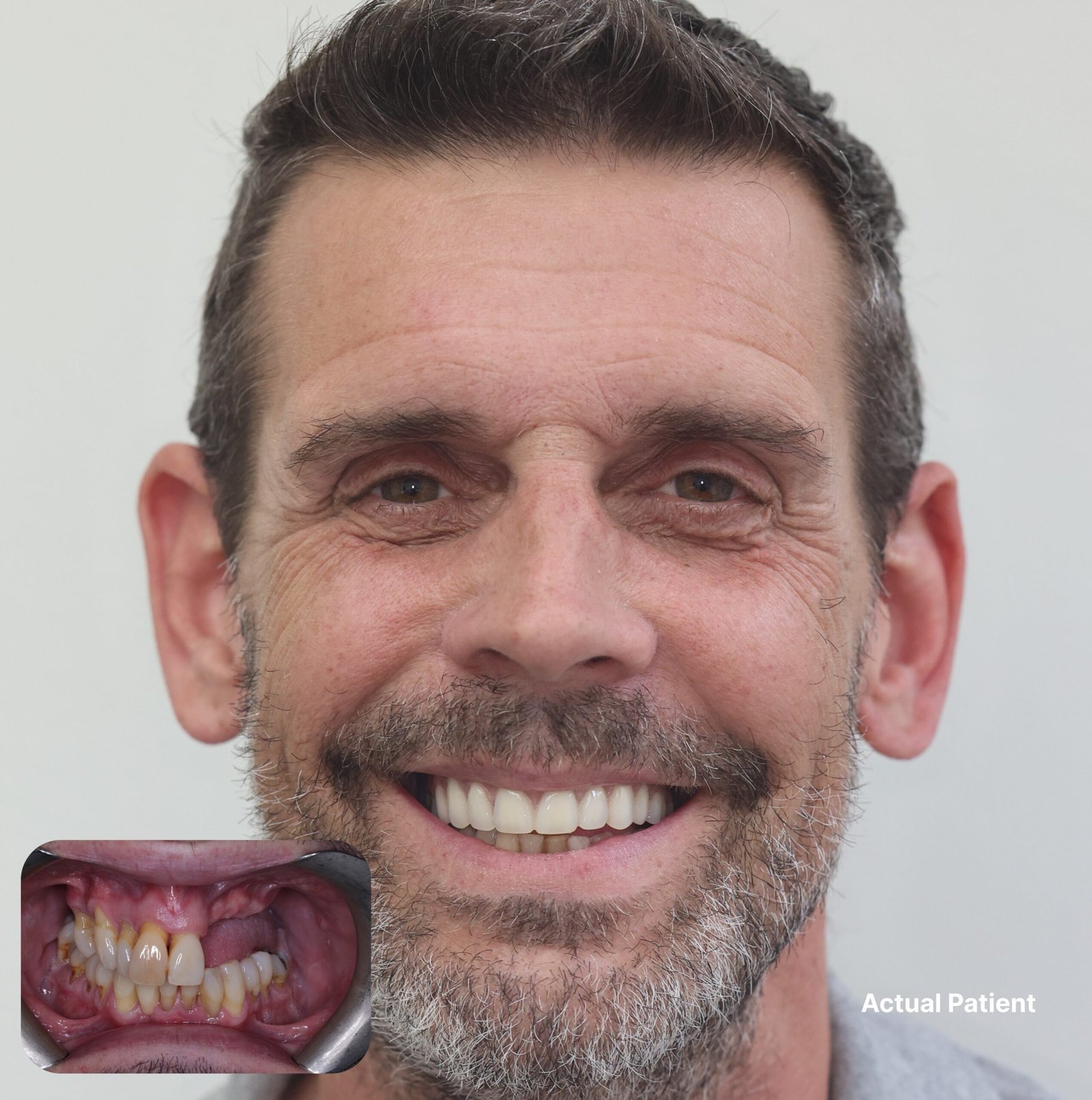
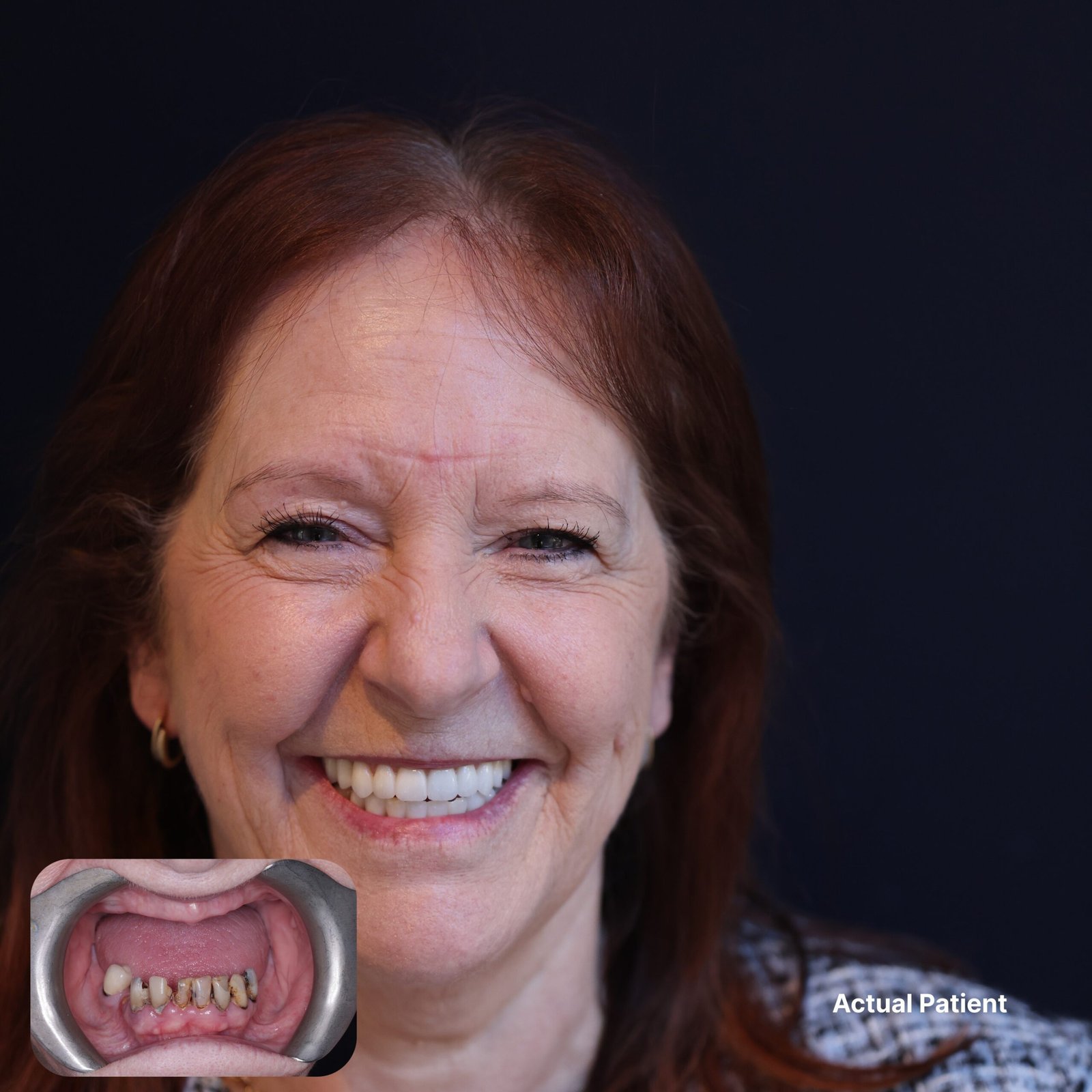
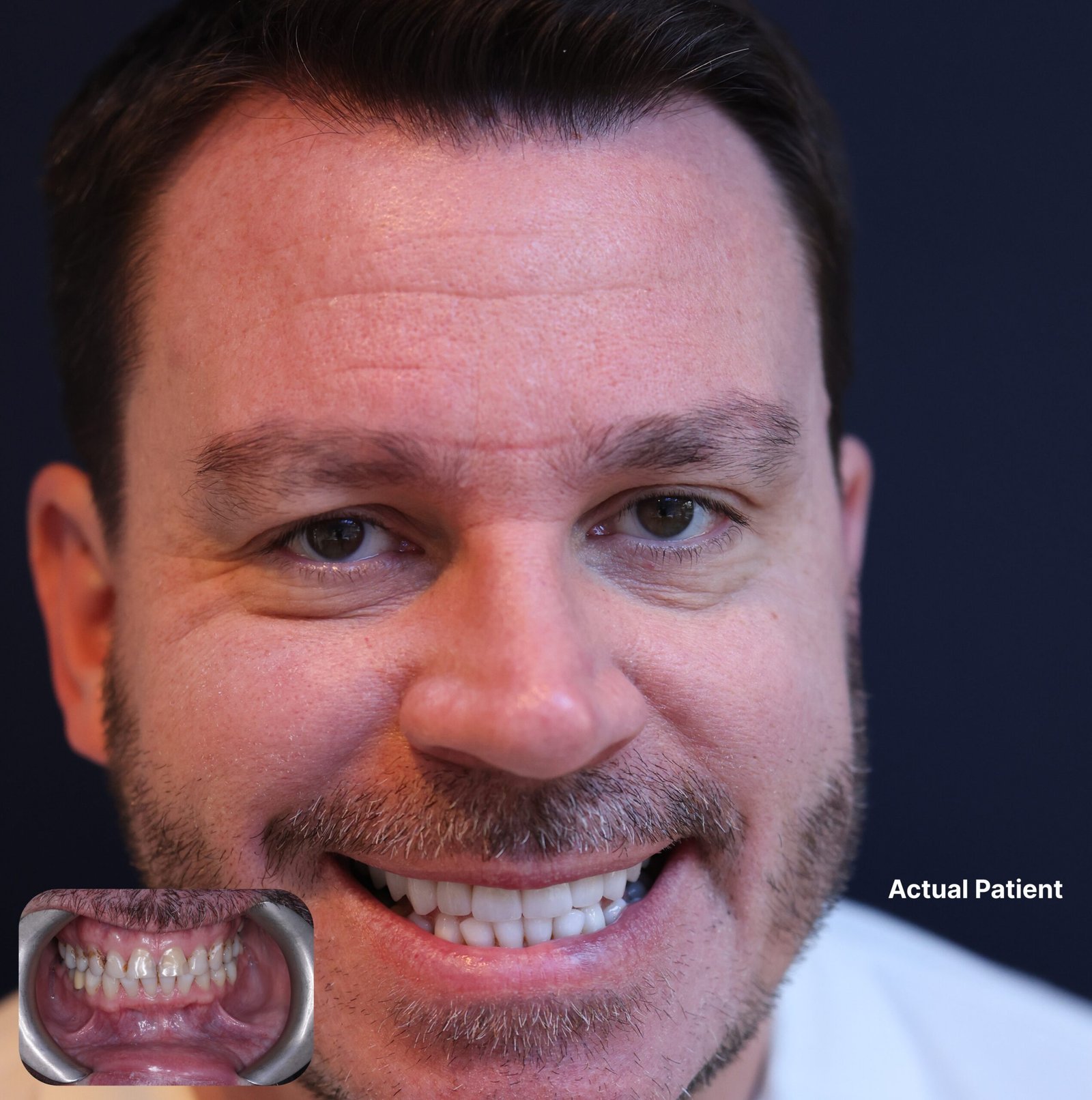
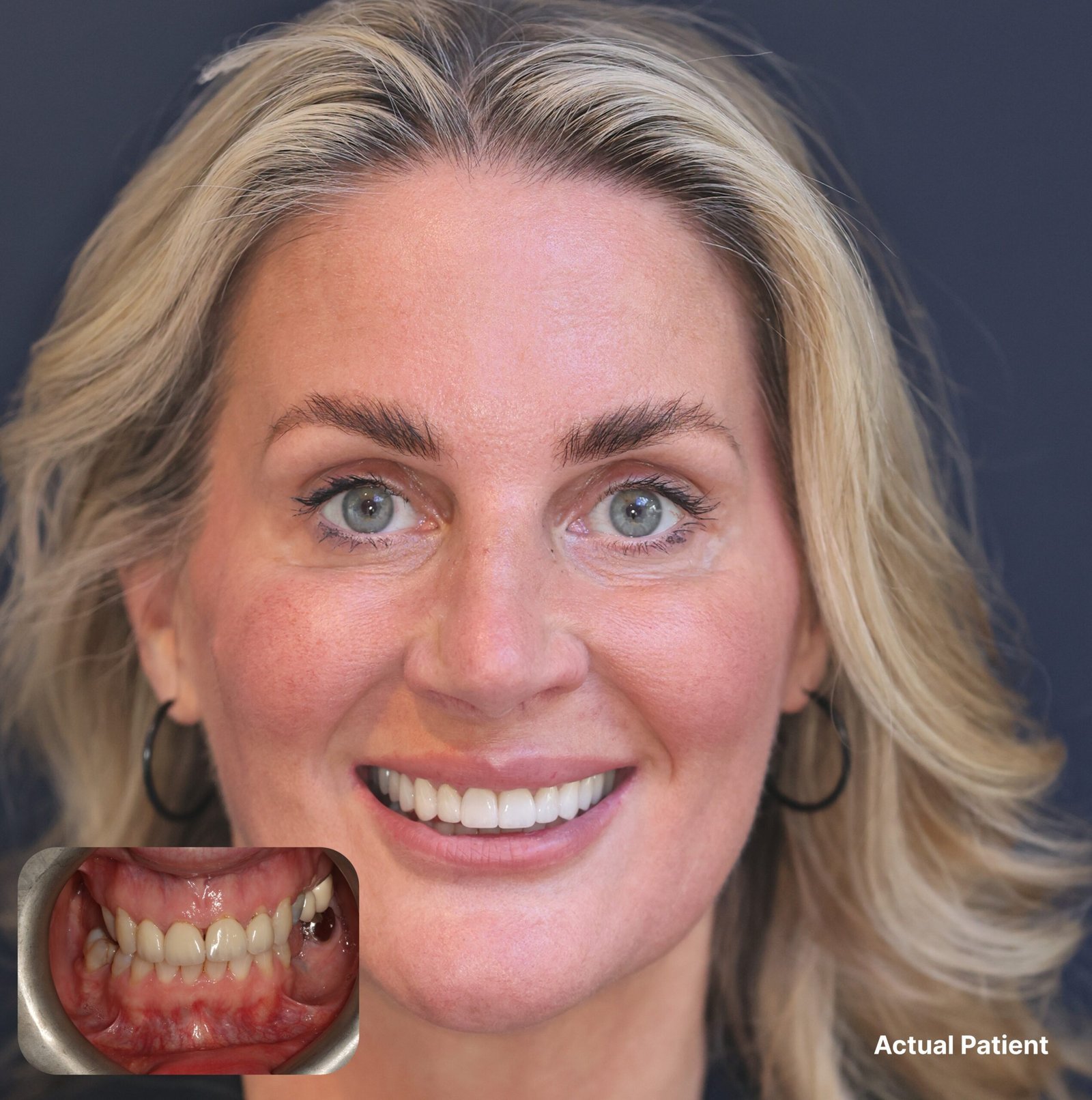
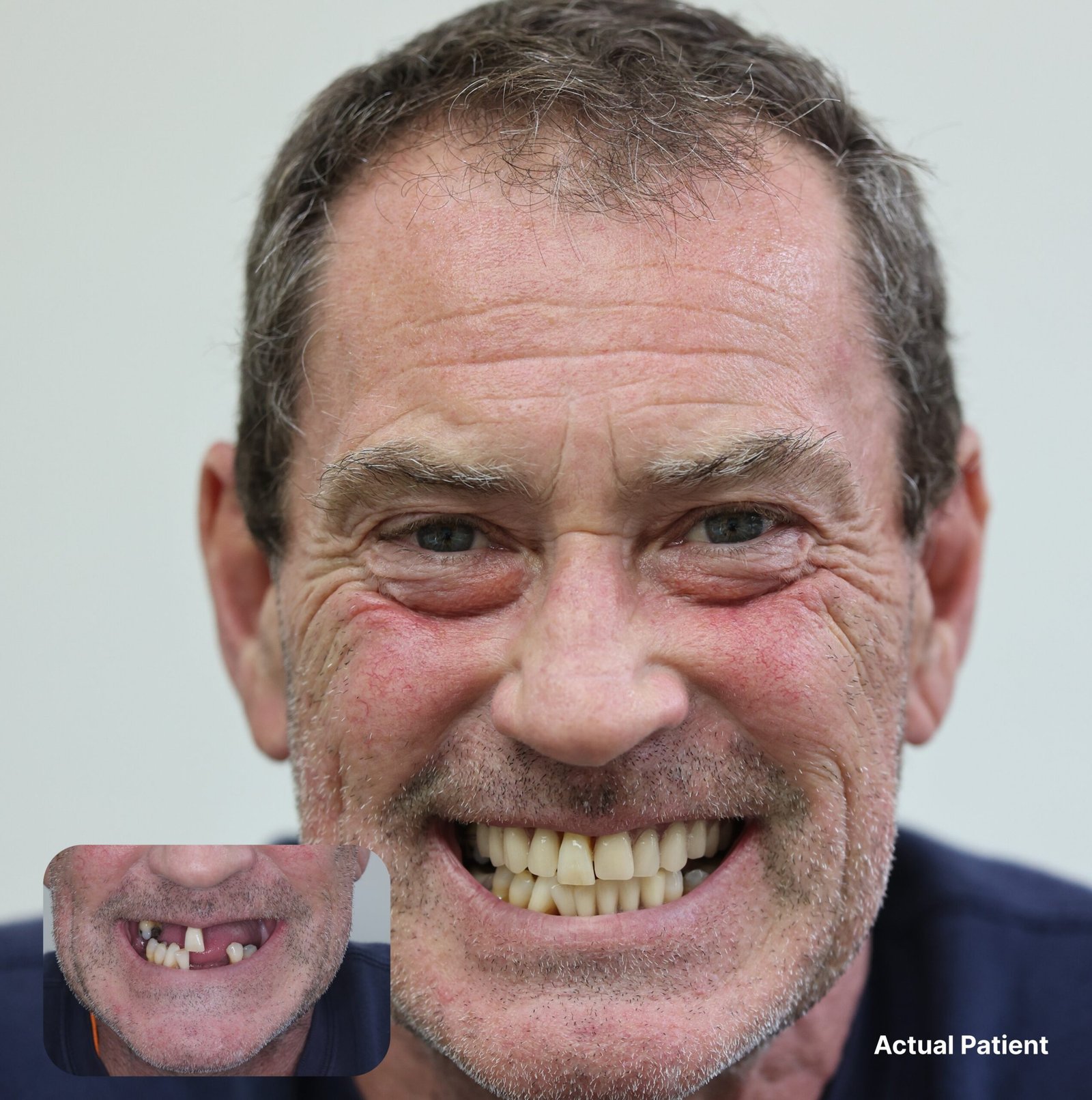
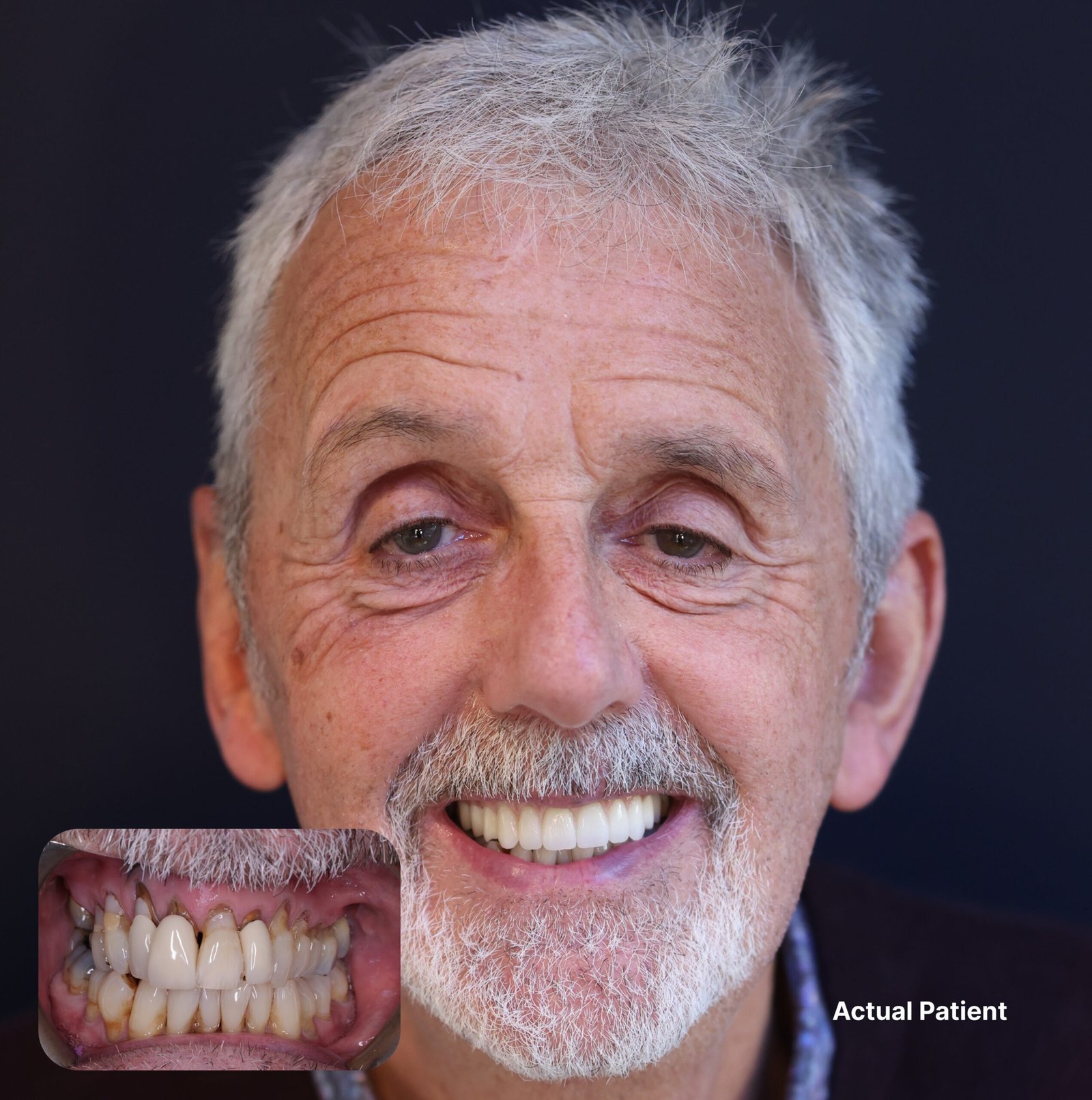
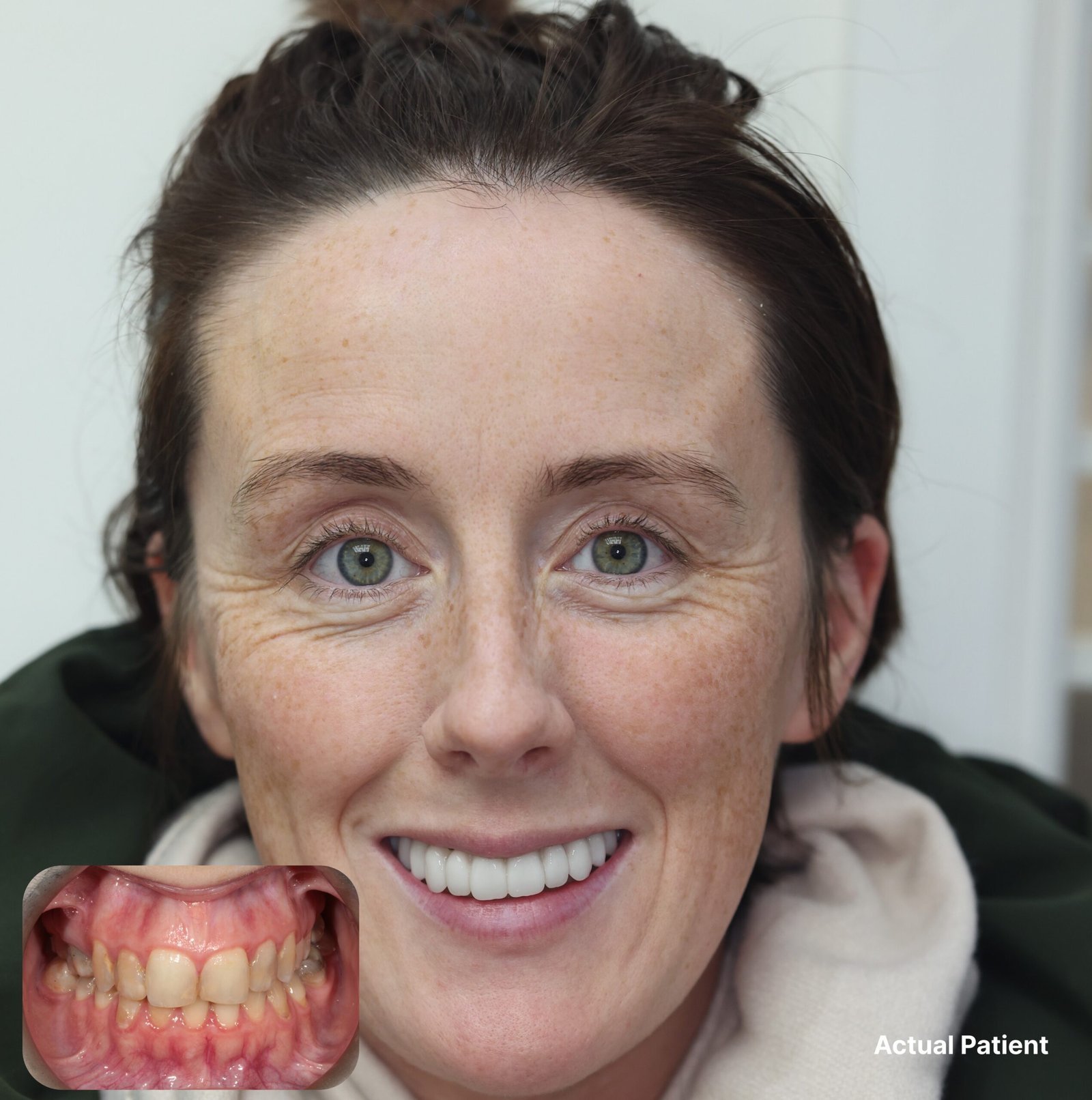
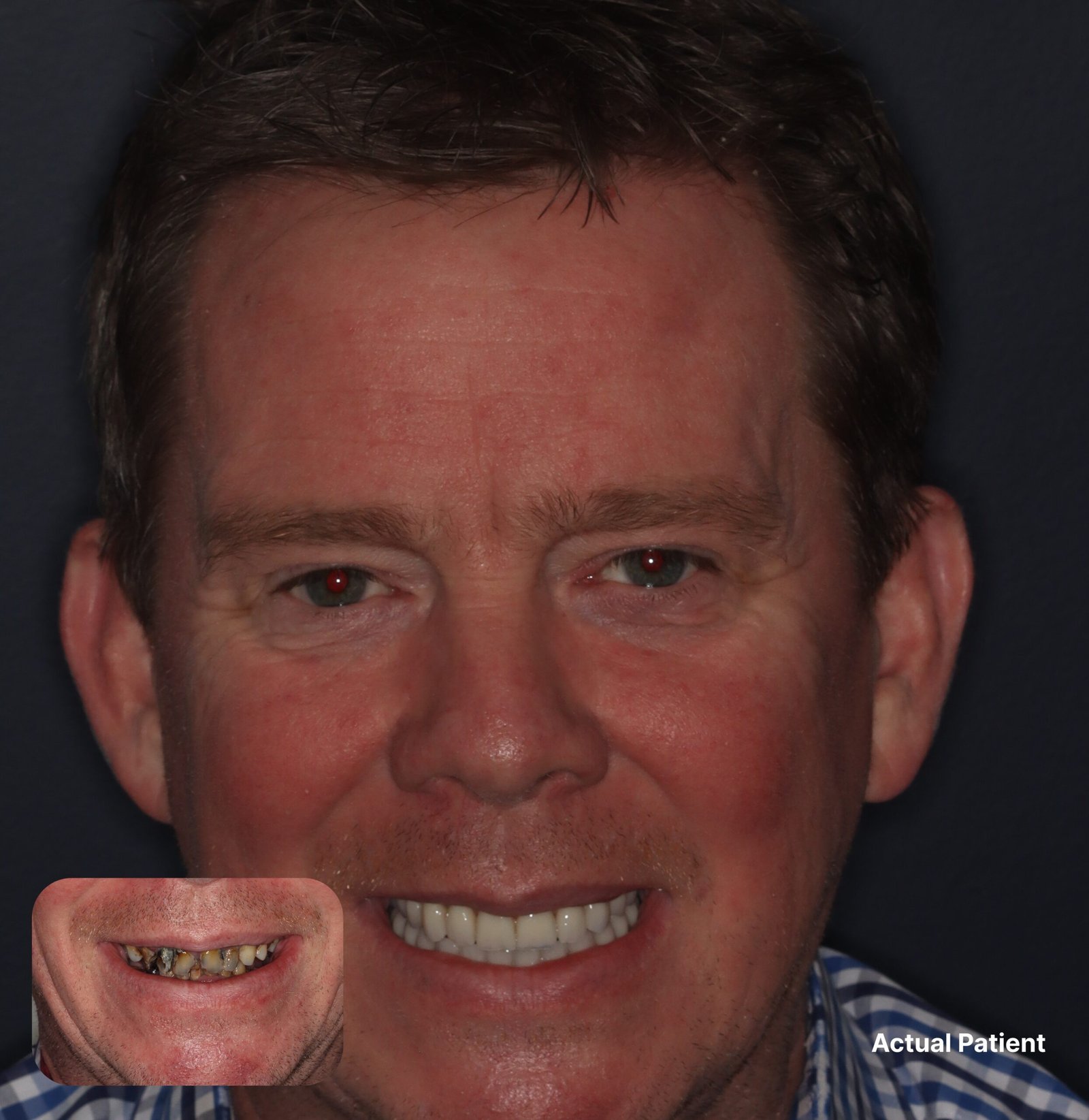
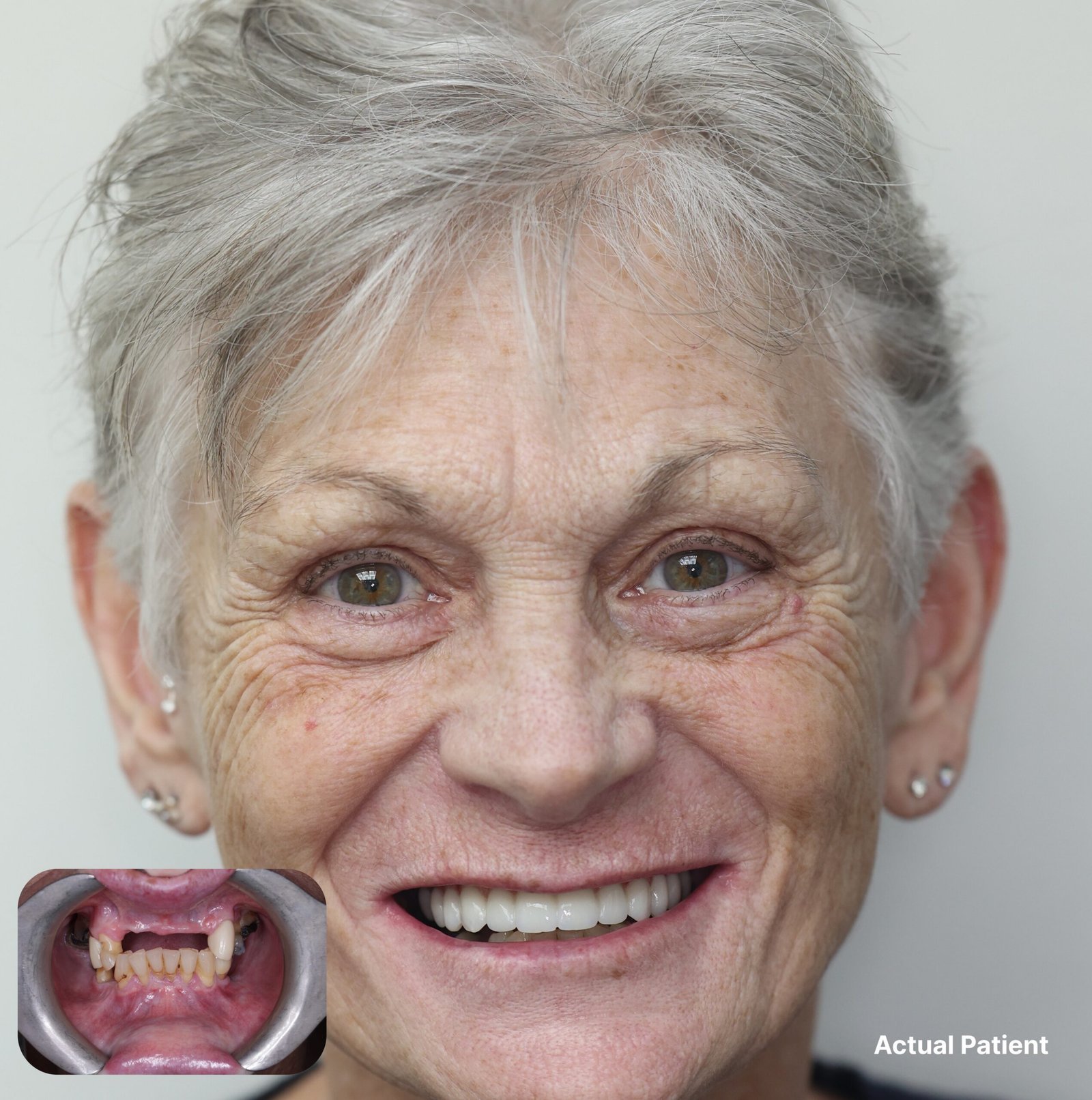
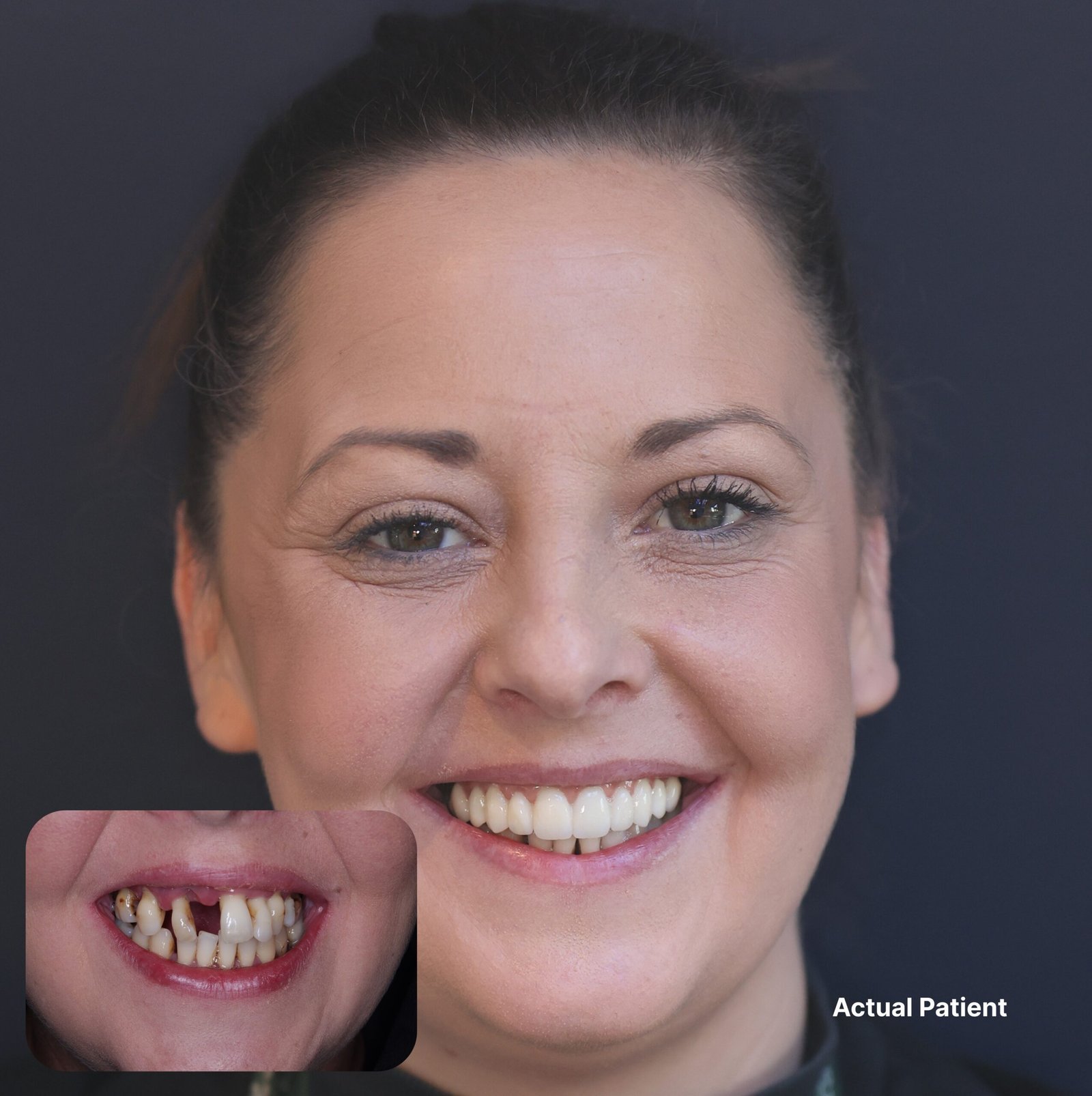
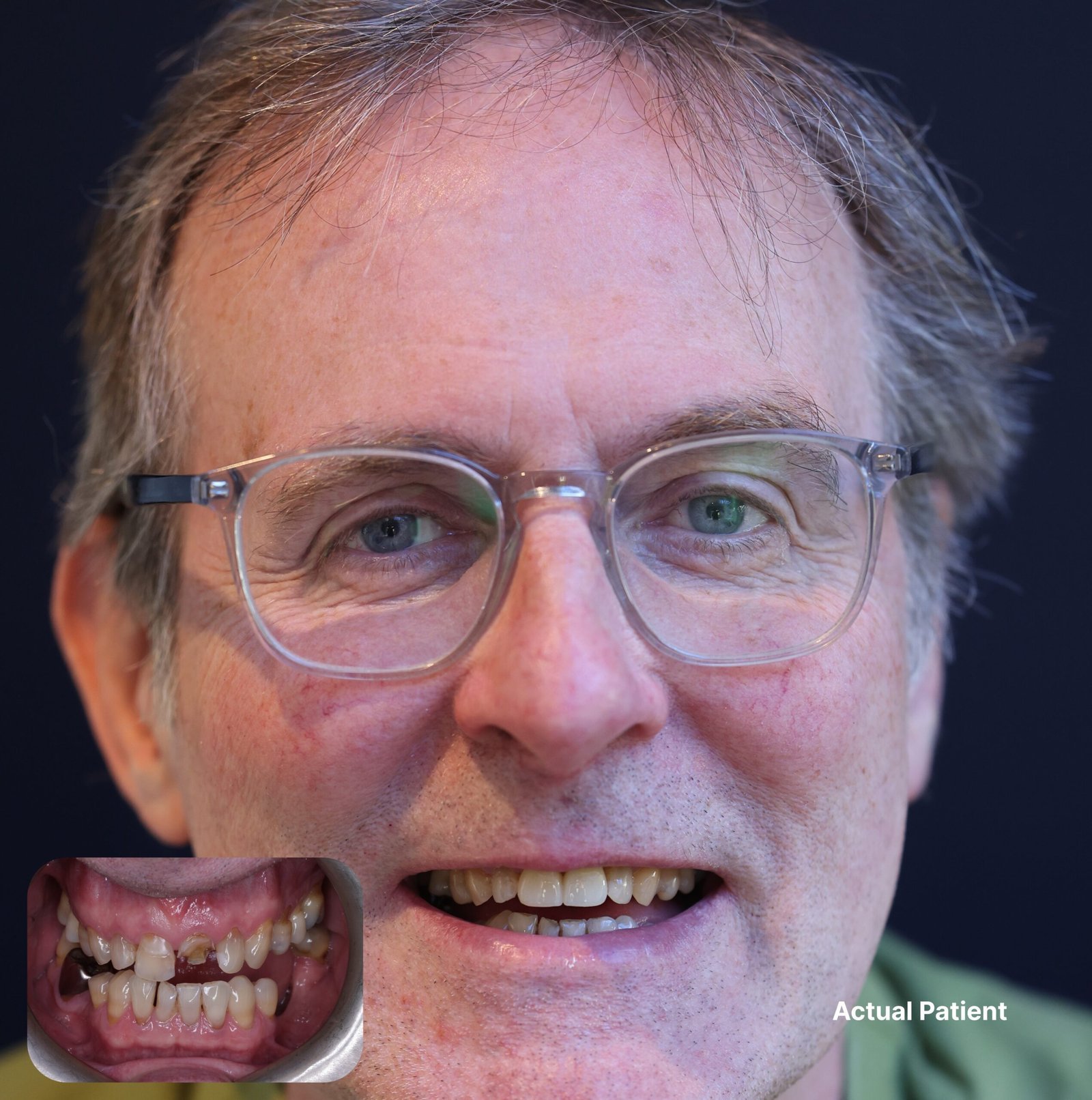
Be our Next Success Story!
Experience personalised dental care designed to help you achieve your dream smile.
What bone grafting actually involves, in plain English
When a tooth is removed, the bone that surrounded the root begins to resorb because the stimulation that kept it healthy is gone. Over time, both the height and width of the bone at that site reduce. If enough time passes, or if gum disease or infection has accelerated the process, the bone may no longer have sufficient volume to support a dental implant securely.
A bone graft introduces new bone material to the deficient site. This material acts as a scaffold that encourages the body to grow new bone in the area. Over a period of several months the graft matures, the new bone consolidates, and the site becomes suitable for implant placement.
The graft material itself can come from several sources. In many cases I use synthetic bone substitute material, which is safe, predictable, and does not require a second surgical site to harvest donor bone. In some more complex cases, bone taken from elsewhere in your own jaw may be the better option. I will always explain which approach is most appropriate for your specific case and why.
The procedure is carried out under local anaesthetic. Sedation is available. Recovery is typically straightforward, with some swelling and tenderness in the days following the procedure managed with standard pain relief and detailed aftercare guidance from my team.
Not sure where to begin? Speak to someone.
Make an Enquiry
Related Dental Implant Treatments in Cheshire
- Your Dental implant Journey
Here is exactly what the bone grafting and implant process involves
Bone grafting is a preparatory procedure, not a standalone treatment. It is the foundation stage that makes implant placement possible. Here is the complete journey from your first consultation to your finished implant.
Free 3D Smile Assessment
Your consultation is completely free and includes a full cone beam CT scan. The scan gives me a precise measurement of the bone available at the site where an implant is needed, the density of that bone, and whether a graft is required before placement can proceed. You leave with a written treatment plan and a complete cost breakdown. No pressure to proceed.
Free · Approximately 45 minutesFull Case Planning
Once I have reviewed your CT scan in detail, I plan the grafting procedure precisely. I decide on the most appropriate graft material for your case, whether the graft will be placed at the same appointment as an extraction or as a separate procedure, and how long the healing period will need to be before implant placement can begin. I walk you through every stage before anything is agreed.
Clinical planning · Specific to your anatomyBone Graft Procedure
The graft is placed under local anaesthetic at the deficient site. The procedure typically takes 45 to 90 minutes depending on the extent of the grafting required. Sedation is available throughout. In cases where a tooth is being extracted at the same appointment, the graft is placed immediately into the extraction socket before closure, which preserves the maximum amount of bone volume from the outset.
Day procedure · 45 to 90 minutes · Sedation availableHealing Period
The graft material takes time to integrate and for new bone to form. This healing period is typically three to six months depending on the size and location of the graft. During this time I monitor the site at regular check-in appointments. You carry on with your normal life throughout.
3 to 6 months · Monitored throughoutImplant Placement
Once the graft has matured and the bone volume is confirmed as sufficient, the dental implant is placed at the prepared site. This is the stage that the grafting was building towards. With the new bone in place, the implant has the stable foundation it needs to integrate successfully.
Day procedure · Under local anaestheticFinal Crown or Restoration
After the implant has integrated with the bone, the final crown, bridge, or prosthesis is designed and fitted. This is the completed result, the implant in its permanent form, supported by the bone that was rebuilt to make it possible.
Final appointment · Approximately 60 minutes- Why Invest in an Implant
Here is what bone grafting makes possible
Bone grafting is not the end goal. It is what makes the end goal possible. These are the outcomes patients reach because the grafting stage was done properly.
They become suitable for implants when they were not before
This is the fundamental benefit. A patient who was told implants were not possible for them, who had a bone graft carried out correctly, who waited for the healing period, and who then received a successfully integrated implant. That journey starts with the decision to graft.
Their implant has the foundation to last a lifetime
The long-term success of an implant is directly related to the quality and volume of bone supporting it. An implant placed into properly grafted bone has the same prospects for longevity as one placed into naturally sufficient bone. The graft does not compromise the result. It enables it.
The surrounding natural teeth are protected
Bone loss at an extraction site does not stay contained. Over time it affects the supporting bone of the adjacent teeth too. Bone grafting at the time of extraction, or in advance of implant placement, arrests that process and protects what remains.
They avoid the more complex alternatives
For patients with moderate bone loss, a bone graft followed by a conventional implant is typically a more straightforward route than the alternatives, such as zygomatic implants, which become necessary when loss is more severe. Addressing bone loss earlier keeps the treatment pathway simpler.
The cost can be spread interest-free
Through Tabeo, the cost of bone grafting as part of an implant treatment plan can be spread over 12 months at 0% interest. For longer repayment periods, an APR applies. All options are discussed at your consultation before any commitment is made.
- Transparent Pricing
How much does bone grafting cost in Cheshire?
The cost of bone grafting depends on the extent of the graft required, whether it is being placed at the same time as a tooth extraction, and whether a single site or multiple sites need to be addressed. Bone grafting at my practices in Northwich and Wilmslow is priced as part of an overall implant treatment plan. Your exact written cost for both the grafting and the implant treatment is confirmed at the free 3D Smile Assessment, before you commit to anything.
In many cases bone grafting adds less to the overall treatment cost than patients expect, particularly when it is planned alongside an extraction or an implant procedure from the outset. What it does add is significantly to the long-term prospects of the implant itself.
Finance Block:
0% finance through Tabeo
Tabeo offers 12 months’ interest-free finance on implant treatment including bone grafting where required. For repayment periods beyond 12 months, an APR applies. Full details and representative examples are discussed at your consultation before you commit to anything.
- Talk to Our Team
Not sure if you're suitable? Give us a call. There's no obligation.
We understand that choosing a dental implant is a significant decision. Our team is here to answer any questions, with no pressure, no sales tactics, and no obligation to proceed.
- START WITH A CONSULTATION
What Your Free 3D Smile Assessment Includes
Full 3D CT Scan
A full cone beam CT scan of your jaw — included at no charge. This gives Dr Nikhil a precise picture of your bone density, nerve positions, and implant suitability.
Written Treatment Plan
You will leave with a full written treatment plan and a complete cost breakdown. Nothing is left vague or estimated.
An Honest Conversation
Dr Nikhil will take the time to understand your situation, answer every question, and give you an honest clinical opinion — with no pressure to proceed.
Finance Options Explained
If 0% finance is right for you, we will walk you through the options in detail so you can make a fully informed decision.
Response Within 1 Working Day
We respond to every enquiry within one working day. Often same day.
- Making the right choice
What is the difference between bone grafting and zygomatic implants for patients with bone loss?
It is the question patients ask most often before booking. Here is the honest comparison.
| Bone Graft then Implants | Zygomatic Implants | Denture | |
|---|---|---|---|
| Suitable for moderate bone loss | Yes | Yes, but designed for severe loss | Yes |
| Suitable for severe bone loss | Depends on extent | Yes, specifically designed for this | Yes |
| Bone graft required | Yes | No | No |
| Time to final implant | 9 to 15 months total | Months, often same day fixed teeth | Immediate |
| Fixed permanently | Yes | Yes | No |
| Preserves jawbone | Yes | Yes | No |
| Long-term outcome | Excellent when planned well | Excellent for right candidate | Bone continues to recede |
- MEET YOUR CLINICIAN
Meet Your Implant Dentist, Dr Nikhil Oberai MSc
Bone grafting is a surgical procedure that requires precision, patience, and a thorough understanding of how bone heals and integrates over time. It is also the stage of implant treatment that is most often rushed or skipped when corners are cut. I have been performing bone grafting procedures as part of complex implant treatment plans for over a decade. I hold a Master’s Degree in Dental Implantology from the University of Manchester and teach these techniques at the same institution as an Honorary Clinical Teaching Fellow.
The patients I find most satisfying to treat with bone grafting are the ones who arrived having been told implants were not possible for them. Taking the time to plan the grafting stage correctly, monitoring the healing carefully, and then placing a successfully integrating implant is exactly the kind of clinical work I trained for.
“For every problem, there is a solution. It might be challenging, but it is almost always possible.”
Credentials:
- BDS, University of Manchester (2008)
- MSc Dental Implantology, University of Manchester (2014)
- Honorary Clinical Teaching Fellow — University of Manchester
- Key Opinion Leader — Osstem UK
- External Examiner, BAIRD Implant Course
- Award Winning dentistry
- GDC No. 150126
- Frequently Asked Questions
Frequently Asked Questions About Bone Grafting
Here are the questions our single implant patients ask most often — answered honestly and in plain language.
Bone grafting is a surgical procedure that adds bone material to a site in the jaw where the natural bone has become insufficient to support a dental implant. It is needed when teeth have been missing for some time and the bone has resorbed, when a previous failed implant has left behind a damaged site, or when gum disease has caused bone loss. The graft creates the foundation that allows an implant to be placed successfully.
The procedure is carried out under local anaesthetic and sedation is available throughout. There is typically some swelling and tenderness in the days following the procedure, managed with standard pain relief. Most patients find the experience more manageable than they anticipated. My team provides detailed aftercare guidance to make the recovery as comfortable as possible.
The healing period for a bone graft is typically three to six months, depending on the size and location of the graft. During this time the graft material integrates with the surrounding bone and new bone forms at the site. I monitor the healing at regular check-in appointments throughout this period.
Yes, and in many cases this is the preferred approach. Placing the graft material into the extraction socket at the time of removal preserves the maximum amount of bone volume from the outset and reduces the total number of appointments needed. Whether this is the right approach for your specific case is discussed at the free assessment.
The cost depends on the extent of grafting required and whether it is being carried out alongside other procedures. Your exact written cost is confirmed at the free 3D Smile Assessment before you commit to anything. Finance through Tabeo at 0% over 12 months is available, with an APR applying to longer repayment periods.
No. Many patients have sufficient bone for implants without any grafting. Whether grafting is needed depends on the bone volume and density at the specific site, which is confirmed by the 3D CT scan. I only recommend grafting when the clinical evidence from the scan shows it is genuinely necessary.
In cases of severe upper jaw bone loss, zygomatic implants can sometimes provide an alternative route that bypasses the area of bone loss entirely and removes the need for grafting. I will discuss all available options at your assessment based on what your CT scan shows.
Call Croft Dental in Wilmslow on 01625 523 524, or Brunner Court in Northwich on 01606 440 394, or complete the enquiry form above. My team will be in touch within one working day, usually the same day.