CASE STUDY
- Patient: Jean
- Treatment: Full Arch Dental Implants with Immediate Temporary Bridge
- Implant System: Osstem Dental Implants with Multi-Unit Abutments
- Treating Clinician: Dr Nikhil Oberai MSc · GDC No. 150126
- Presenting Situation: Required full arch implant rehabilitation with precise surgical planning for optimal load distribution
- Key Clinical Detail: Implant angulations planned specifically to achieve correct AP spread and distribute biting forces optimally across the prosthesis
- Outcome: Immediate temporary bridge placed on the day of surgery. Staged impressions and try-ins to achieve the right aesthetic result. Permanent bridge fitted. Transformation achieved.
Getting the angulations right is what makes the transformation last.
Jean’s journey was one I found genuinely rewarding from start to finish. Not just because the aesthetic result was everything we hoped for, but because of the precision required to get there and the patience Jean showed throughout every stage of the process.
Full arch implant treatment looks, from the outside, like a relatively contained procedure. Implants placed, bridge fitted, done. What is less visible is the level of surgical planning that determines whether the outcome is truly excellent or merely adequate. In Jean’s case, achieving the right implant angulations to support the prosthesis properly and distribute the biting load correctly was central to everything that followed.
She went through the journey with great trust and good humour. Her transformation was exactly that, a transformation, and helping her achieve it has been, as I said at the time, a great journey.
The decision to have a full arch restoration. And the commitment to doing it properly.
Jean came to see me having made the decision that she wanted a full arch implant restoration done properly. That distinction matters. Not a compromise solution. Not a treatment that cut corners on the planning or the staging. A thorough, well-executed rehabilitation that would stand the test of time and look exactly as she had envisioned.
The clinical assessment that followed her initial consultation established the starting point clearly. Bone levels, gum health, bite relationship, and the spatial requirements for the final prosthesis were all reviewed. The element that would define the surgical approach was the planning of implant angulations to achieve what is clinically described as an adequate AP spread.
AP spread, the anterior-posterior distribution of the implants, is what determines how well the biting forces of a full arch bridge are distributed across the implants beneath it. Getting this right is the difference between a prosthesis that remains stable and comfortable over many years and one that places uneven stress on individual implants. It is a detail of surgical planning that not every clinician gives sufficient attention to. It was the central consideration in Jean’s case.
- Planning the treatment
The surgical plan that made the aesthetic outcome possible.
Before the procedure date was set, a detailed surgical plan was developed. The position and angulation of every Osstem implant was planned in advance, with the specific goal of achieving the AP spread needed to support the full arch prosthesis correctly.
Multi-unit abutments were selected for this case. These are the connectors between the implant posts and the prosthesis, and they allow the bridge to be attached at the correct angle regardless of the angle at which the implant itself was placed. This is what makes immediate loading, attaching a temporary bridge on the day of surgery, possible even in cases where the implants are angled away from vertical to maximise bone engagement and AP spread.
Jean was walked through every element of the surgical plan before anything proceeded. She understood why the implants would be positioned the way they were, what the multi-unit abutments would do, and what the staged process to her permanent smile would look like.
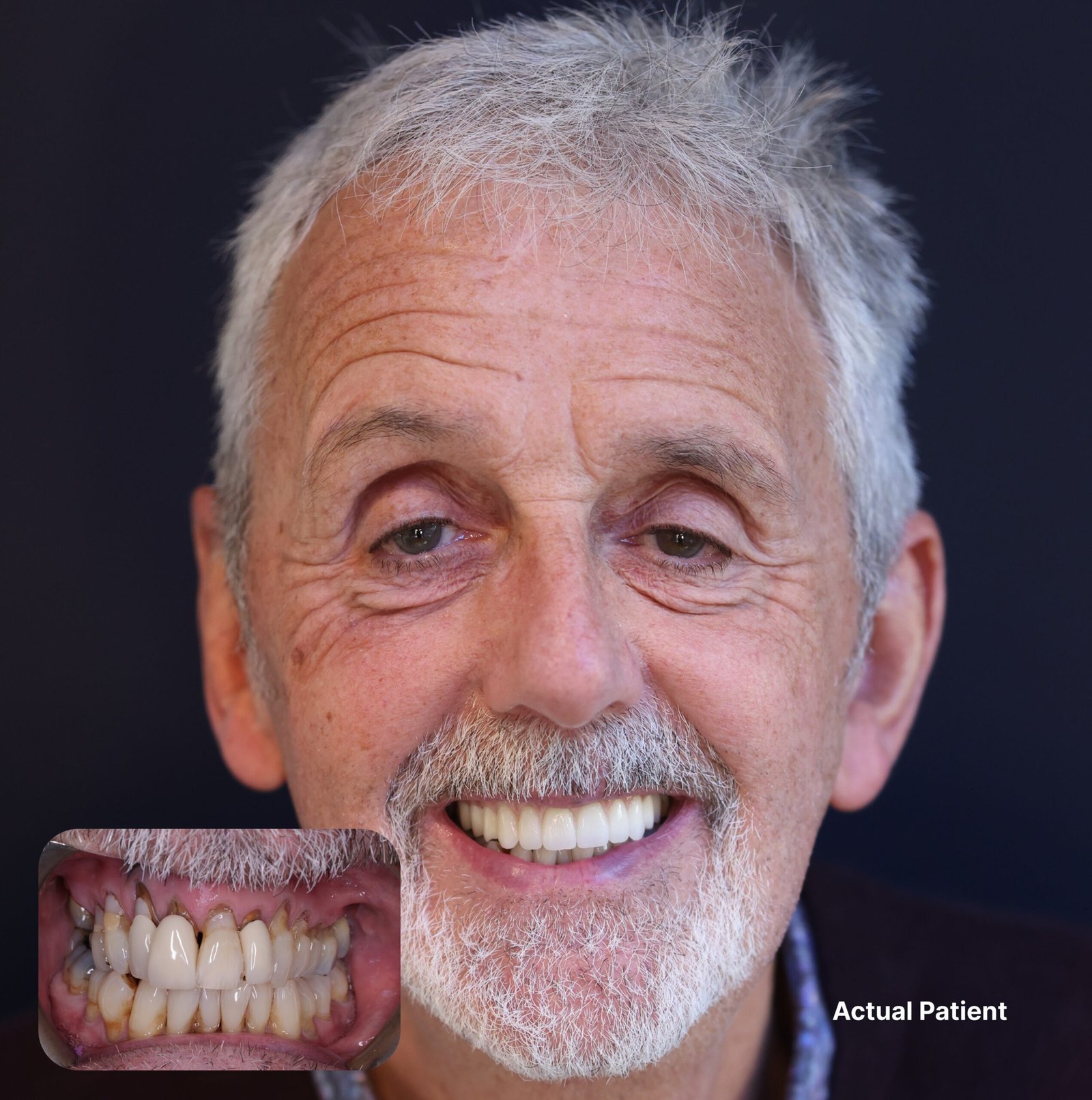
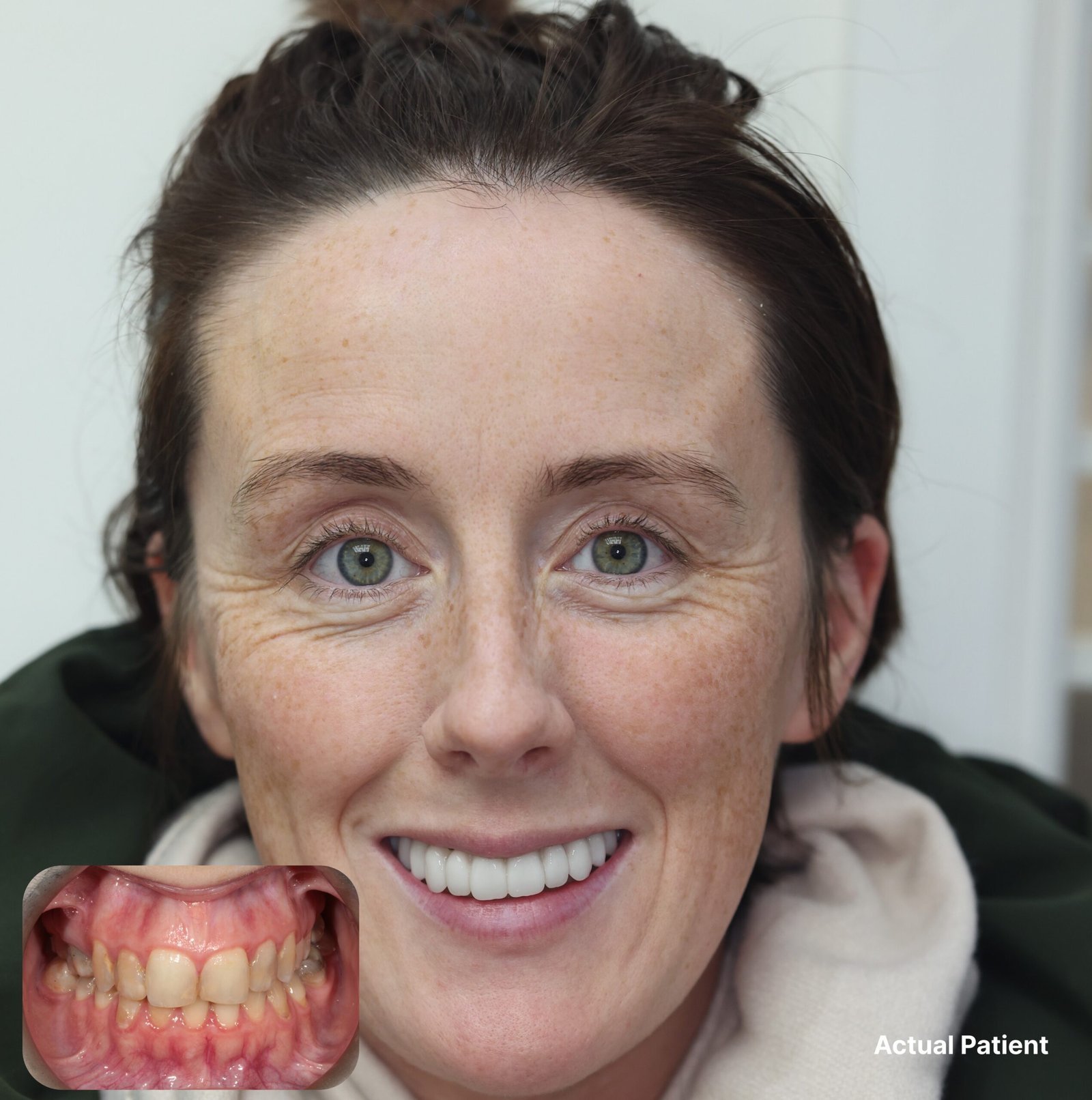
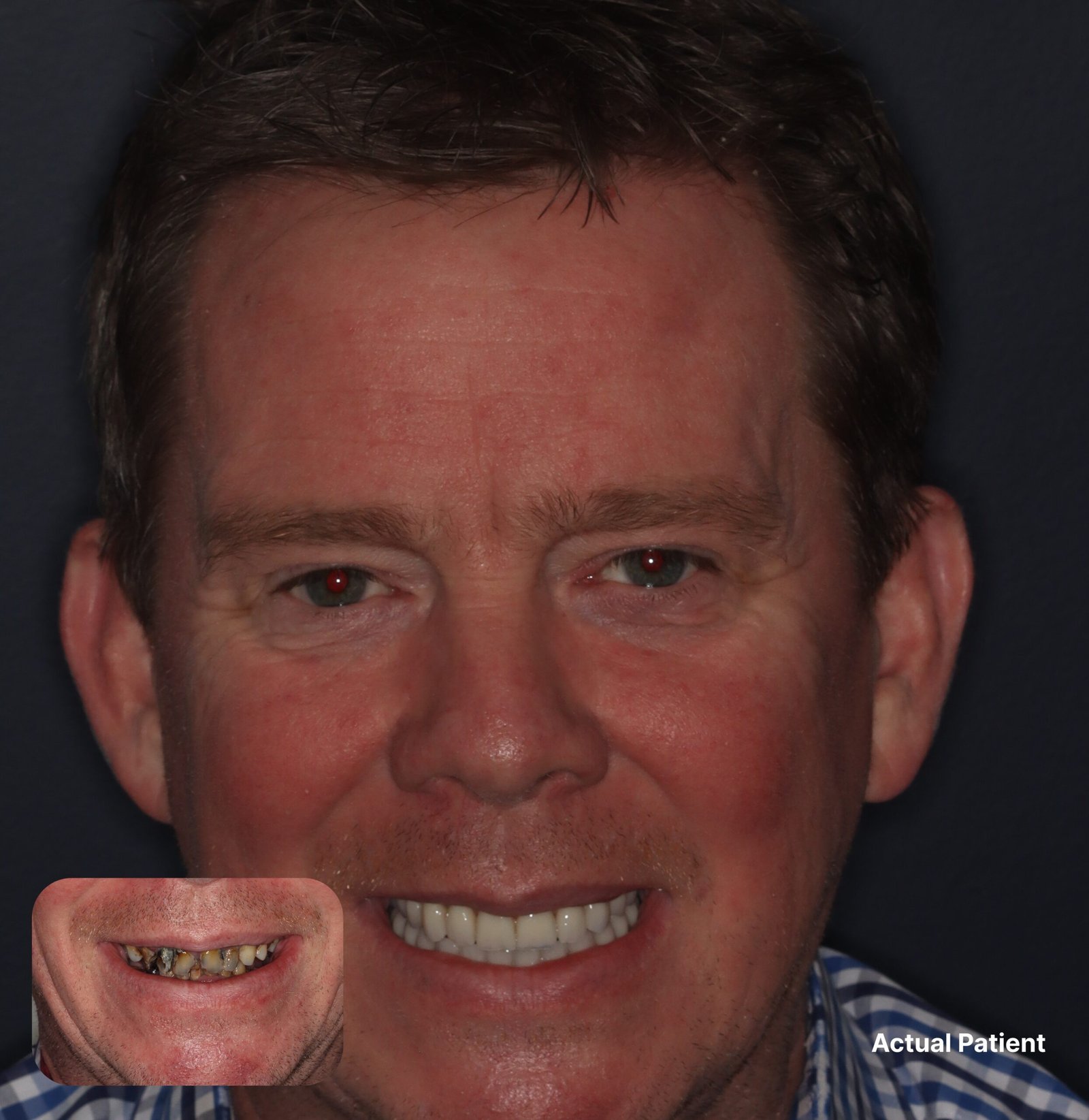
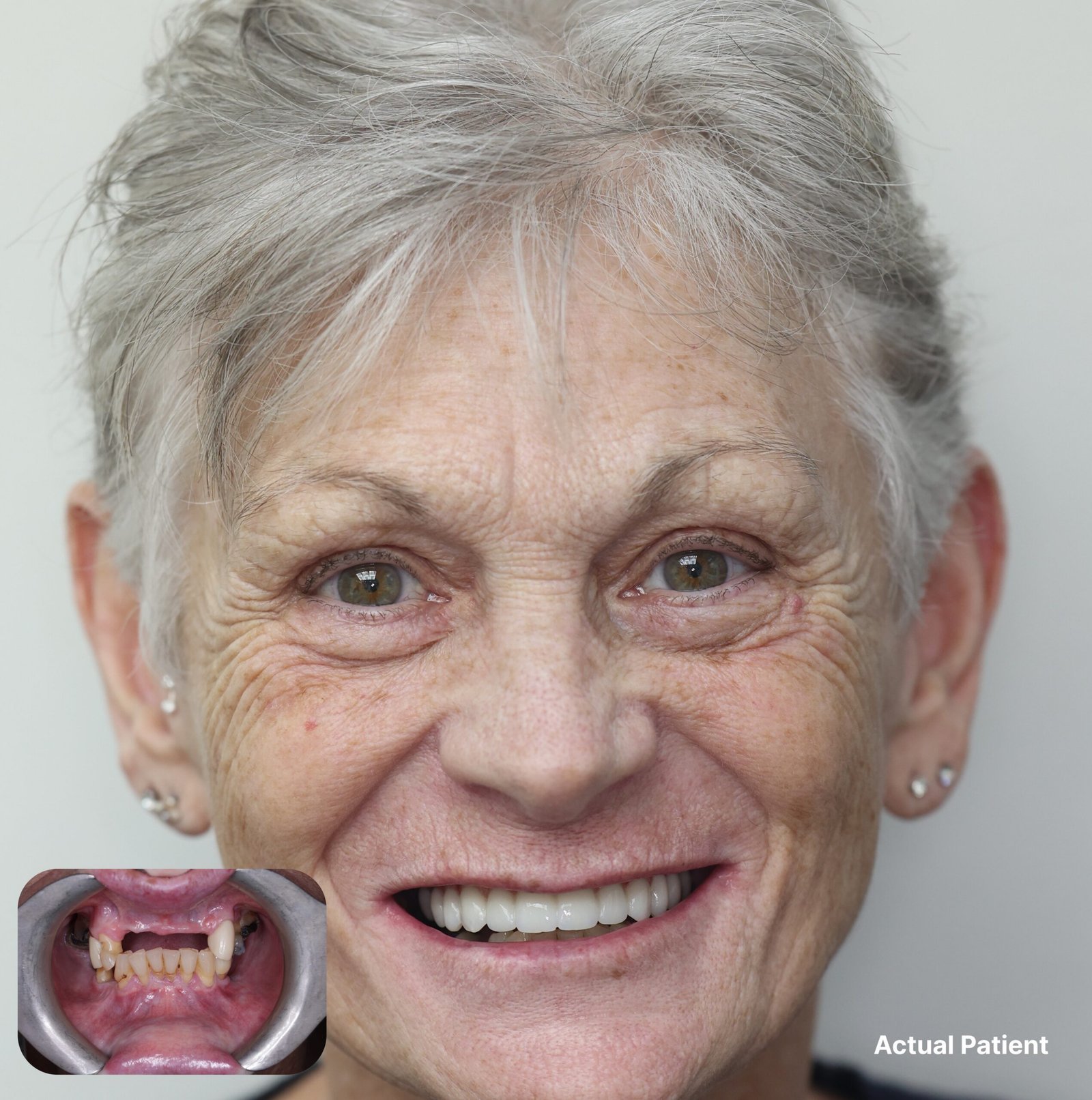
- Real Patient Results
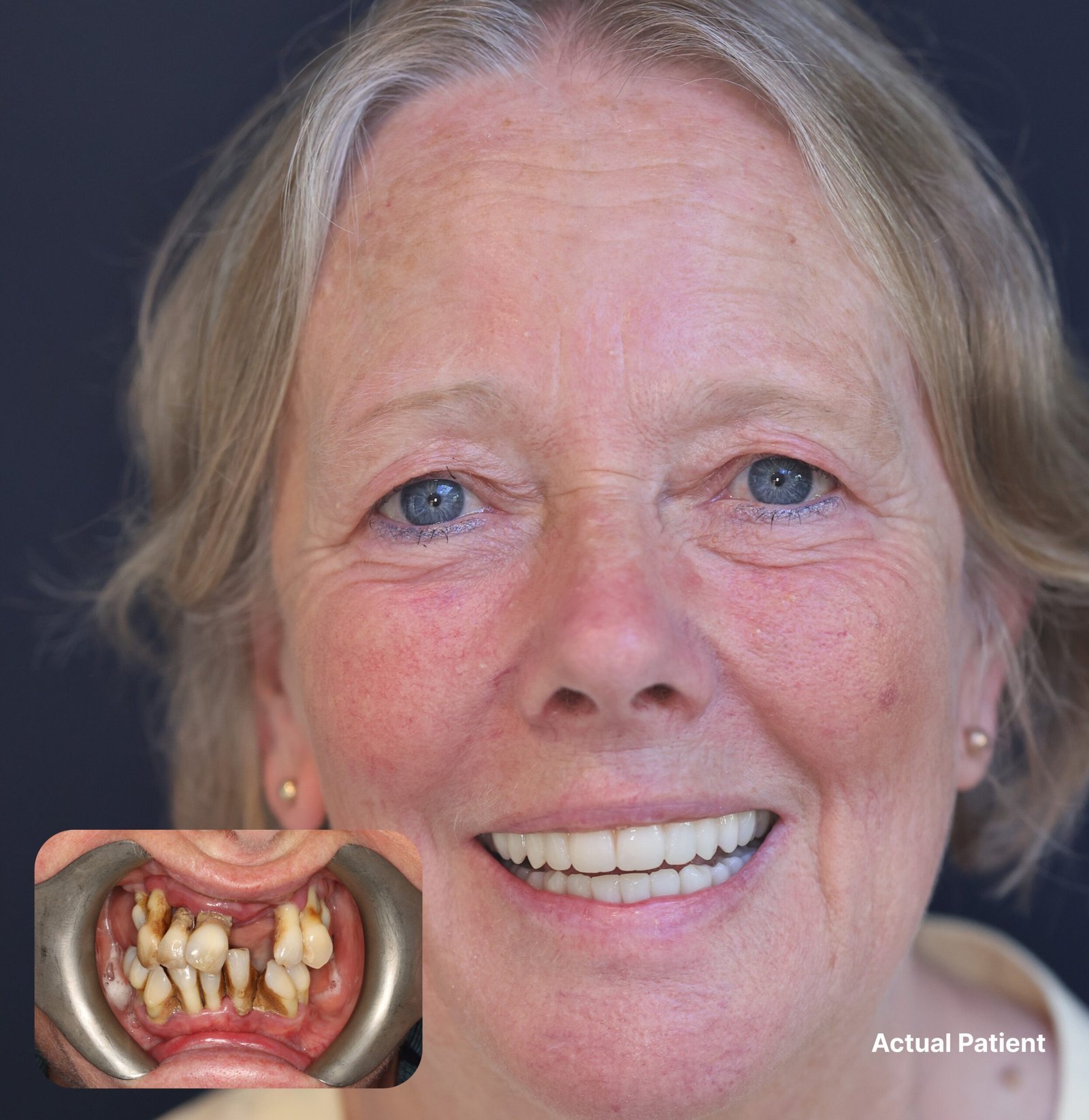
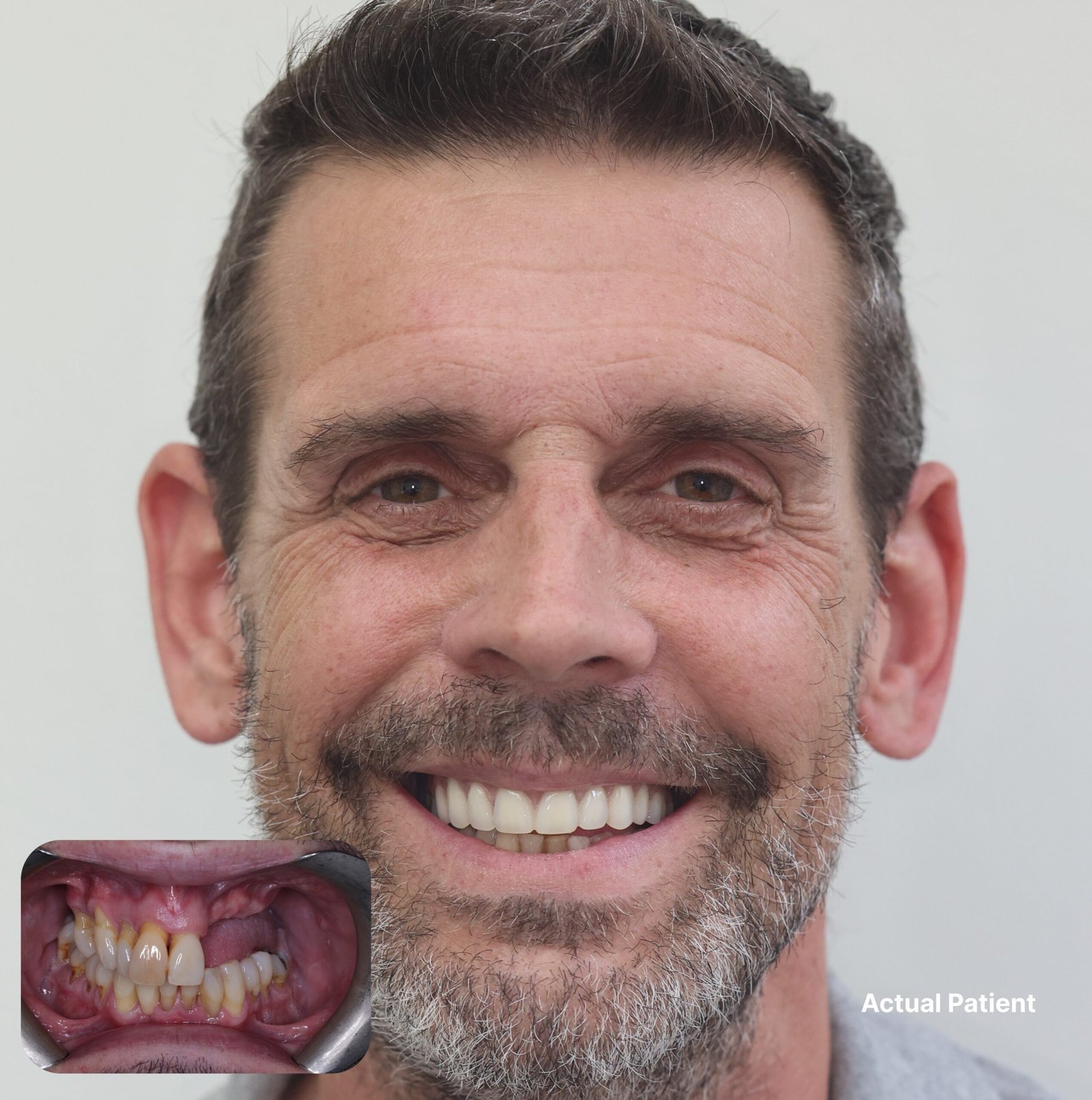
Thousands of Smiles Transformed
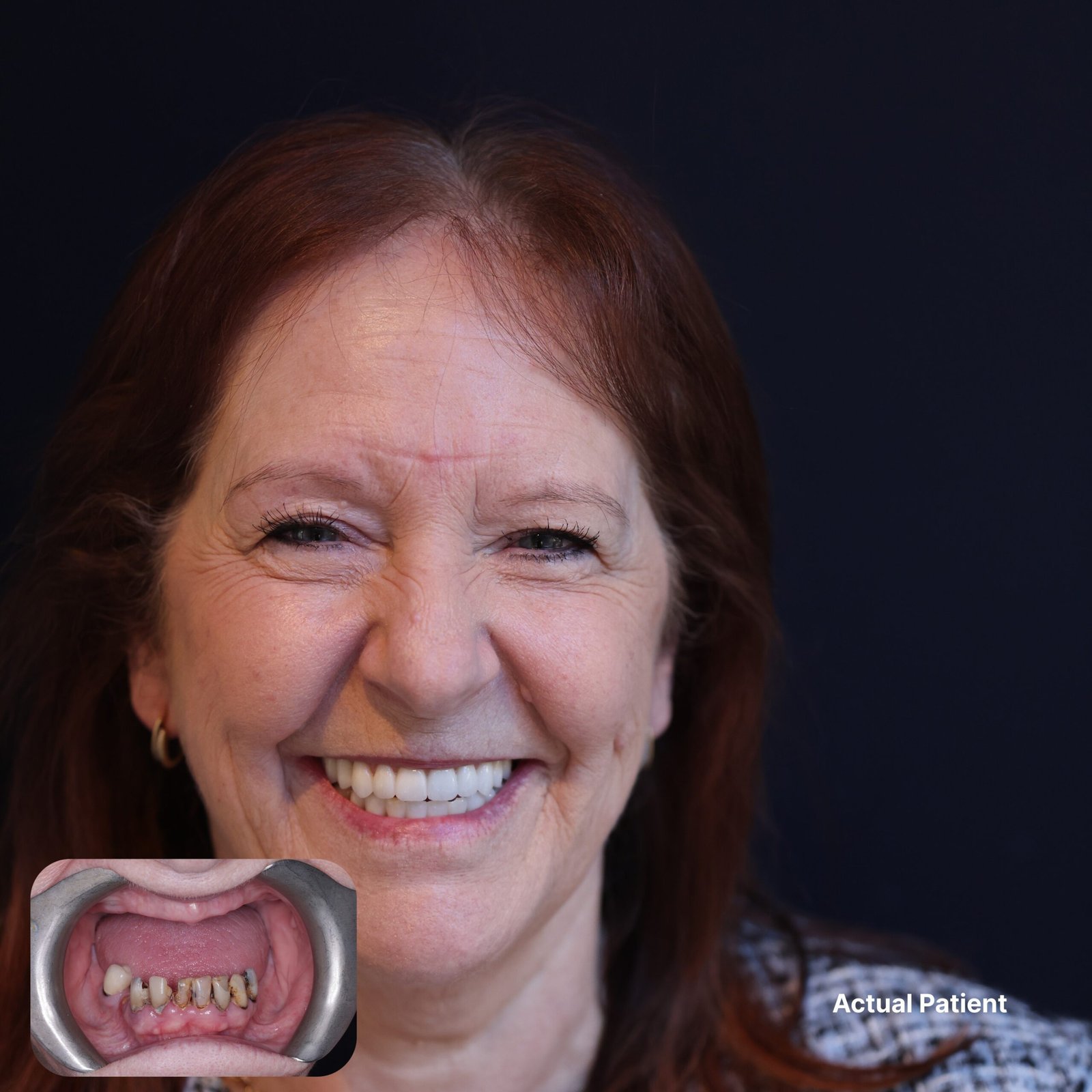
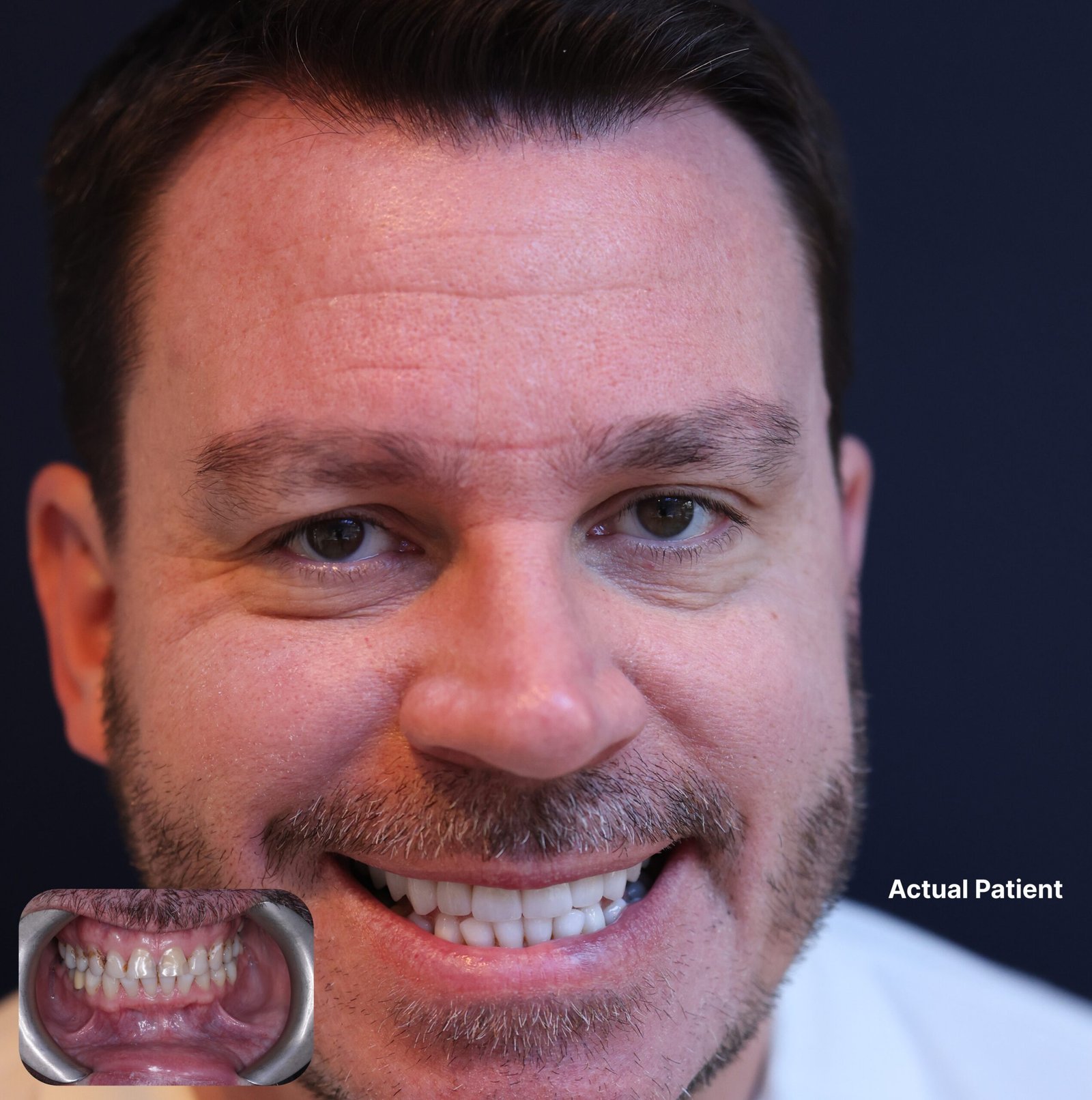
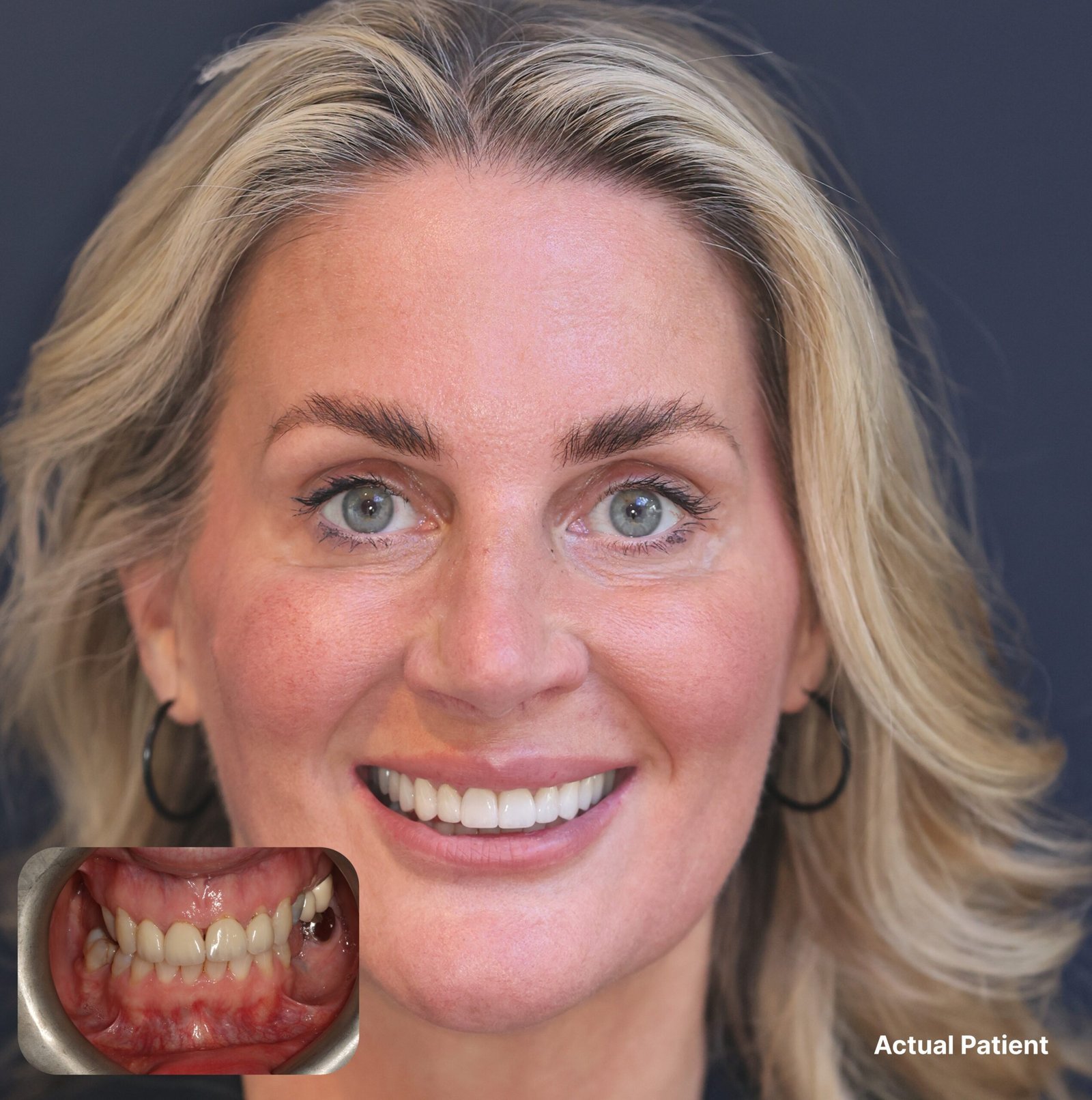
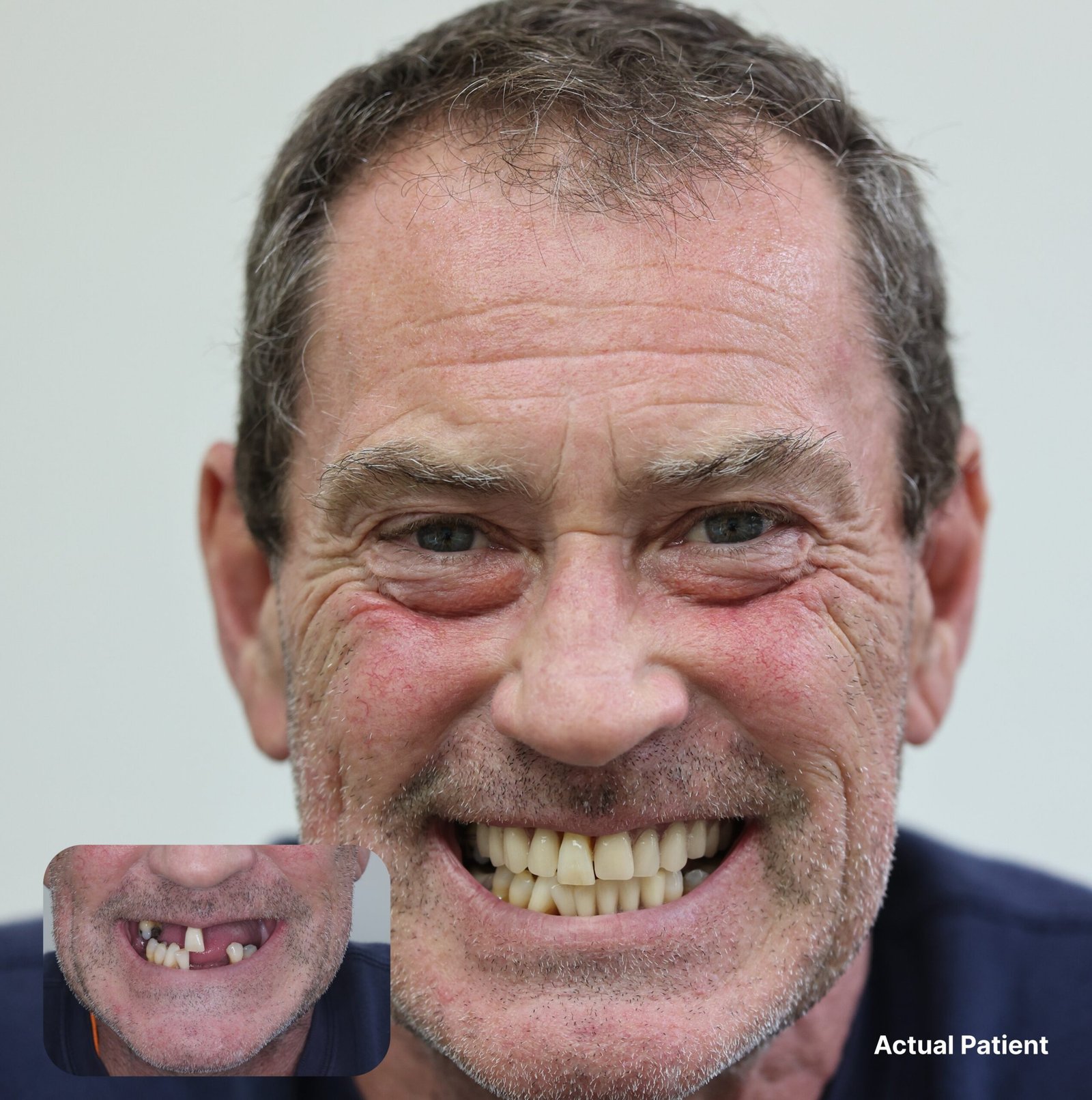
Be our Next Success Story!
Experience personalised dental care designed to help you achieve your dream smile.
Immediate placement, staged impressions, and try-ins that got every detail right.
The treatment proceeded in two clear phases separated by a 12-week healing period.
On the day of surgery, the Osstem implants were placed at the planned angulations and the multi-unit abutments were attached. A temporary fixed bridge was then secured on the same day. Jean left the practice with fixed teeth on the day of surgery. There was no period of wearing a denture, no visible gap, and no interim compromise.
The 12-week healing period allowed the implants to integrate fully with the jawbone through osseointegration, and for the soft tissue to settle around the abutments. During this time Jean carried on with her normal life with the temporary bridge in place.
After healing was confirmed, the staging process for the permanent bridge began. This involved a series of impressions taken at progressive stages and multiple try-in appointments. Try-ins are where the teeth are placed temporarily in the mouth and reviewed with the patient before anything is finally confirmed. Shade, shape, proportion, how the teeth sit relative to the lips and face, how the bite feels, all of these are assessed and refined at the try-in stage.
For Jean, this process took the time it needed to take. Each try-in was an opportunity to refine the result and confirm that what we were building was exactly right. She was involved in every assessment and gave clear, thoughtful feedback at each stage.
When the permanent bridge was finally fitted, every element of the result had already been agreed. There were no surprises. Just the finished smile she had been working towards.
Not sure where to begin? Speak to someone.
Make an Enquiry
Explore Related Treatments
- The outcome
A transformation. In every sense of the word.
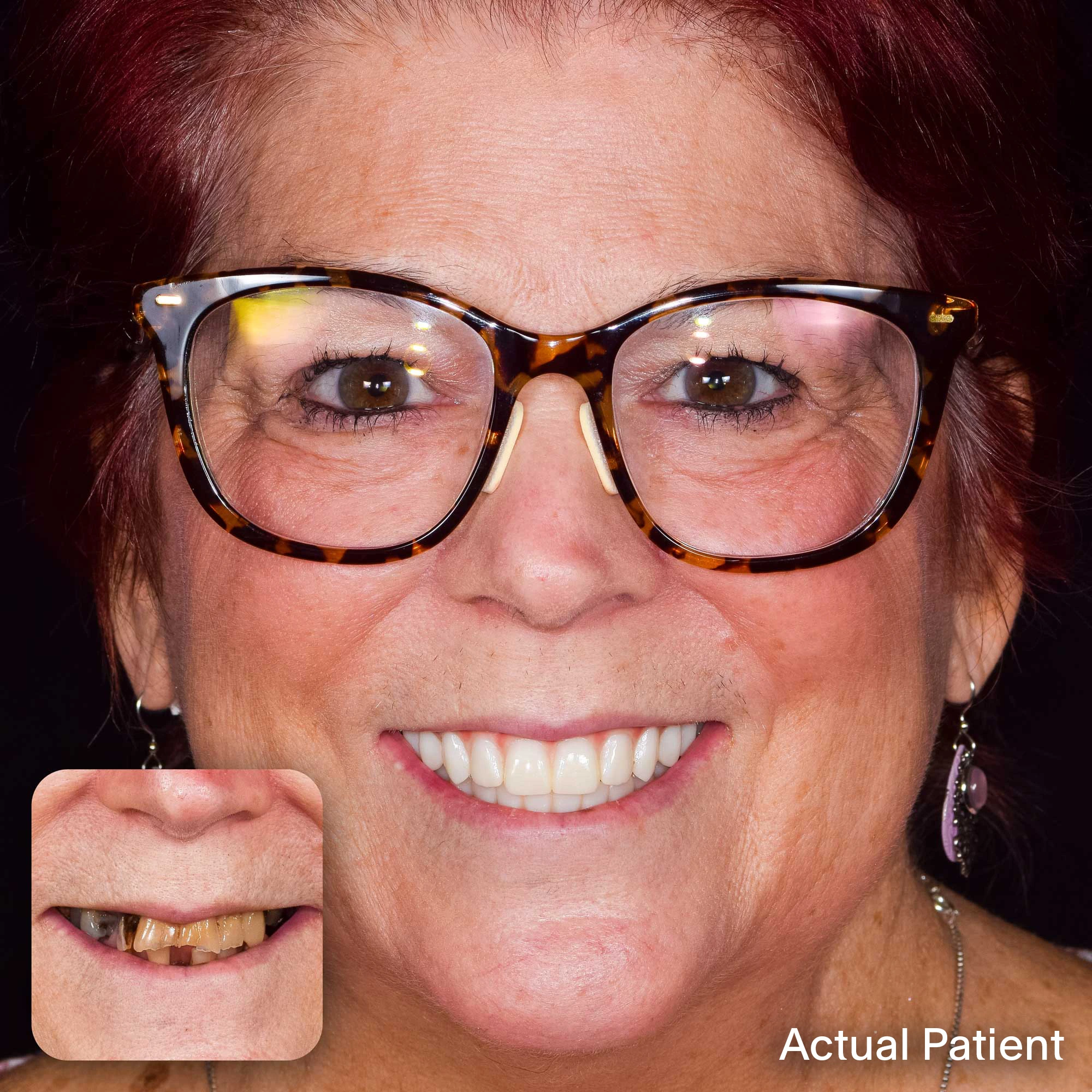
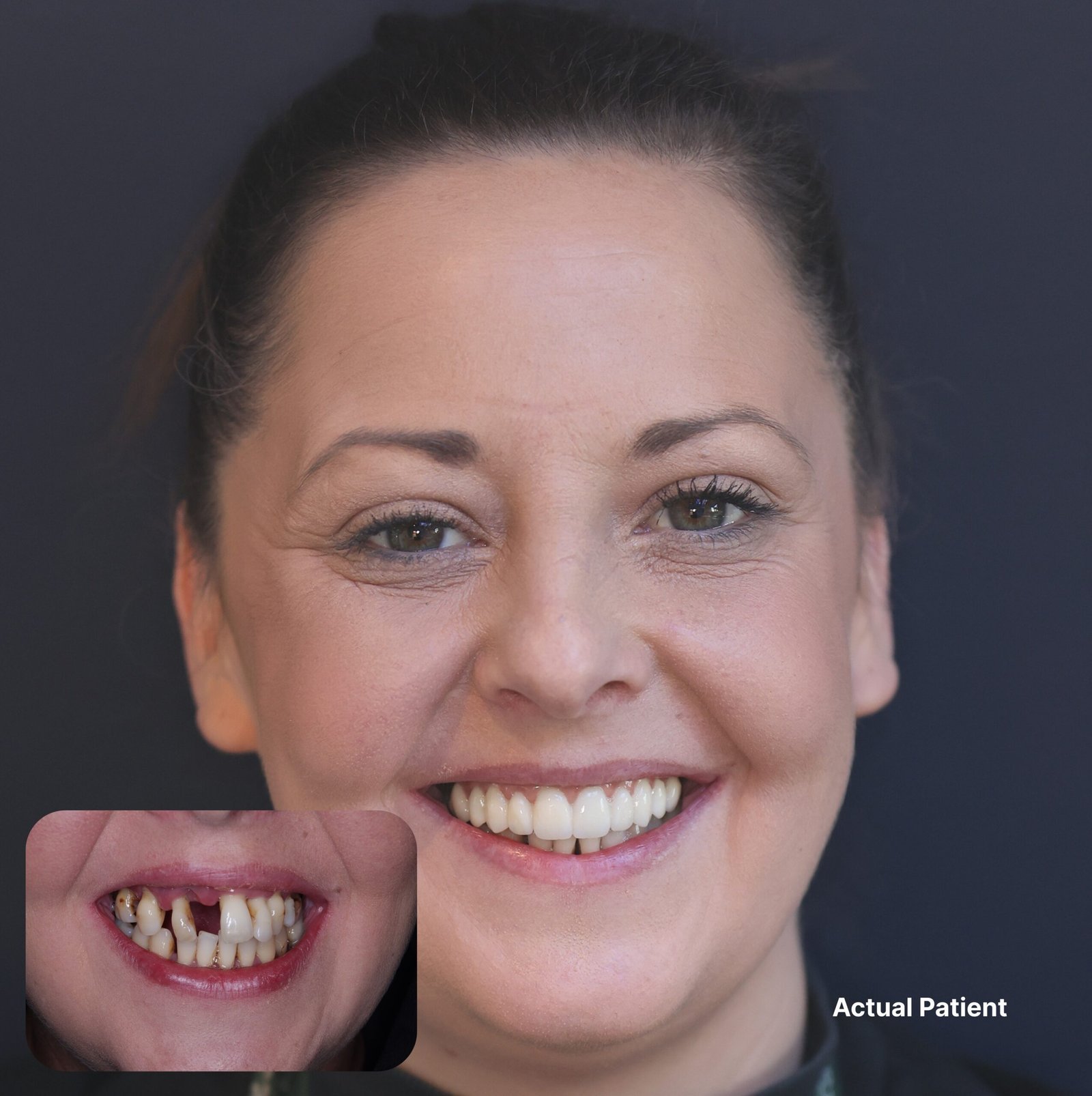
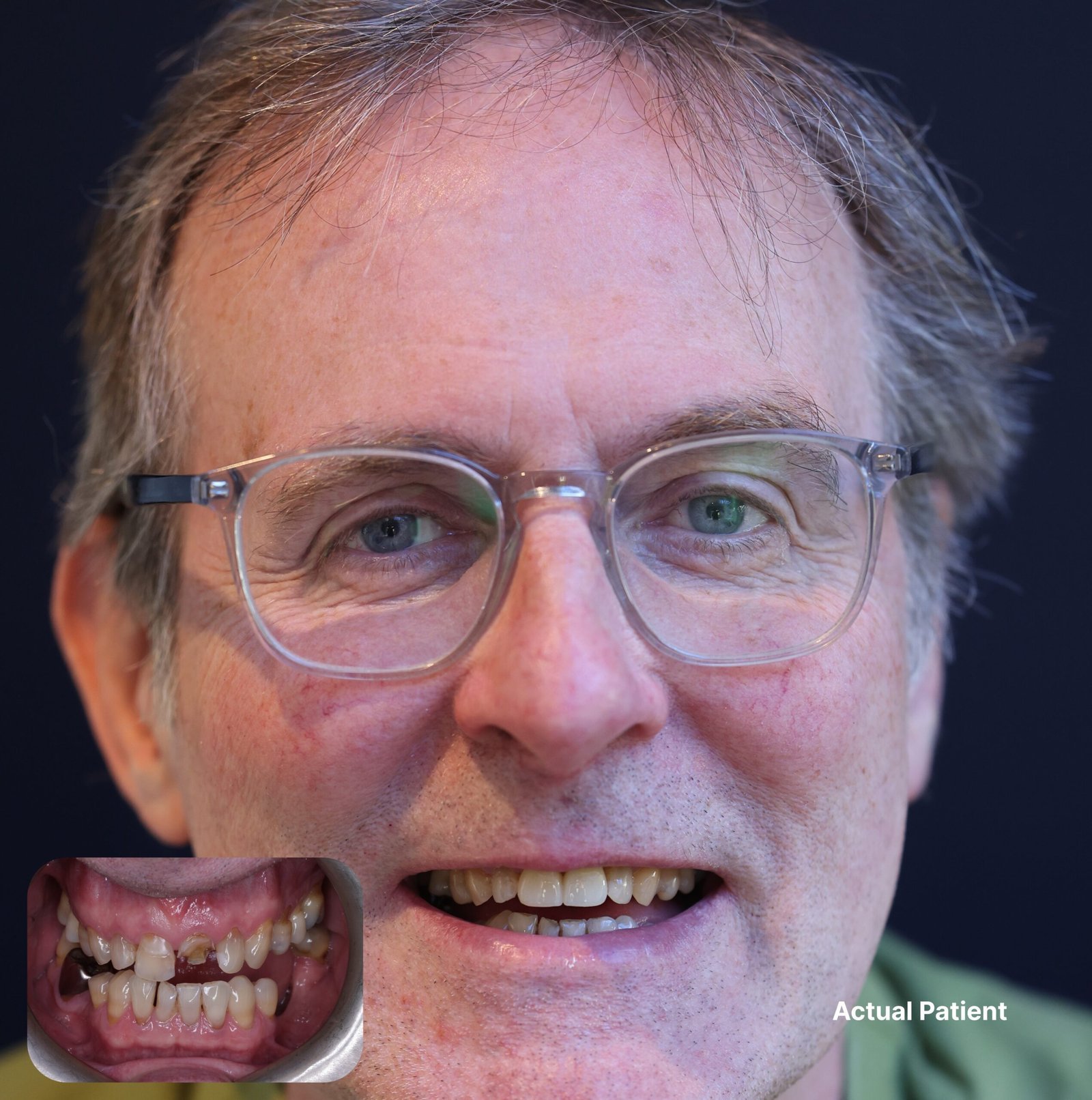
The photographs show the outcome, and it speaks clearly. A complete, natural-looking full arch smile supported by implants that were placed with the surgical precision needed to make the result last.
What the photographs do not show is the detail beneath the surface. The AP spread that distributes biting forces correctly. The multi-unit abutments that allow the bridge to sit at the right angle. The try-in stages that refined the aesthetics before anything was permanently placed. The planning that made all of it possible.
Jean was delighted with the result. The transformation she had come in hoping for was exactly what she received. A completely natural-looking smile that functions properly, sits correctly in her face, and is built on a surgical foundation designed to be stable for many years to come.
- Dr Nikhil reflects
The staging is what protects the long-term result.
Jean’s case illustrates something I want every patient considering full arch implant treatment to understand. The try-in stages, the staged impressions, the time spent refining the aesthetic result before the permanent bridge is fitted, are not optional extras or delays. They are what protect the quality of the final outcome.
It is easy to rush this stage. To fit the bridge after the first impression, to skip the try-in, to get to the end of the process as quickly as possible. I do not do this. The try-in stages are where I confirm that every element of the result is exactly right before it becomes permanent. Jean went through those stages with patience and engagement, and the result reflects that.
Achieving the right AP spread to support the prosthesis correctly is the surgical detail that most directly determines how the result holds up over years of daily use. Getting it right means the biting forces are distributed evenly, no individual implant is carrying disproportionate load, and the bridge remains stable and comfortable long term. Getting it wrong means problems develop over time that are complex and expensive to address.
I plan this element of every full arch case with the same attention I gave to Jean’s. It is not something that can be corrected after the fact.
“For every problem, there is a solution. It might be challenging, but it is almost always possible.”
“Helping this patient achieve her transformation has been a great journey.” — Dr Nikhil Oberai, on Jean’s outcome
- Treatment involved
Full Arch Osstem Implants with Multi-Unit Abutments and Staged Permanent Bridge
Jean had full arch dental implants placed using the Osstem system with multi-unit abutments, with a temporary fixed bridge placed on the day of surgery using the immediate loading protocol. Following a 12-week healing period, a staged series of impressions and try-in appointments were carried out to achieve the correct aesthetic result before the permanent bridge was fitted.
Full arch treatment at my Northwich and Wilmslow practices starts from £15,500 per arch on the Gold Package. 0% finance is available through Tabeo over 12 months.