
Tooth Extraction by Dr Nikhil Oberai
If you need a tooth removed and have been putting it off, I want you to know that the experience is almost always far more straightforward than patients anticipate. And wherever possible, I plan what comes next at the very same appointment.
You have been putting this off. Most patients have.
Tooth extraction is one of the most commonly delayed dental procedures. Not because the procedure itself is particularly difficult, but because the word carries weight. The anticipation of pain, the anxiety about what happens on the day, and in many cases the worry about what comes afterwards, all combine into a reason to keep postponing.
For some patients the delay is a few weeks. For others it has been months or years. A tooth that should have been removed long ago has been causing ongoing discomfort, affecting the surrounding teeth, and in some cases causing infection that has spread further than it needed to. I understand why people put it off. But I also know, because patients tell me every week, that they wish they had come sooner.
- Why patients come to see me
Do any of the points below sound familiar?
The tooth has been causing pain for longer than it should have
Toothache that comes and goes, sensitivity that has gradually worsened, or a dull persistent ache that has become the background noise of your day. The tooth has been telling you for some time that something is wrong. The delay in addressing it has rarely made it better.
You are anxious about the procedure itself
Fear of dental procedures is very common and completely understandable, particularly where extractions are concerned. The anticipation of what it might feel like is almost always significantly worse than the procedure itself. Sedation is available throughout for patients who would find it helpful.
You are worried about what the gap will look like and how long it will be there
This is one of the most common concerns patients raise when discussing extraction. What will it look like? How long will there be a visible gap? What are the options for replacing the tooth? These are exactly the questions I address at the same appointment where the extraction is discussed.
You have an infection and you are not sure how serious it is
Dental infections left untreated do not simply resolve on their own. They can spread to the surrounding bone and tissue. If there is swelling, persistent pain, or a bad taste associated with the tooth, this warrants an urgent assessment rather than a wait-and-see approach.
The good news is, extraction is one of the most straightforward procedures I carry out, and what comes next can be planned on the same day.
Most patients who are anxious about having a tooth removed tell me afterwards that it was far less of an experience than they had built it up to be. The procedure is carried out under local anaesthetic, takes between 20 and 60 minutes depending on the complexity of the case, and for the majority of patients is less uncomfortable than the toothache that preceded it.
What I find particularly important is what happens at the same appointment. Wherever clinically appropriate, I discuss and plan the replacement of the extracted tooth before you leave. That might mean booking a bone graft to preserve the extraction site for a future implant. It might mean planning immediate implant placement on the same day. Or it might mean simply outlining the options and giving you time to decide. You do not leave with just a gap and a question mark. You leave with a clear picture of where things go from here.
- Real Patient Results
Thousands of Smiles Transformed
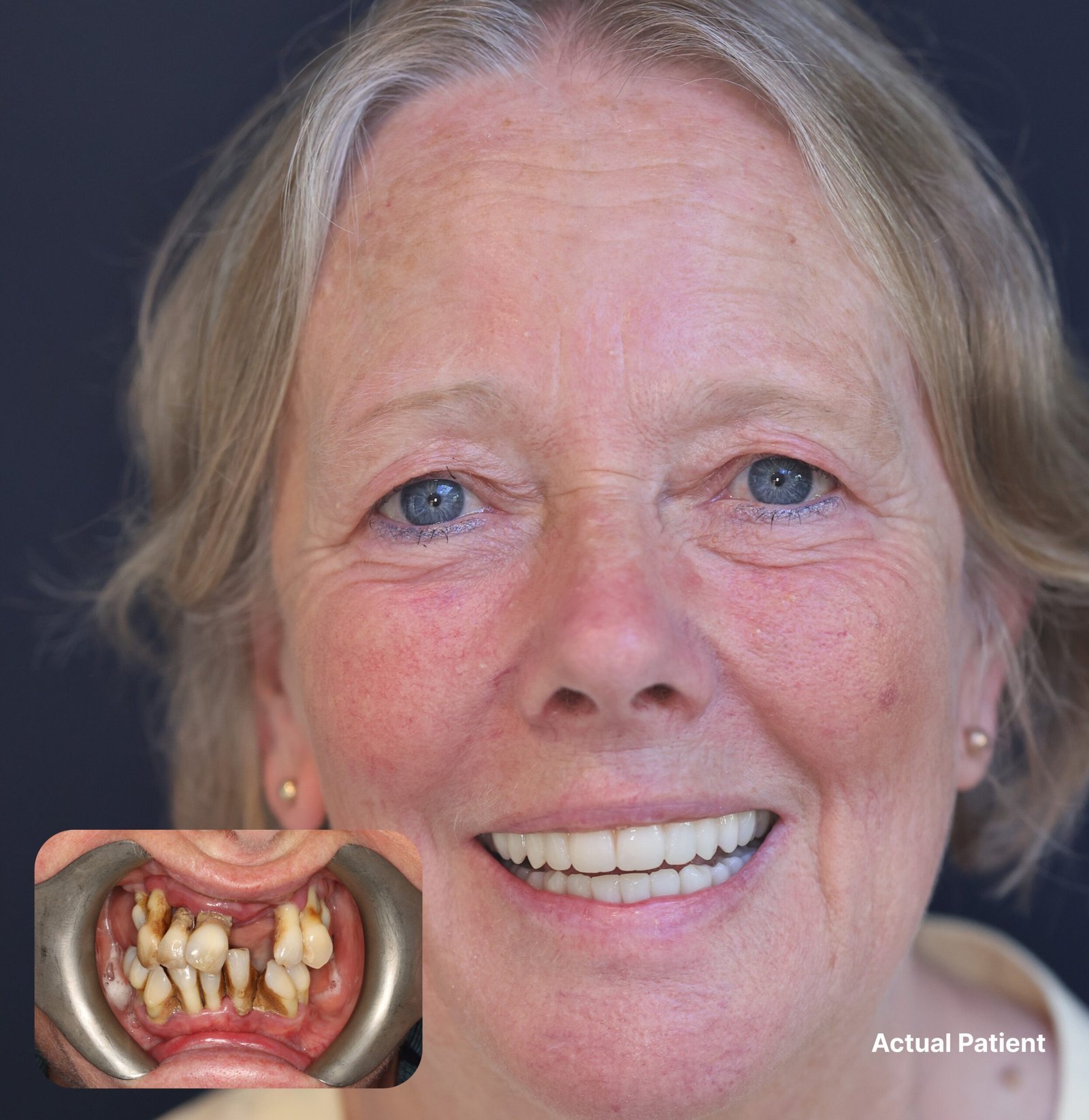
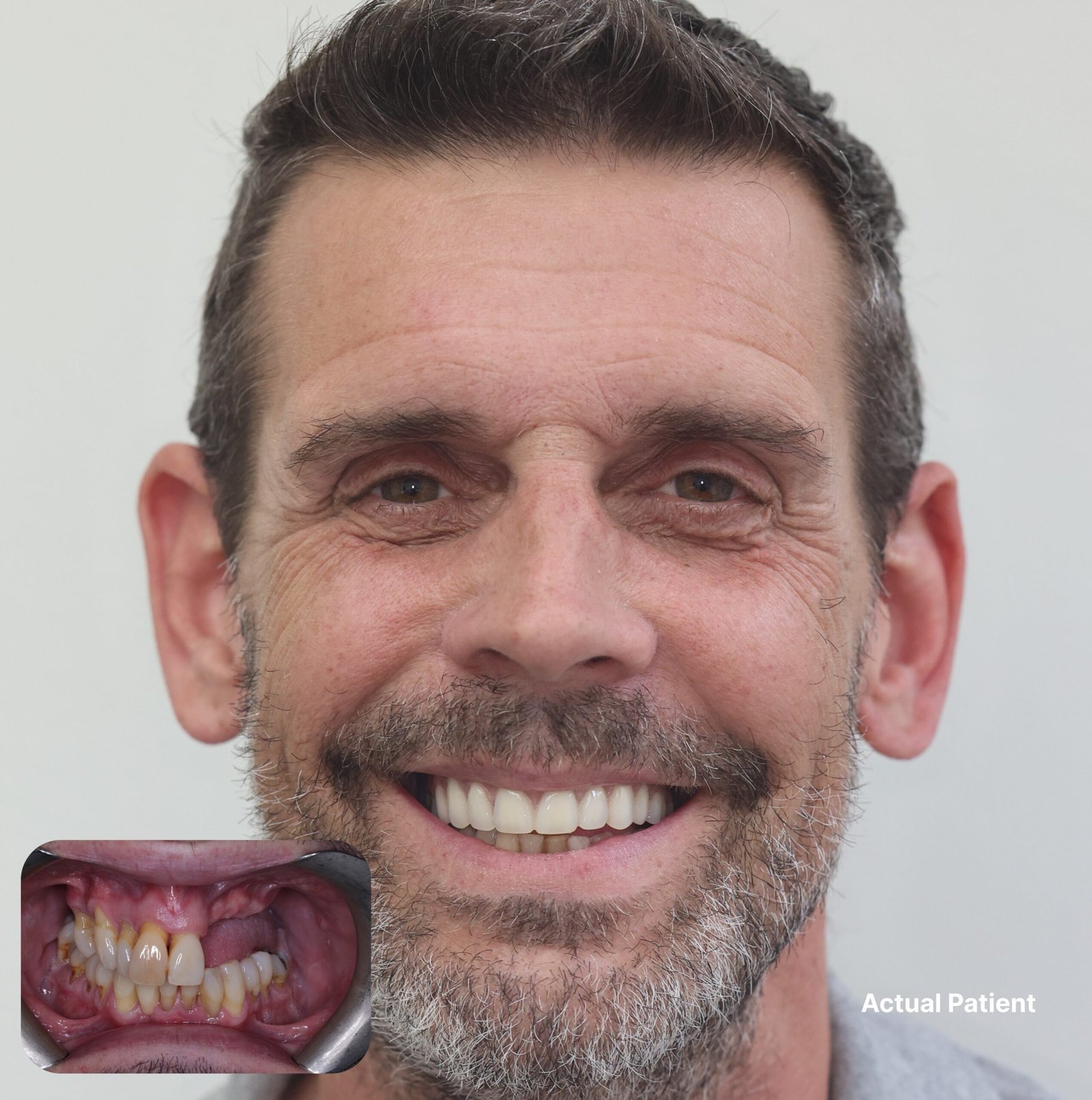
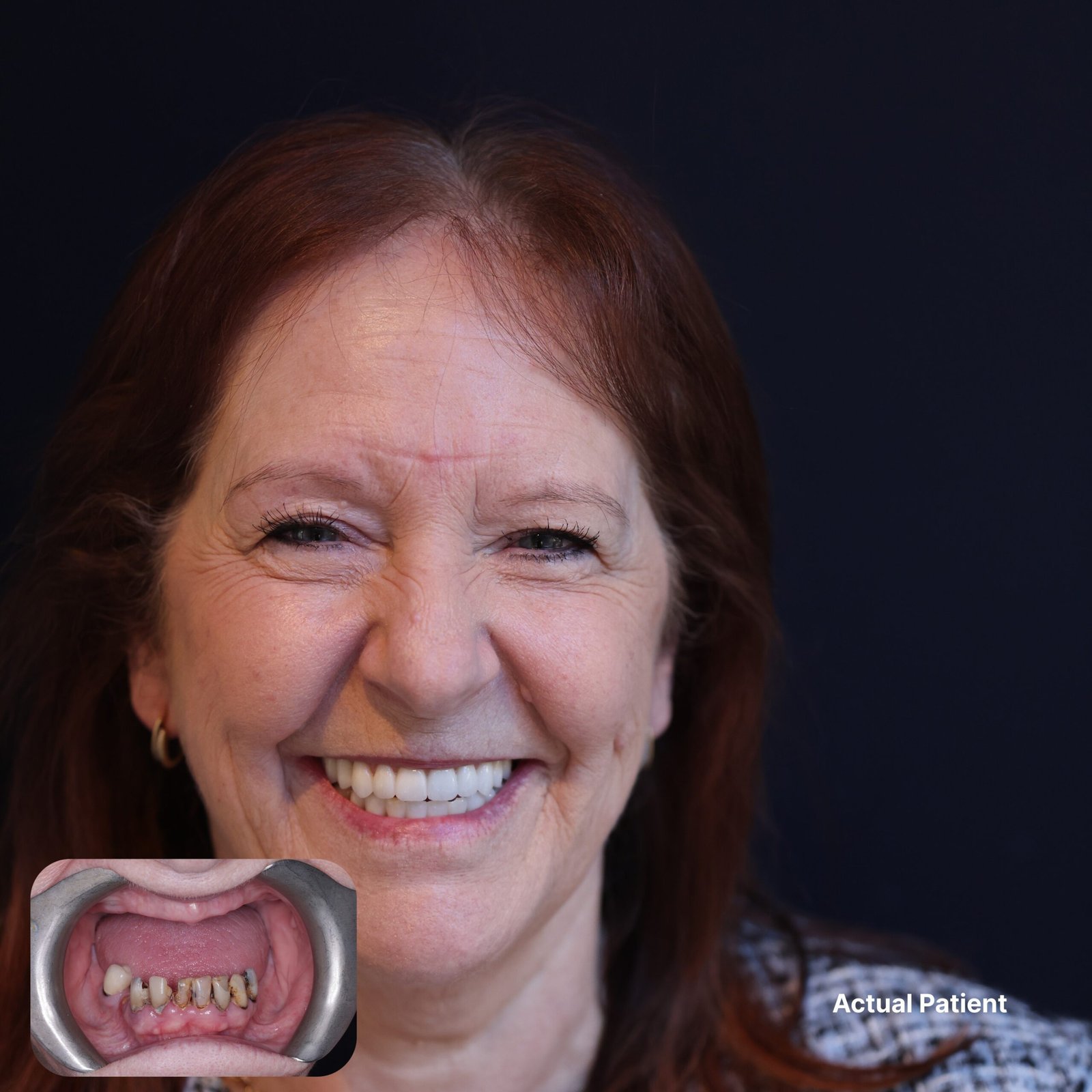
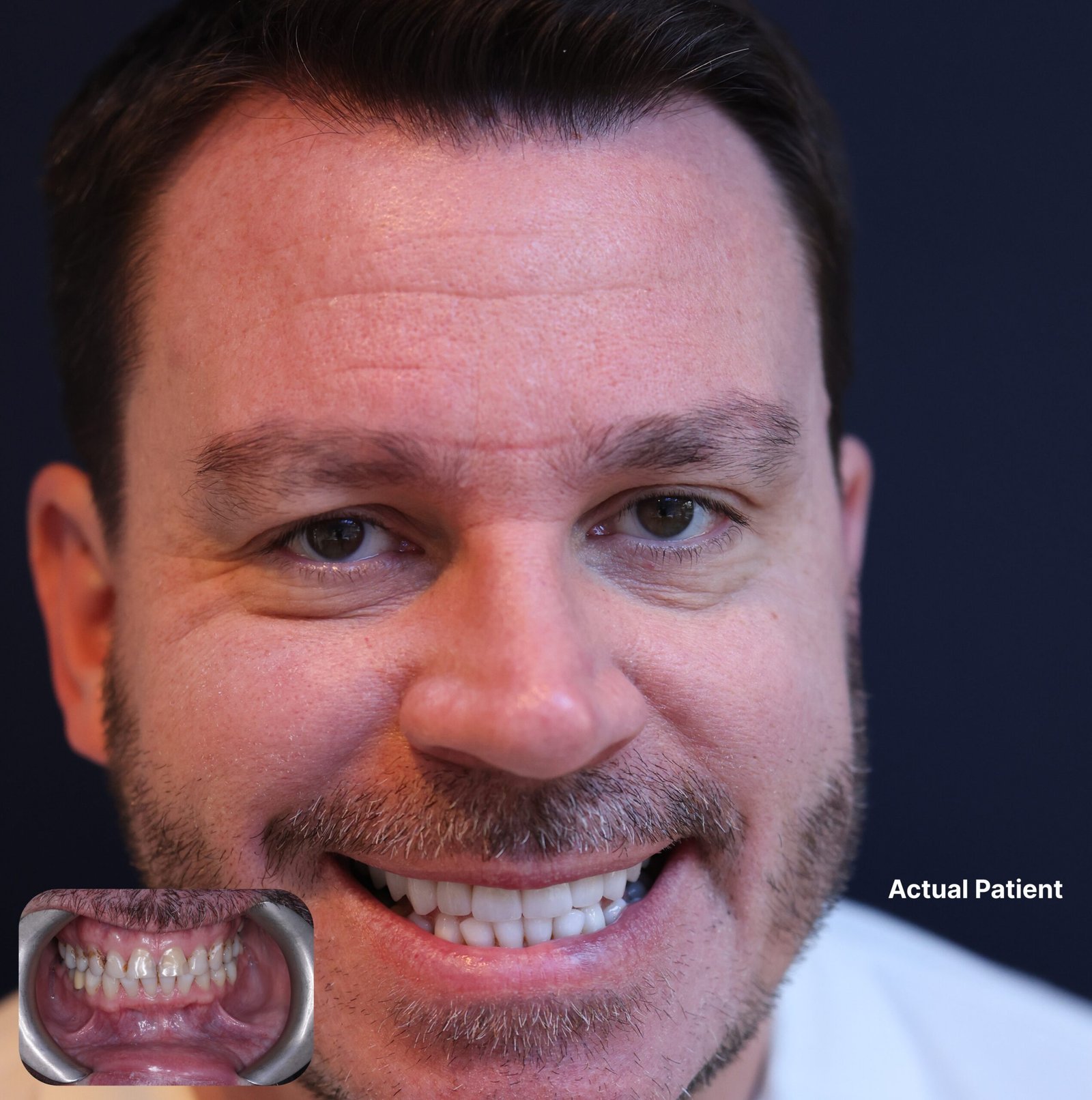
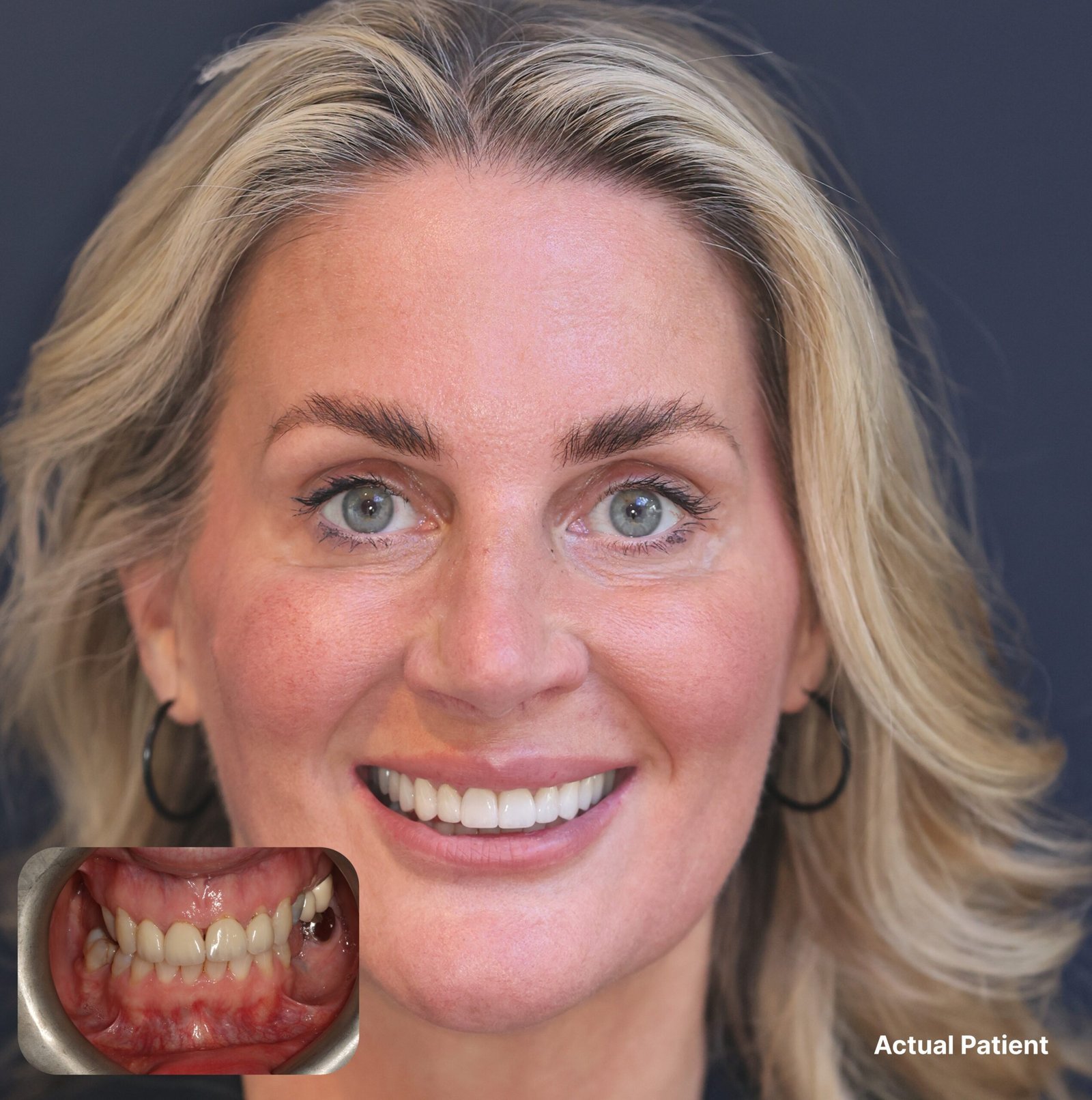
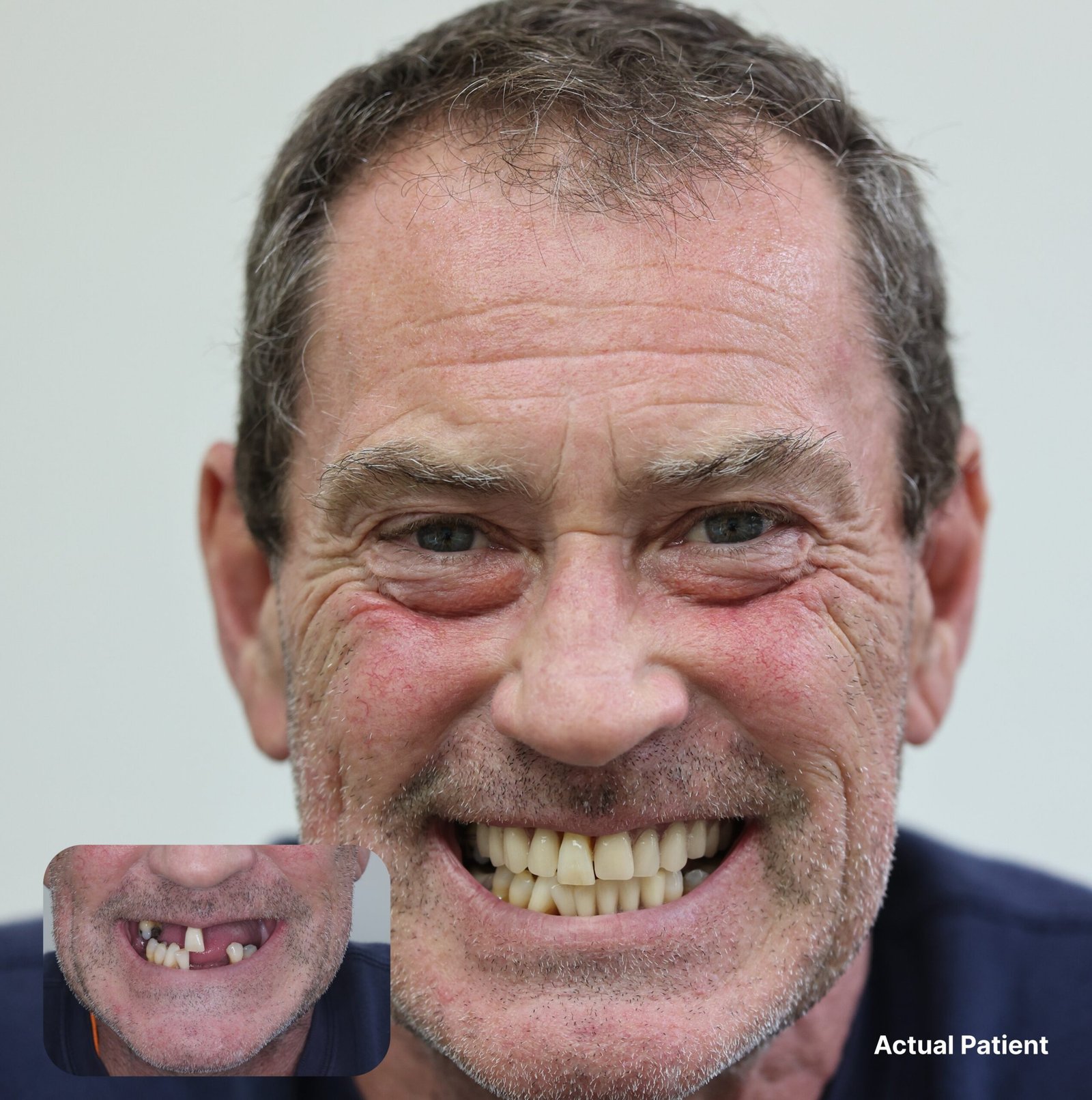
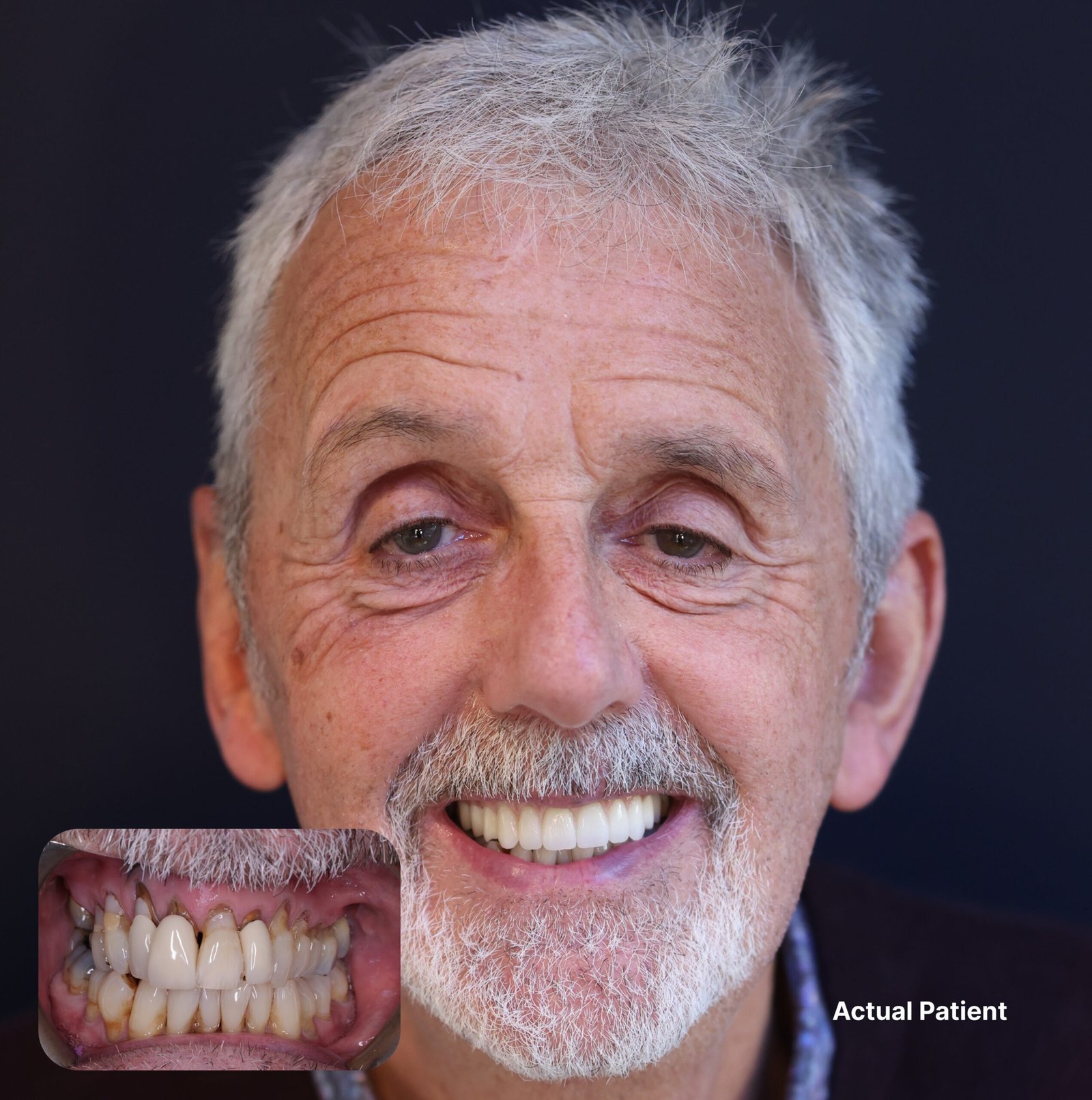
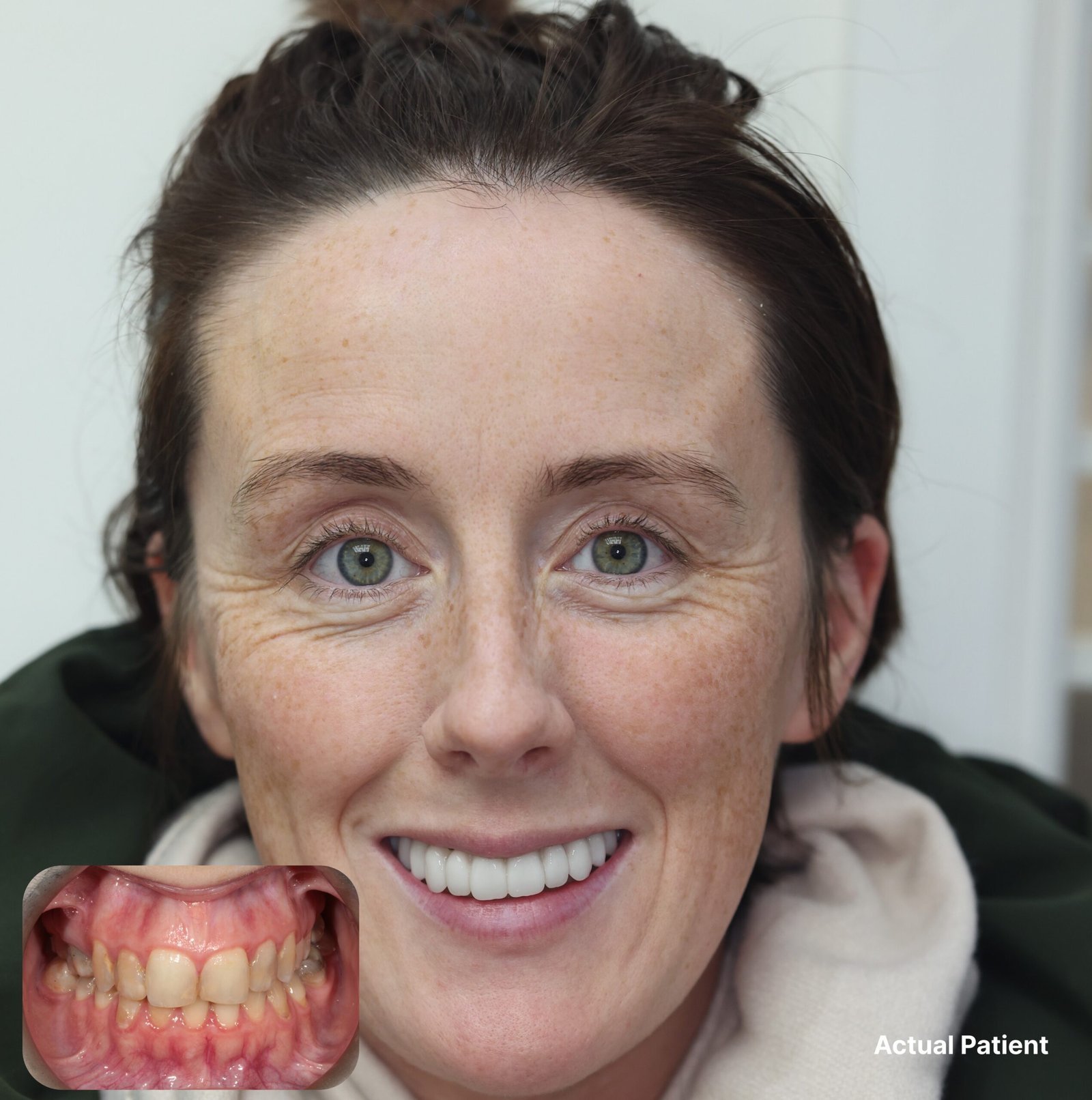
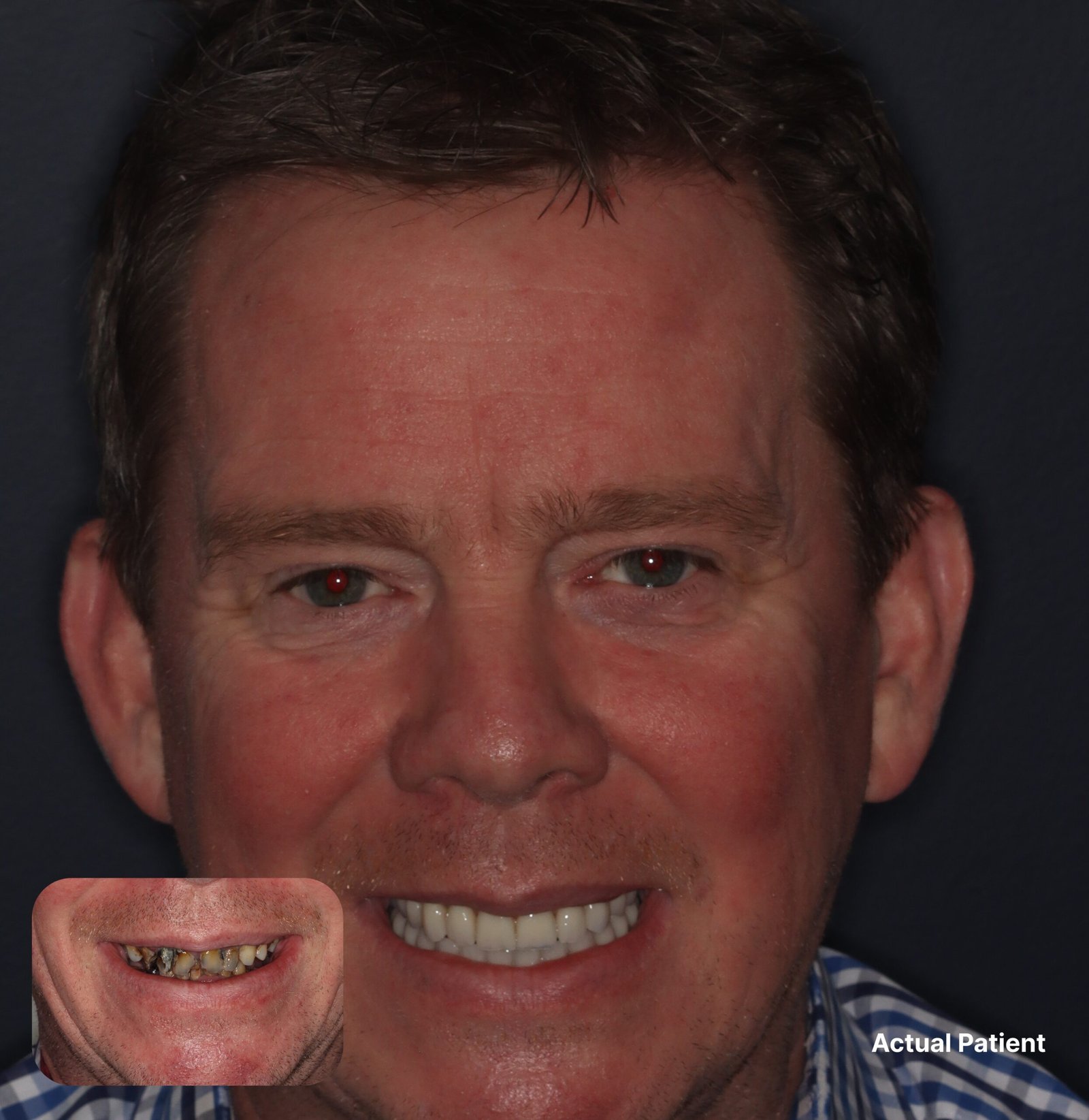
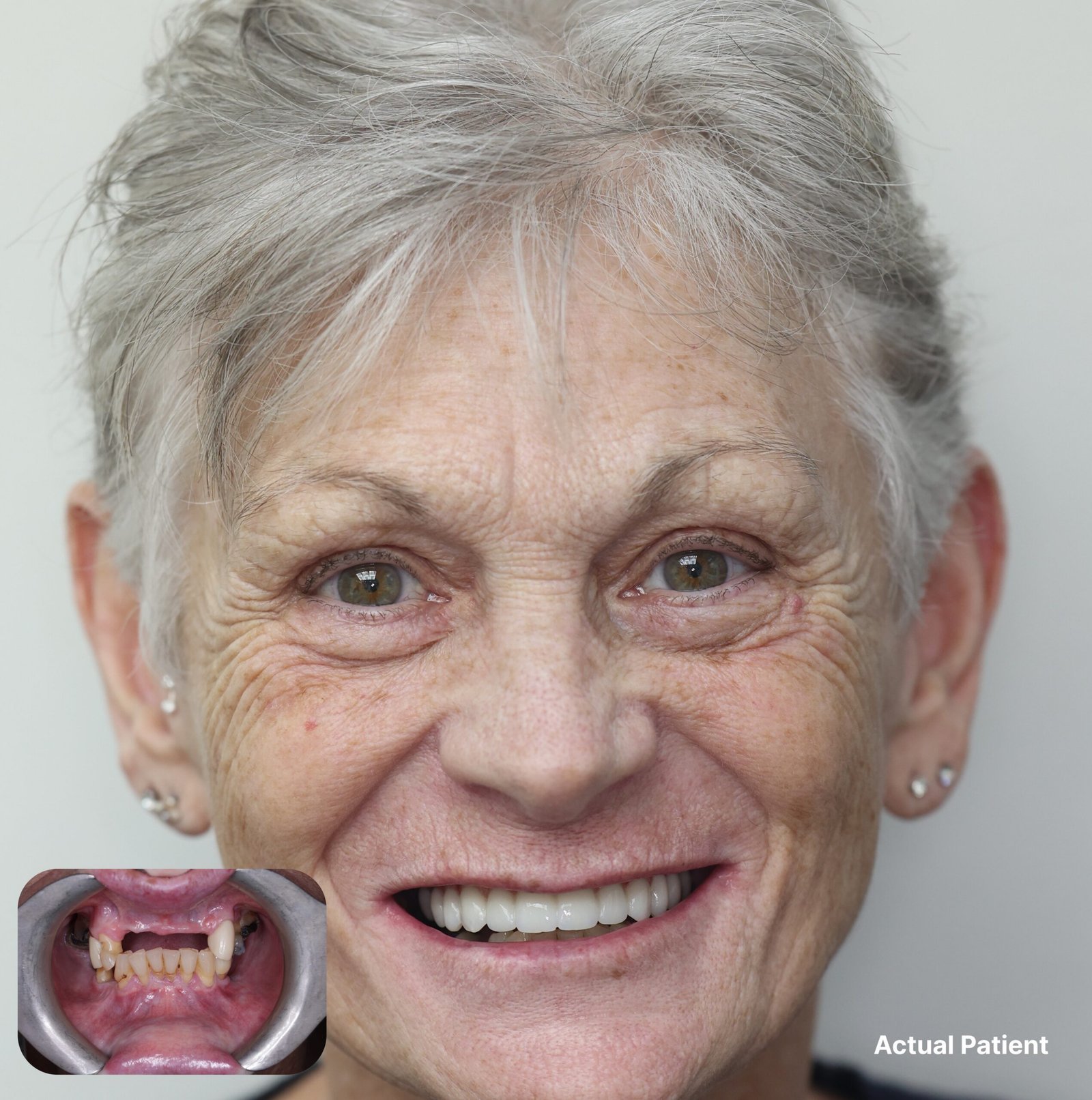
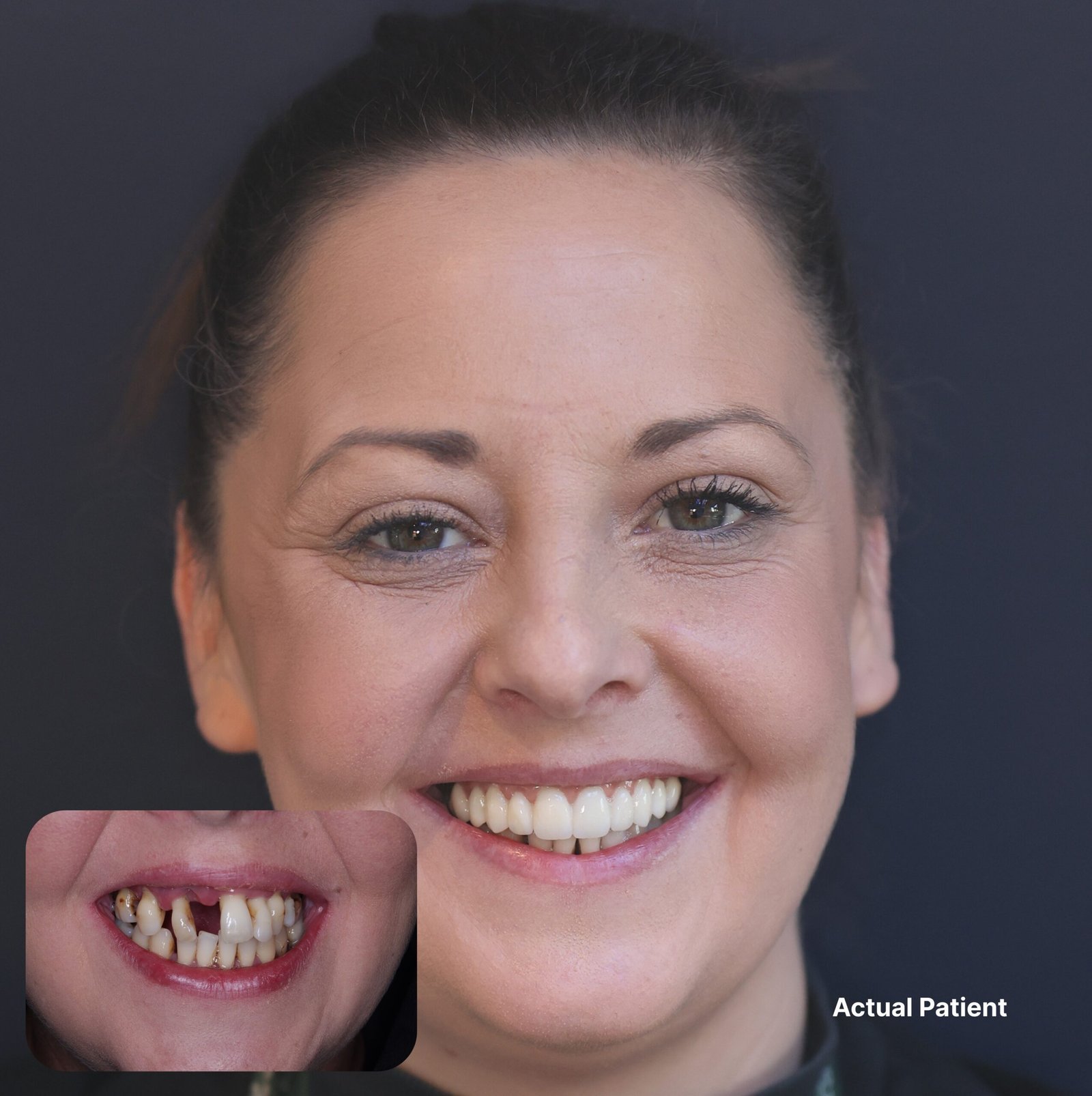
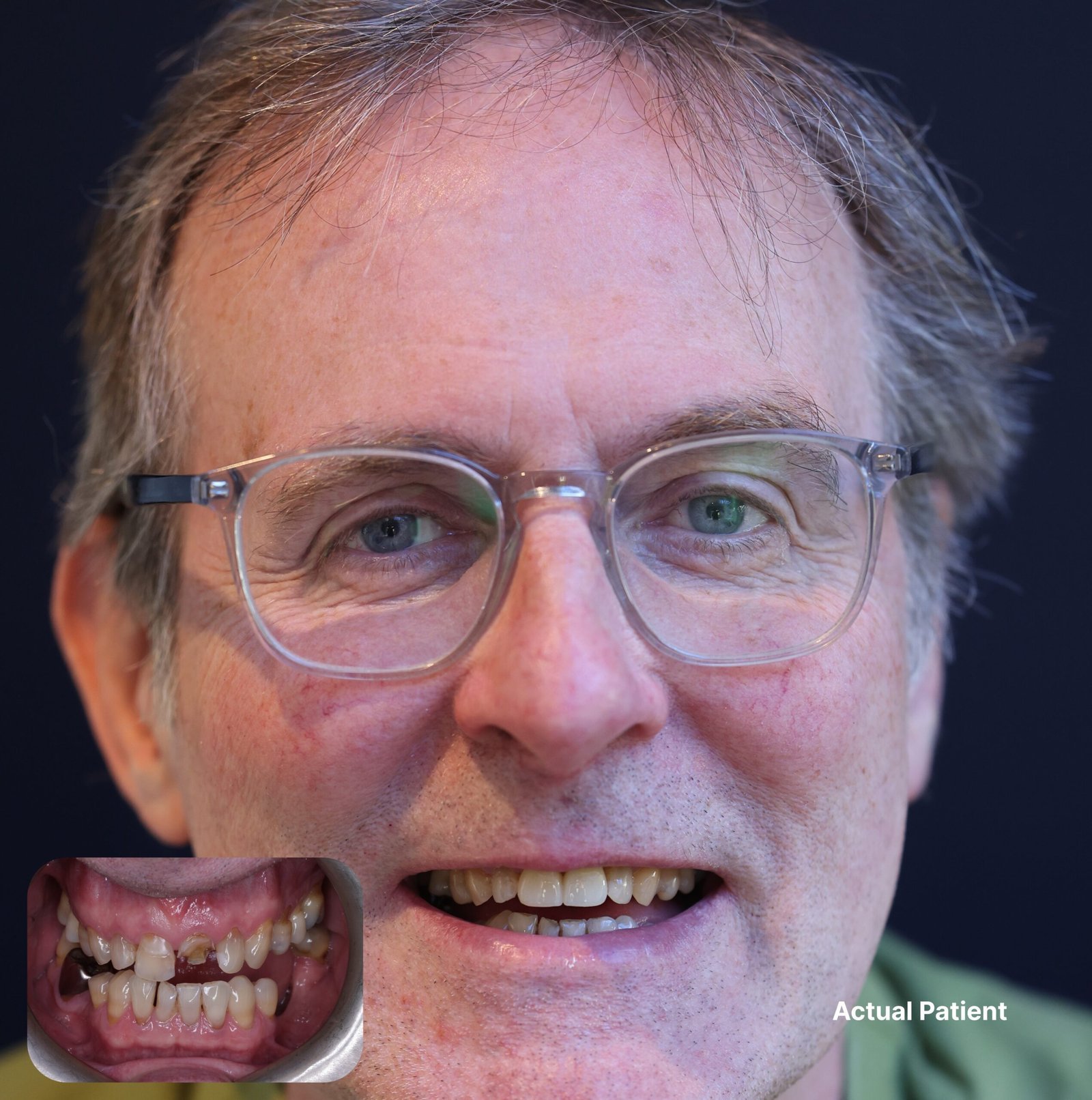
Be our Next Success Story!
Experience personalised dental care designed to help you achieve your dream smile.
What a tooth extraction actually involves, in plain English
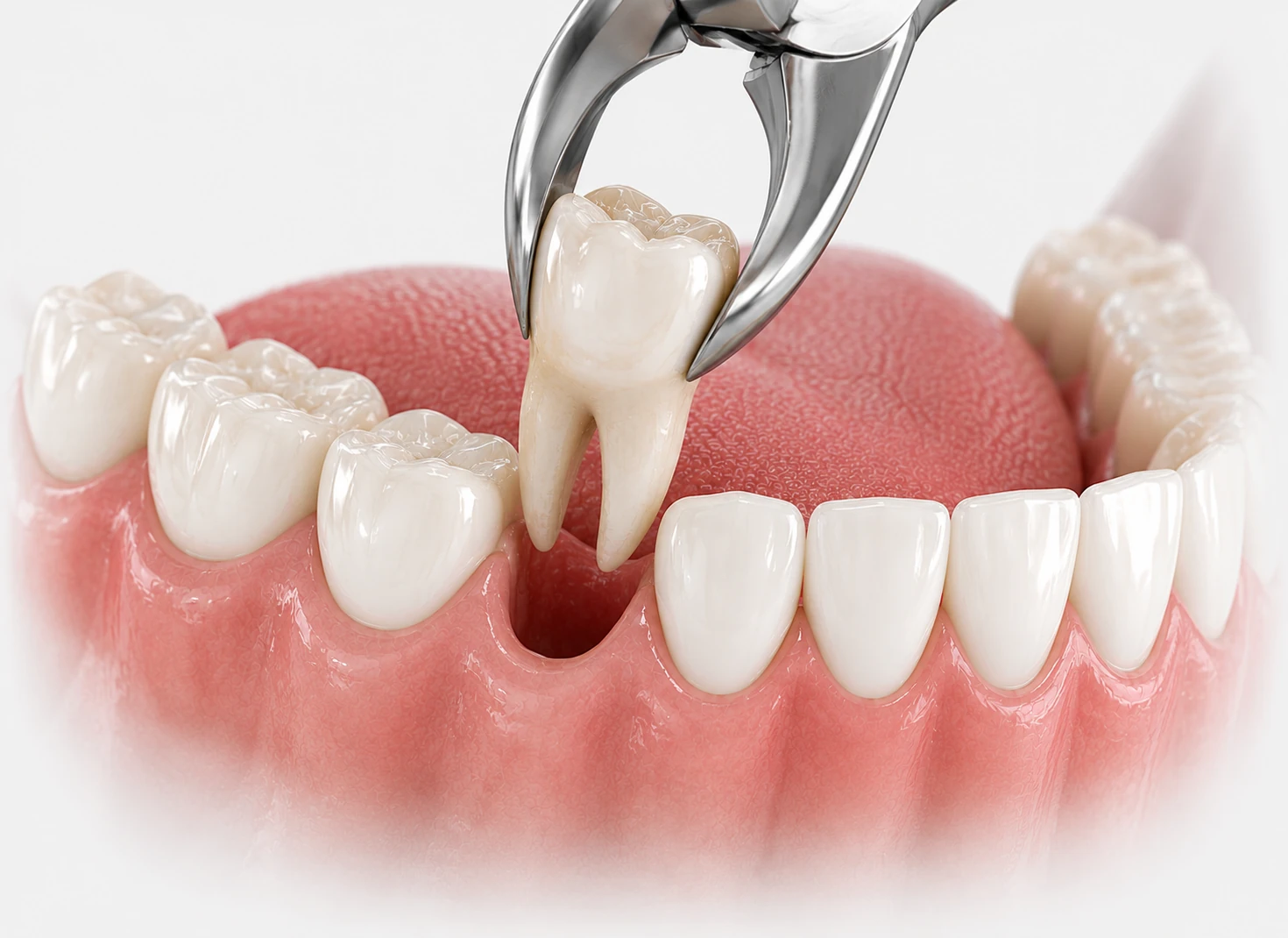
A tooth extraction is the removal of a tooth from its socket in the jawbone. There are two broad categories. A simple extraction is used where the tooth is fully visible above the gumline, is intact, and can be loosened and removed with dental instruments under local anaesthetic. A surgical extraction is used where the tooth is broken, partially buried beneath the gum, or has roots that are curved or difficult to access. Both are carried out under local anaesthetic and sedation is available for either.
Before any extraction I carry out a thorough assessment of the tooth and the surrounding bone and tissue. Where a CT scan gives additional information that would be useful for planning, particularly if implant placement is being considered at the same time, I will carry one out as part of the consultation.
The procedure itself typically takes between 20 and 60 minutes. After the tooth is removed, the socket is cleaned and closed. I give every patient detailed aftercare guidance before they leave, covering what to expect in the following days and what to do if anything does not feel right.
Not sure where to begin? Speak to someone.
Make an Enquiry
Explore Related Treatments
- Your treatment, step by step
Here is exactly what happens, from your first call to a fully healed site</em
Every stage is explained before anything proceeds. Nothing happens until you are completely comfortable and ready.
Free Consultation and Assessment
Your consultation is free and begins with a thorough examination of the tooth and the surrounding bone and tissue. I assess the complexity of the extraction, discuss what the procedure involves, and explain what to expect in the days following. Where a replacement tooth is being considered, I discuss the options at this stage and outline what the site will need to make that possible.
Free · Approximately 30 to 45 minutesPre-Extraction Planning
For cases where immediate implant placement or a socket preservation graft is being considered alongside the extraction, I review the relevant imaging and confirm the plan before the procedure date. You will know exactly what is happening on the day and what the intended outcome is before you arrive.
Clinical planning · All options confirmed in writingThe Extraction
The tooth is removed under local anaesthetic. Sedation is available throughout for patients who would find it helpful. Simple extractions typically take 20 to 40 minutes. More complex surgical extractions, where the tooth is broken or the roots require careful removal, take a little longer. My priority throughout is that you are comfortable, informed, and in control.
20 to 60 minutes · Local anaesthetic · Sedation availableImmediate Next Steps
Where a socket preservation graft or immediate implant is being placed at the same appointment, this is done immediately after extraction while the site is already open and prepared. Where neither applies, the socket is carefully cleaned and closed, and aftercare instructions are provided in detail before you leave.
Same appointment · Depending on clinical planHealing and Aftercare
The first few days following extraction typically involve some swelling, tenderness, and restricted eating on the affected side. My team provides detailed written aftercare guidance and is available to answer any questions in the days that follow. Most patients find healing significantly more comfortable than they anticipated.
7 to 14 days primary healing · Monitored by my teamImplant Planning or Next Stage
Once the extraction site has healed, the next stage of treatment is booked depending on what was planned. This might be a bone graft assessment, an implant placement consultation, or a review to confirm that the site is ready for the next step. The journey from extraction to a permanent replacement tooth is managed as a single, coordinated process from the start.
Ongoing planning · At your pace- Why Invest in an Implant
Here is what patients tell me after the extraction is done
Almost without exception, patients who have been putting off an extraction tell me the same thing when it is over. They wish they had done it sooner. Here is why.
The pain they had been managing stops
The toothache, the sensitivity, the infection-driven discomfort that had become part of daily life goes away. Patients describe the relief as immediate and significant. The thing they were dreading turned out to be what ended the problem.
The procedure was far easier than they expected
Every patient who comes in anxious and leaves having had the extraction tells me the same thing. The anticipation was worse than the reality. The local anaesthetic is effective. The procedure is straightforward. The recovery is manageable.
The surrounding teeth are protected
A tooth that is failing, infected, or decayed does not stay contained in its effects. The infection can spread to neighbouring teeth and bone. Removing it promptly protects what surrounds it and prevents a contained problem from becoming a wider one.
The path to a replacement tooth is clear from day one
Because I discuss and plan replacement at the same appointment wherever possible, patients leave knowing what comes next. They are not starting from scratch weeks later. The implant journey begins at the extraction appointment.
The bone at the site is preserved for a better implant outcome
Where a socket preservation graft is placed at the time of extraction, the bone volume needed for a future implant is maintained from the outset. This improves the implant outcome and in many cases removes the need for a more significant bone graft procedure later.
- Transparent Pricing
How much does tooth extraction cost in Cheshire?
The cost of extraction at my practices in Northwich and Wilmslow depends on the complexity of the case. A straightforward simple extraction is priced differently from a surgical extraction involving a broken or impacted tooth. Your exact cost is confirmed at the consultation before any procedure is booked.
Where a bone graft or same-day implant is being discussed at the same appointment, the full combined cost is provided in writing before any decisions are made. There are no surprises and nothing is added to the treatment plan without your full understanding and agreement first.
Finance Block:
0% finance through Tabeo
Where extraction is the first stage of an implant treatment plan, the full treatment cost including the extraction can be spread over 12 months at 0% interest through Tabeo. For longer repayment periods, an APR applies. Full details discussed at your consultation.
- Talk to Our Team
Not sure if you're suitable? Give us a call. There's no obligation.
We understand that choosing a dental implant is a significant decision. Our team is here to answer any questions, with no pressure, no sales tactics, and no obligation to proceed.
- START WITH A CONSULTATION
What Your Free 3D Smile Assessment Includes:
Full 3D CT Scan
A full cone beam CT scan of your jaw — included at no charge. This gives Dr Nikhil a precise picture of your bone density, nerve positions, and implant suitability.
Written Treatment Plan
You will leave with a full written treatment plan and a complete cost breakdown. Nothing is left vague or estimated.
An Honest Conversation
Dr Nikhil will take the time to understand your situation, answer every question, and give you an honest clinical opinion — with no pressure to proceed.
Finance Options Explained
If 0% finance is right for you, we will walk you through the options in detail so you can make a fully informed decision.
Response Within 1 Working Day
We respond to every enquiry within one working day. Often same day.
- MEET YOUR CLINICIAN
I'm Dr Nikhil Oberai MSC & Dental Implants are all I do
An extraction carried out thoughtfully, with the long-term health of the site and the surrounding teeth in mind, is the foundation of good implant treatment. I have been carrying out extractions as part of complex implant planning for over a decade. The cases I take particular care with are the ones where immediate implant placement or socket preservation is being considered alongside the removal, because how the extraction is managed directly affects the quality of everything that follows.
I hold a Master’s Degree in Dental Implantology from the University of Manchester and teach at the same institution as an Honorary Clinical Teaching Fellow. Every extraction I carry out is planned with the next step in mind, not just the procedure itself.
“For every problem, there is a solution. It might be challenging, but it is almost always possible.”
Credentials:
- BDS, University of Manchester (2008)
- MSc Dental Implantology, University of Manchester (2014)
- Honorary Clinical Teaching Fellow — University of Manchester
- Key Opinion Leader — Osstem UK
- External Examiner, BAIRD Implant Course
- Award Winning dentistry
- GDC No. 150126
- Frequently Asked Questions
Common questions my patients ask me about tooth extraction
Here are the questions our tooth extraction patients ask most often — answered honestly and in plain language.
The procedure is carried out under local anaesthetic, which means you should not feel pain during the extraction itself. You may feel pressure or movement but not pain. Sedation is available if that would help you feel more comfortable. After the anaesthetic wears off there is typically some tenderness for a few days, managed with standard pain relief. Most patients tell me it was far less of an experience than they had anticipated.
A simple extraction typically takes 20 to 40 minutes. A more complex surgical extraction, where the tooth is broken at the gumline or the roots require careful removal, may take a little longer. The full appointment, including the assessment and aftercare discussion, typically takes around an hour.
The socket will heal over the following days and weeks. I provide detailed aftercare guidance before you leave covering what to eat, how to clean the area, what to watch out for, and how to reach us if anything does not feel right. Primary healing of the soft tissue typically takes one to two weeks. The underlying bone takes longer to fully consolidate.
In some cases yes. Where the extraction site has sufficient bone and the conditions are right, immediate implant placement is possible. This preserves the bone volume and reduces the number of future appointments. Whether your case qualifies is confirmed at the consultation using a CT scan.
A socket preservation graft places bone material into the extraction socket immediately after the tooth is removed. It maintains the bone volume at the site for a future implant and is recommended where immediate implant placement is not appropriate but implant treatment is planned. Whether you need one depends on your specific clinical situation and is discussed at the consultation.
The cost depends on the complexity of the extraction. Simple and surgical extractions are priced differently. Your exact cost is confirmed at the free consultation before any procedure is booked. Where extraction is the first stage of an implant plan, the full combined cost is provided in writing before any commitment is made. 0% finance through Tabeo is available.
Dental anxiety around extractions is very common and I take it seriously. Sedation is available for every extraction procedure at my practices in Northwich and Wilmslow. Many patients who come in with significant anxiety find the experience far more manageable than they expected, with or without sedation. Please let my team know when you book so we can make sure the appointment is set up to be as comfortable as possible for you.
Call Croft Dental in Wilmslow on 01625 523 524, or Brunner Court in Northwich on 01606 440 394, or complete the enquiry form above. My team will be in touch within one working day, usually the same day.